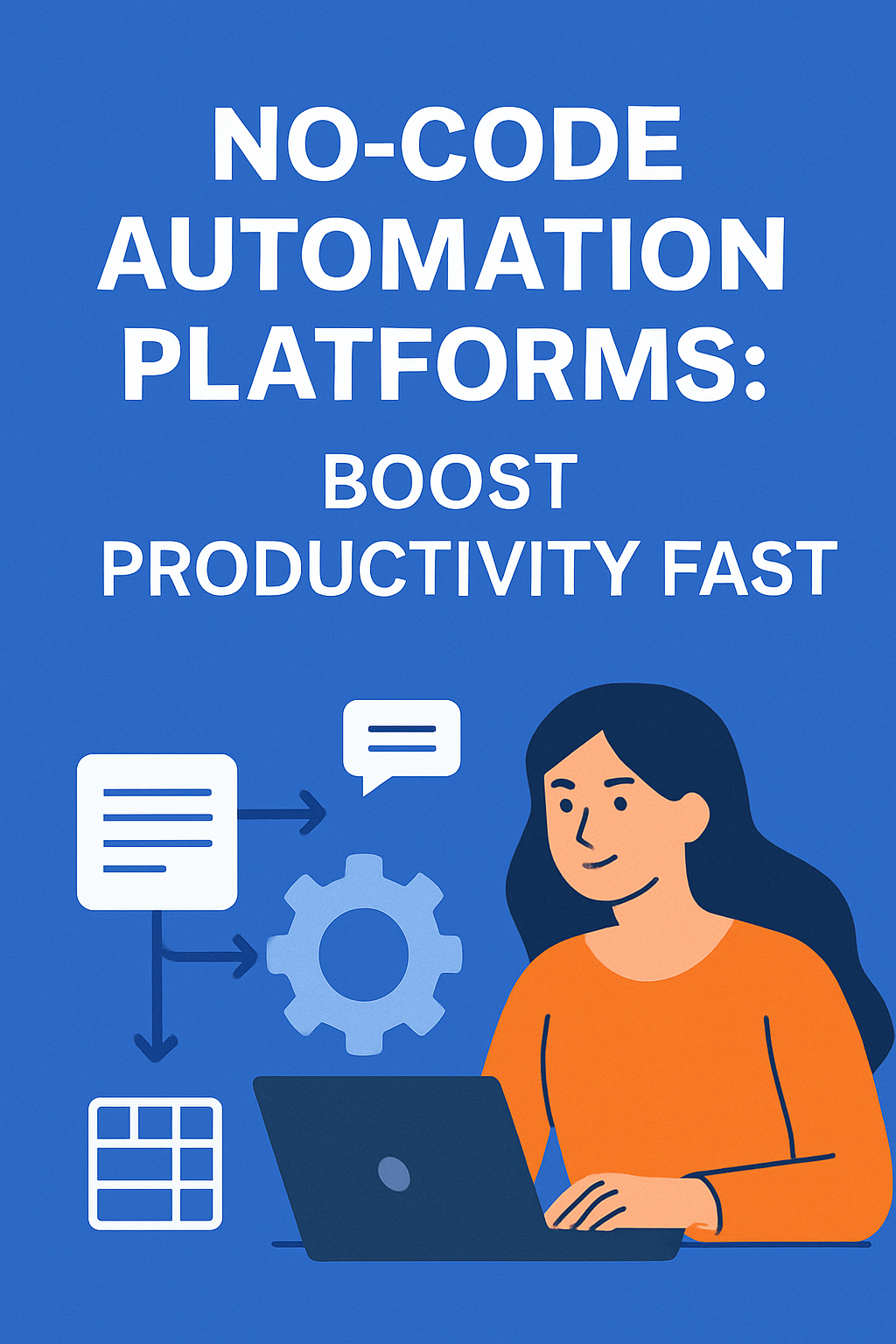
The demand for faster, more efficient business processes has never been higher. From startups to large enterprises, companies are constantly looking for ways to reduce repetitive tasks, improve productivity, and streamline operations. Enter no-code automation platforms — tools that empower users to automate workflows without writing a single line of code.
These platforms are redefining how teams work, enabling people from marketing, sales, HR, and operations to build sophisticated automated systems without relying on developers. But what exactly are no-code automation platforms, and why are they becoming a critical part of modern business infrastructure? Let’s explore.
What Are No-Code Automation Platforms?
No-code automation platforms are software tools that allow users to create automated workflows and processes using a visual, drag-and-drop interface. Instead of writing scripts or building custom applications, users connect actions, triggers, and data sources through pre-built integrations.
Key Features
- Drag-and-drop workflow builder
- Pre-built connectors for apps like Google Sheets, Slack, Trello, and CRMs
- Conditional logic to handle different scenarios
- Real-time triggers that automate processes instantly
- Reporting and analytics for process monitoring
Why No-Code Automation Is Transforming Workflows
1. Democratization of Automation
No-code platforms remove the barrier of technical expertise. This means employees across departments can independently build and maintain automation without waiting for IT resources.
2. Time and Cost Savings
Automating repetitive tasks — like data entry, report generation, or customer follow-ups — frees up employees’ time, allowing them to focus on strategic activities.
3. Rapid Deployment
With no coding required, automation solutions can be implemented within hours or days rather than weeks or months.
4. Scalability
Businesses can start with small automations and gradually build complex systems as needs evolve.
Popular No-Code Automation Platforms in 2025
1. Zapier
One of the pioneers in no-code automation, Zapier connects over 6,000 apps. It’s ideal for automating small to medium-scale workflows across cloud services.
Best For: Marketing automation, CRM updates, cross-app data synchronization.
2. Make (formerly Integromat)
Make offers a more visual and flexible workflow builder with advanced logic capabilities. It’s perfect for more complex multi-step automations.
Best For: Detailed data manipulation, multi-platform integrations.
3. Microsoft Power Automate
Part of Microsoft’s Power Platform, it integrates seamlessly with Office 365, Dynamics, and Azure services.
Best For: Enterprises already using Microsoft’s ecosystem.
4. n8n
An open-source automation tool offering more control and customization for businesses that want flexibility without full coding.
Best For: Tech teams looking for a self-hosted option.
5. Workato
Workato focuses on enterprise-grade automation with strong data security and governance features.
Best For: Large companies with strict compliance needs.
Use Cases for No-Code Automation
- Marketing Campaigns
Automatically send welcome emails, update CRM records, and post on social media when a new lead is captured. - Sales Processes
Create instant notifications for sales reps when high-value leads enter the funnel. - Customer Support
Auto-generate support tickets from incoming emails or chat messages. - Human Resources
Automate onboarding by creating accounts, sending welcome kits, and assigning training tasks. - Data Management
Sync data across tools, generate daily reports, and keep databases updated in real-time.
Advantages Over Traditional Automation
| Feature | No-Code Automation Platforms | Traditional Automation |
| Ease of Use | Visual interface, no coding | Requires coding skills |
| Setup Speed | Hours to days | Weeks to months |
| Cost | Affordable subscriptions | Higher development cost |
| Scalability | Easy to expand | May require re-coding |
| Maintenance | Managed by end-users | Developer involvement |
Challenges and Limitations
While no-code automation offers many benefits, it’s not without challenges:
- Limited Customization: Extremely complex workflows may still require custom coding.
- Integration Gaps: Some niche tools may not be supported.
- Vendor Lock-in: Switching platforms can be difficult once workflows are deeply integrated.
- Performance Limits: Heavy data processing may be slower compared to coded solutions.
The Future of No-Code Automation
By 2025, AI-driven features are becoming standard in no-code automation platforms. Tools are now capable of suggesting automation workflows, predicting bottlenecks, and even building workflows from natural language prompts.
For example, you can now type: “When a customer fills out the form, send them a personalized email, update the CRM, and create a Slack alert for the team” — and the platform will set it up automatically.
This integration of AI with no-code tools means the barrier to entry for automation will be even lower, pushing adoption across industries.
Conclusion
No-code automation platforms are not just a passing trend; they’re a strategic asset for businesses aiming to boost productivity and reduce operational costs. Whether you’re a small business owner looking to free up time or an enterprise aiming to optimize workflows, no-code tools offer the speed, flexibility, and power to transform how you work.
In the next few years, expect to see even more intelligent automation capabilities, deeper integrations, and greater accessibility — making it possible for anyone, regardless of technical skill, to build powerful automated systems.