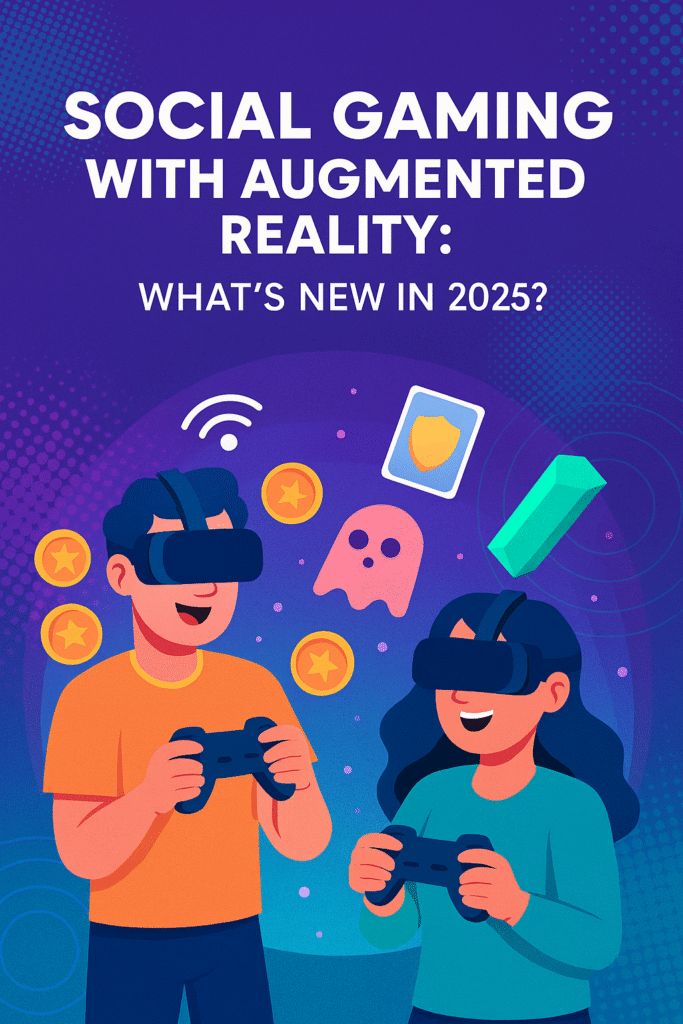
The world of gaming is constantly evolving, and in 2025, augmented reality (AR) is shaping the future of social gaming like never before. What once felt futuristic is now part of daily life—merging real-world interactions with digital overlays that create immersive, community-driven experiences. From AR-based multiplayer games to new platforms that connect players across the globe, this year marks a turning point in how we socialize, play, and engage in digital spaces.
In this article, we’ll explore the latest innovations in social gaming with augmented reality, how platforms are leveraging AR to connect players, and what the future holds for this rapidly expanding space.
A Quick Look Back: How AR Gaming Got Here
To understand where we are today, let’s revisit the journey of AR in gaming. The early wave of augmented reality entered the mainstream with Pokémon GO in 2016, which introduced millions of players to location-based AR play. It wasn’t just about catching digital creatures—it was about going outside, collaborating with others, and turning everyday environments into gaming arenas.
Since then, AR gaming has evolved significantly. With advances in 5G connectivity, wearable devices, and mobile processing power, AR is no longer limited to simple overlays. It now blends multi-user interaction, real-time rendering, and AI-powered personalization, making social gaming more interactive and engaging.
What’s New in Social AR Gaming in 2025
So, what makes 2025 a standout year for AR gaming? Here are the biggest trends and breakthroughs:
1. Cross-Reality Social Platforms
AR is no longer siloed into single games—it’s becoming part of larger social ecosystems. Platforms like Meta Horizon Worlds, Niantic’s ARDK, and Snap’s AR gaming hubs are introducing shared virtual layers where players can meet, play, and collaborate in real time. These spaces blend gaming with social networking, creating digital “hangout spots.”
2. Wearables That Enhance Social Play
Until recently, AR gaming was mostly tied to smartphones. In 2025, lightweight AR glasses and headsets have entered mainstream adoption, thanks to players like Apple Vision Pro Lite, Meta Quest AR Glasses, and Xiaomi’s smart eyewear. These devices make AR more natural, freeing players from holding phones and creating seamless multiplayer experiences in real-world settings.
3. Hyper-Local Multiplayer Experiences
One of the most exciting new features is location-based AR matchmaking. Players in the same city, neighborhood, or even the same park can join collaborative AR quests. Imagine walking down your street and teaming up with nearby players to defend a virtual fortress or solve puzzles that appear on physical landmarks.
4. AI-Driven NPCs and Adaptive Social Play
Artificial intelligence is enhancing the AR social experience by creating adaptive NPCs (non-player characters) who interact dynamically with groups of players. These AI companions not only enrich gameplay but also adjust challenges based on group size, skill level, or local context, making social AR experiences more inclusive.
5. Integration with Social Media and Streaming
AR gaming is becoming a content engine for creators. Platforms now let players stream AR sessions directly to TikTok, Twitch, or YouTube, blending gaming with digital storytelling. Social games now include “spectator modes”, where non-players can engage with AR content through live interactions.
Examples of AR Social Games in 2025
Here are some of the most exciting AR titles and platforms making waves this year:
- Peridot by Niantic (Expanded 2025) – Once a virtual pet game, it has evolved into a multiplayer ecosystem where players breed, share, and interact with AR creatures in social spaces.
- Minecraft Earth Reboot – Reintroduced in 2025 with stronger AR mechanics, players can now build shared AR worlds visible to friends and passersby.
- Ingress: Social Renaissance – Niantic’s original AR game has been updated with enhanced storytelling, alliances, and real-world team missions.
- AR Sports Leagues – From soccer overlays to AR-enhanced basketball, players are forming local leagues where physical play meets AR gamification.
Why Social AR Gaming Matters
AR gaming is not just entertainment—it’s changing the way people connect. Traditional online gaming connected players through screens, but AR creates blended reality experiences that feel more natural and engaging.
- Community building: AR brings people together in shared spaces, encouraging face-to-face interaction while still enjoying digital worlds.
- Physical activity: Unlike sedentary console gaming, AR encourages players to move, explore, and engage physically.
- Inclusivity: With adaptive AI and real-world accessibility, AR gaming opens new opportunities for players of different abilities and backgrounds.
- Digital economies: Many AR games are now tied to NFTs, skins, and digital assets, allowing players to trade, collect, and monetize their AR experiences.
Challenges in AR Social Gaming
Despite rapid growth, AR social gaming still faces challenges:
- Hardware adoption – While AR glasses are more available, they remain expensive for mass audiences.
- Privacy concerns – Location-based AR requires sensitive data, raising questions about safety and surveillance.
- Accessibility – Not all regions have 5G or the infrastructure needed for seamless AR play.
- Game longevity – Many AR titles have struggled to maintain long-term engagement after launch.
These issues remind us that AR gaming is still in a transitional phase, with enormous potential but hurdles to overcome.
The Future of Social AR Gaming
Looking forward, AR gaming in social contexts will likely expand in three major ways:
- Persistent AR worlds – Shared virtual layers that stay in place, accessible anytime (think “digital graffiti” or permanent AR landmarks).
- Blended AR/VR play – Hybrid spaces where VR users and AR players interact seamlessly in the same digital environment.
- AR commerce and events – Concerts, sports, and brand activations that blend social gaming with marketing, turning cities into interactive game boards.
By 2030, experts predict AR gaming will be as common as mobile gaming is today, with billions of users worldwide engaging in immersive, shared play.
Final Thoughts
Social gaming with augmented reality in 2025 represents a paradigm shift in how we play and connect. What was once science fiction is now part of everyday entertainment—turning sidewalks, parks, and living rooms into shared playgrounds.
While challenges remain, the innovation happening in this space suggests a future where AR gaming isn’t just a hobby but a core part of social interaction and digital culture. For players, creators, and brands alike, the opportunities are endless.
If you’ve been waiting to explore AR gaming, 2025 is the year to jump in and experience what’s new.