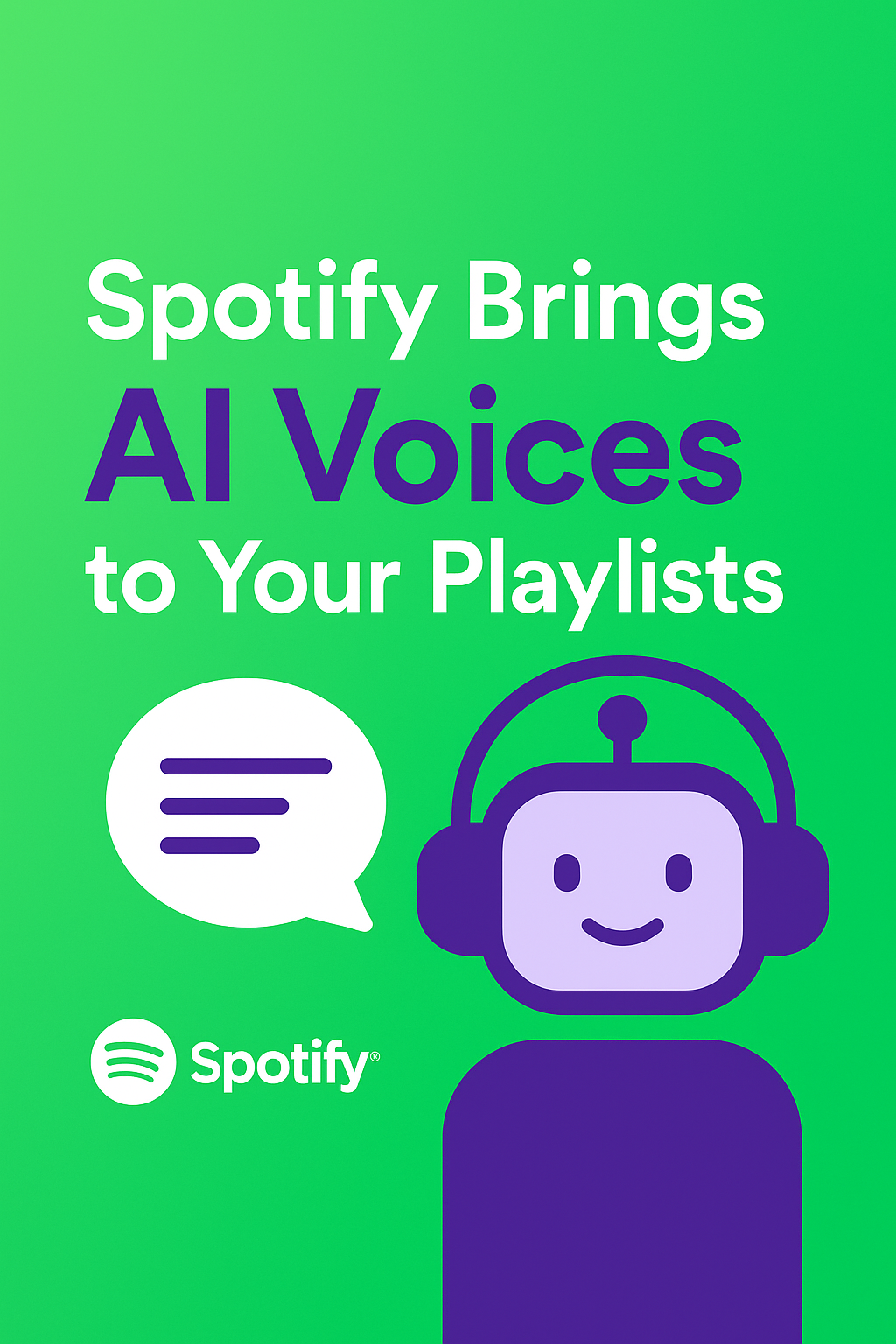
The music streaming industry has been evolving rapidly, with platforms continuously seeking innovative ways to enhance user experiences. In September 2025, Spotify unveiled its latest feature: AI-powered voice narration integrated directly into playlists. This bold move brings together the immersive quality of music and the informative, contextual power of narration—opening up new opportunities for both listeners and creators.
But what exactly does AI narration mean for Spotify’s massive global audience? How does it work, and will it change the way we interact with music? In this article, we’ll dive into the details of this groundbreaking launch, its benefits, challenges, and what it means for the future of streaming.
What Are AI-Narrated Playlists?
Traditionally, playlists have been static collections of songs curated by algorithms, human editors, or the listeners themselves. With Spotify’s new feature, playlists will now include AI-generated spoken segments—short pieces of commentary, storytelling, or guidance that blend seamlessly with the tracks.
For example, imagine pressing play on your “Morning Motivation” playlist. Instead of jumping straight into the music, you might first hear a brief AI-narrated introduction:
“Good morning! Here’s an energizing set of tracks to get your day started strong. Up first, a classic from Daft Punk.”
Throughout the playlist, narration could highlight upcoming songs, provide background stories on artists, or even adapt to user moods in real time.
Why Is Spotify Introducing This Feature?
Spotify has long positioned itself not only as a music streaming service but also as a hub for audio innovation, investing heavily in podcasts, audiobooks, and personalization tools. AI-narrated playlists are the next logical step in this evolution.
Several factors drive this launch:
- Enhanced Personalization – Spotify already uses machine learning to tailor playlists like Discover Weekly and Release Radar. Adding narration makes them feel more alive, almost like having your own DJ or radio host.
- Stronger Engagement – Research shows that spoken audio creates a deeper sense of connection. By weaving in voice, Spotify can keep listeners engaged for longer sessions.
- Differentiation in the Market – Competing platforms like Apple Music and YouTube Music focus primarily on music curation. With AI narration, Spotify sets itself apart by offering something closer to a hybrid of radio and streaming.
- AI Leadership – Spotify has been quietly investing in AI, from personalized recommendations to generative playlist artwork. This feature highlights the company’s commitment to staying ahead in AI-driven audio.
How Does It Work?
Spotify’s AI-narrated playlists are powered by synthetic voices trained on advanced natural language processing models. These voices are designed to sound human-like, with natural intonations, pacing, and even emotional nuance.
Here’s the typical process:
- Playlist Curation – A playlist is created either by the user, Spotify’s algorithms, or an editorial team.
- Narrative Layering – The AI generates spoken segments that fit the playlist’s theme. This could be informational (e.g., artist facts), emotional (e.g., motivational phrases), or contextual (e.g., setting the mood).
- Seamless Integration – The narration is interwoven between songs, with smooth fade-ins and fade-outs, mimicking the flow of a live radio show.
Importantly, users will likely have control over how much narration they want to hear. Some may prefer frequent commentary, while others might opt for minimal interruptions.
Real-World Use Cases
AI-narrated playlists open the door to countless creative possibilities:
- Workout Playlists: The AI could serve as a personal trainer, cheering you on and guiding your workout with motivational lines between songs.
- Study & Focus Sessions: Narration could provide gentle reminders to stay focused or explain the science behind certain music choices.
- Music Discovery: The AI could introduce lesser-known artists, giving short backstories that help listeners connect with new genres.
- Cultural or Seasonal Playlists: For holidays, Spotify could add themed commentary—like a Halloween playlist narrated by a spooky AI voice.
This flexibility makes AI narration appealing to both casual listeners and those looking for curated experiences that feel dynamic and engaging.
Opportunities for Artists and Creators
Beyond listeners, Spotify’s AI narration also creates new possibilities for musicians, podcasters, and brands.
- Artists could partner with Spotify to add AI-narrated introductions to their tracks, explaining their creative process or the meaning behind a song.
- Podcasters might use AI narration to blend podcast-style storytelling with music, offering hybrid audio experiences.
- Brands could sponsor narrated playlists, embedding subtle promotions into the listening experience without disrupting the flow.
This could open up fresh revenue streams, allowing artists to better connect with fans while Spotify monetizes innovative audio formats.
Challenges and Criticism
While the concept is exciting, it’s not without controversy. Some listeners may resist the idea of AI voices interrupting their playlists. Others may worry about authenticity—can a synthetic narrator truly replicate the charm of a human DJ?
Key concerns include:
- Intrusiveness – Some users might see narration as unwanted interruptions in their music flow.
- Authenticity – Even with advanced AI, synthetic voices may lack the warmth and spontaneity of real human hosts.
- Data Privacy – To provide hyper-personalized narration, Spotify would need to analyze listening habits more deeply, raising privacy questions.
- Creative Boundaries – There’s an ongoing debate about whether AI-generated content dilutes or enhances artistic experiences.
Spotify will need to carefully balance innovation with user control, likely offering toggle options or customization features.
AI Narration in Context: The Bigger Picture
Spotify’s move reflects a larger trend in the audio and tech industries. AI voices are rapidly becoming mainstream, from assistants like Siri and Alexa to audiobook narrators and gaming characters.
What’s different here is the integration of narration into a traditionally music-only space. Spotify is essentially blending the intimacy of podcasts, the personalization of streaming, and the adaptability of AI.
This could transform the very definition of playlists—from static song lists to interactive audio experiences.
The Future of Music Streaming with AI
Looking ahead, AI narration could be just the beginning of Spotify’s broader strategy. Future features may include:
- Real-Time Narration: AI responding live to user input, moods, or activities.
- Customizable Voices: Allowing users to pick their favorite narrator voice—anything from a soothing guide to a celebrity-inspired tone.
- Interactive Playlists: Playlists that adapt mid-stream, with narration guiding users through different choices (like a “choose-your-own-adventure” for music).
- AI + Human Collaboration: Artists could collaborate with AI narrators to create storytelling-driven albums or audio journeys.
The possibilities are vast, and Spotify’s experiment could pave the way for a new era of audio entertainment.
Conclusion
Spotify’s launch of AI-narrated playlists represents a bold step into the future of digital streaming. By merging music with spoken narration, the platform is aiming to deliver a more personalized, engaging, and innovative experience for its millions of users.
While challenges around authenticity and user preference remain, the move positions Spotify at the forefront of AI-driven audio innovation. Whether you see it as the next evolution of music streaming or a risky experiment, one thing is certain: the way we listen to playlists will never be the same again.