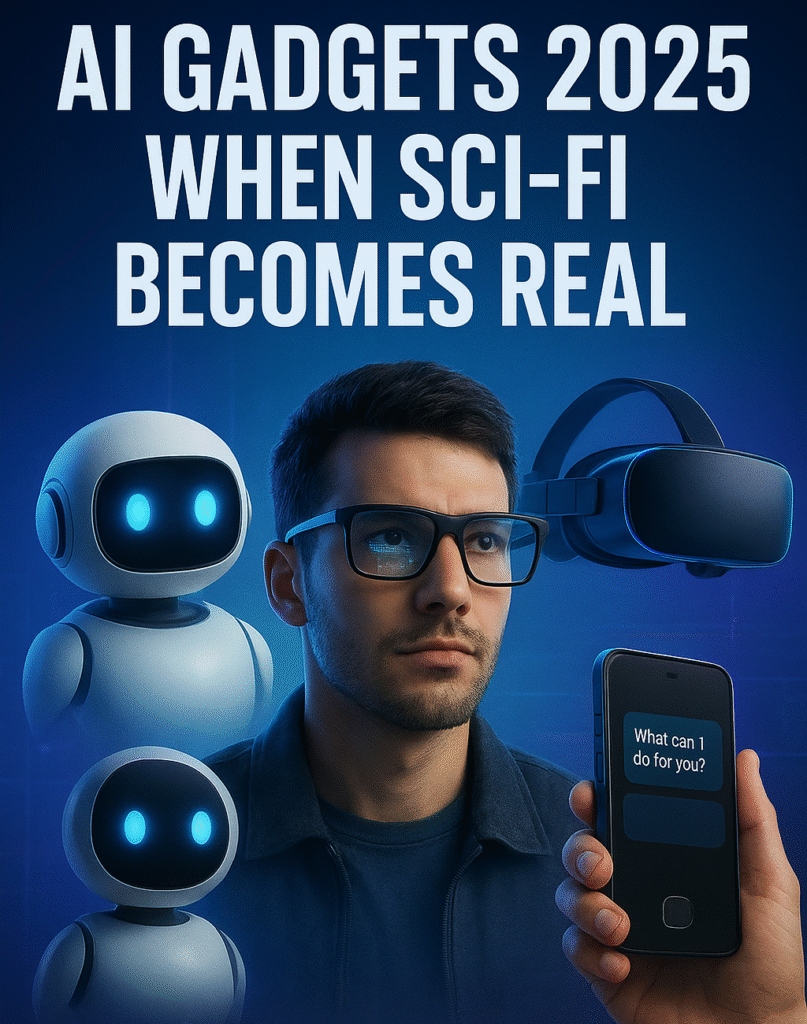
Technology journalists like to say the future arrived “too early” or “too late.” In 2025 the conversation is different: the future looks like a crowded shelf at CES and an overflowing product page at major retailers. What was once the stuff of films — glasses that whisper info into your peripheral vision, small handheld devices that behave like a personal AI butler, headsets that blend reality and virtual layers perfectly — is now real and shipping (or close to it). This article walks through the most promising AI gadgets you can actually touch, buy, or test in 2025, explains why they matter, and separates genuine progress from hype.
1. Smart glasses with real displays (not just notifications)
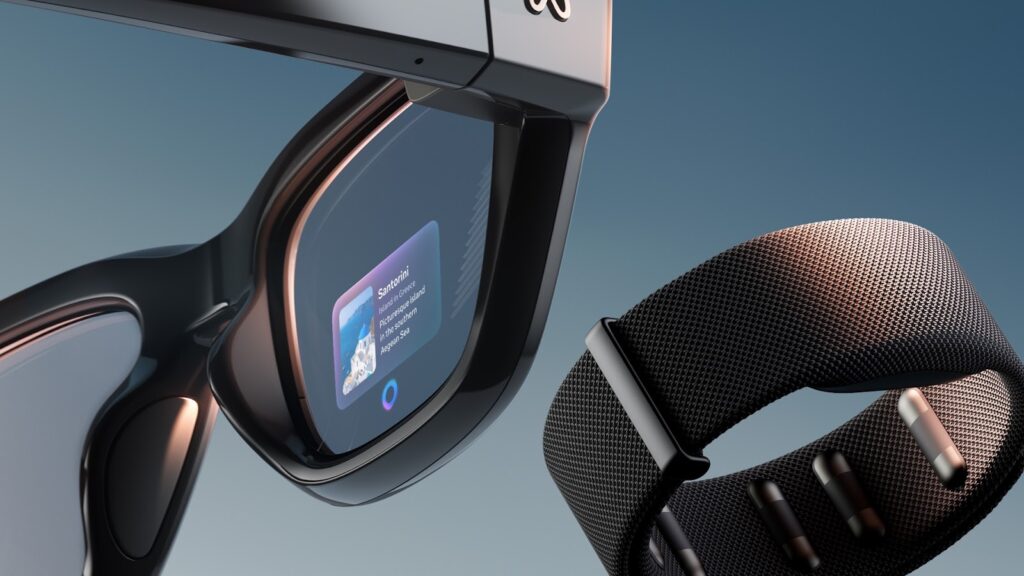
Long predicted, the smart-glasses moment finally arrived in 2025 with products that include built-in displays, translation, and gesture control. Meta’s Ray-Ban Display glasses (with a companion EMG-based wristband for gestures) are a flagship example: they put a small in-lens HUD (head-up display) together with real-time live captions and translation features — a practical step toward “personal superintelligence.” These glasses are being positioned as everyday wearables that shift phone tasks into your line of sight. Reuters
Why this matters: moving from “notification-only” frames to ones that present readable visuals and perform translation/live captioning reduces context switching — you no longer reach for a phone to check a message or lookup a word. Early reviews emphasize the utility of hands-free pedestrian navigation, on-the-spot translations, and quick photo previews; adoption will depend on comfort, battery life, and social norms.
Practical caveats: display size and battery tradeoffs remain — current display glasses typically show limited information (short texts, compact UI), and developers are still refining what belongs in your peripheral view versus what should remain on a phone.
2. Mixed-reality XR headsets that act like personal computers
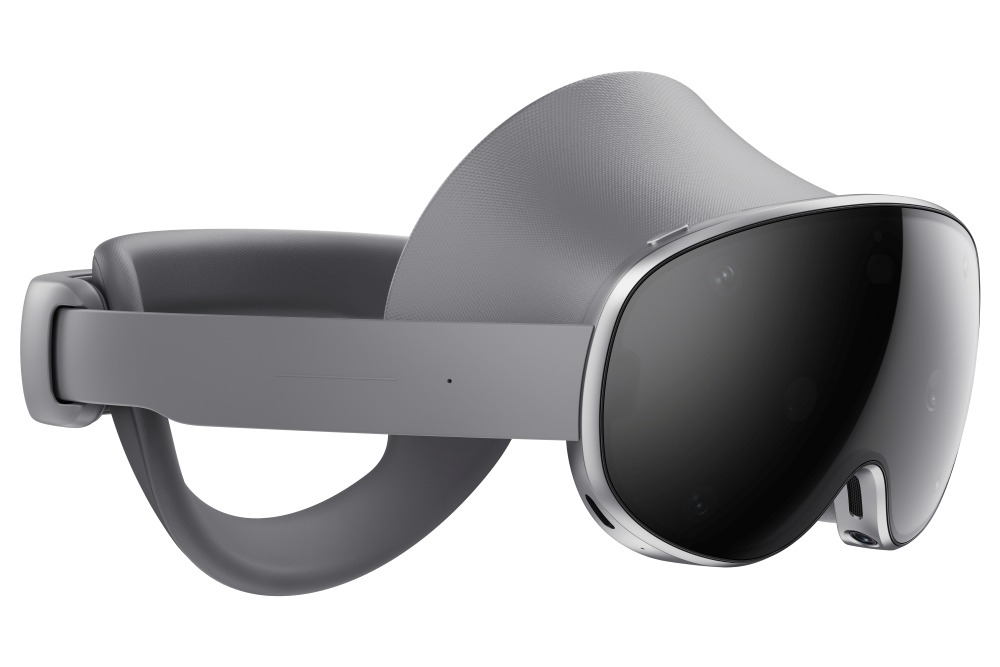
2025 has also seen a leap in XR headsets that feel like multipurpose devices rather than niche gaming rigs. Samsung’s Galaxy XR is an example of the new wave: an “AI-native” headset running Android XR, with high-density micro-OLED screens, advanced tracking, and built-in AI features for spatial apps and productivity. Samsung’s product push signals that XR is moving beyond novelty into mainstream computing — creative work, training, and immersive media are the immediate sweet spots.
Why this matters: XR headsets are finally powerful enough (NPUs + on-device AI) to run sophisticated local models and mixed on-device/cloud agents. That reduces latency for real-time interaction (think live translation for in-headset collaborators, or AI tutors that respond instantly to your gestures).
Practical caveats: price remains high for top models, and prolonged use still raises ergonomic concerns. But competition (Apple, Samsung, Google partners) is driving faster innovation, better software ecosystems, and lower entry points.
3. Pocket AI assistants and dedicated personal devices
Not everything needs to be a phone, and 2025 is proving it. A new class of pocketable, AI-first devices — relatively affordable and built around conversational agents — have emerged. Devices such as the Rabbit R1 (an AI handheld offering continuous conversations, translation and voice recording) show how manufacturers are betting some users prefer a dedicated assistant device rather than installing another app on their smartphone. rabbit.tech
Why this matters: dedicated AI devices can have always-on privacy modes, optimized microphones, long battery life, and hardware tuned for voice interactions. For people who need a privacy-first or distraction-free assistant (writers, journalists, field workers), these gadgets are compelling.
Practical caveats: the killer question is integration — how smoothly do they tie into calendars, homes, and workflows? Subscription models for advanced AI features are common, so total ownership cost must be considered.
4. Smart speakers and the rise of “assistant tiers”
Voice assistants have quietly matured. Amazon, Google and other players have introduced upgraded assistant tiers (for example, Amazon’s Alexa Plus/Alexa+) that add conversational memory, multimodal reasoning, and integration into entire device families — from smart displays to ovens. In 2025 many smart speakers are effectively local-cloud hybrid agents: they do some processing on the device and call cloud models for heavier reasoning. The Verge+1
Why this matters: a more capable assistant in the living room enables hands-free, natural interactions for the whole family — shopping lists, homework help, contextual reminders, and personalized routines. Because many features run locally, privacy improves while responsiveness increases.
Practical caveats: subscription pricing for “plus” tiers and the quality differences across providers (Google vs Amazon vs Apple) are real purchasing considerations.
5. Hybrid on-device/cloud AI: the invisible hero
The most important technical trend powering 2025 gadgets is hybrid AI: models split across device NPUs and cloud endpoints, balancing privacy, latency, and power. IDC and industry reports show more consumer devices shipping with NPUs, enabling on-device inference for common tasks while offloading heavy lifting to cloud models when needed. This hybrid architecture makes many of the cool gadgets above feasible at scale. blogs.idc.com
Why this matters: users get faster responses without sending everything to the cloud; companies can deliver personalization without massive privacy tradeoffs. For device makers this is a differentiator — better offline capability and cheaper long-term cloud usage.
6. Health wearables with AI-grade sensors
2025 wearables are more than step counters. Expect gadgets that combine advanced sensors (optical, bioimpedance, EMG) with on-device models to track stress, predict sleep quality, and offer early health warnings. CES 2025 showcased a range of empathetic robotics and health wearables designed to be diagnostic companions rather than raw data pumps. Forbes+1
Why this matters: continuous AI that runs reliably on your wrist or shirt can detect patterns that a single checkup misses. For consumers, this means better sleep coaching and subtle health nudges; for clinicians, it creates richer longitudinal data streams.
Practical caveats: regulatory hurdles remain—health claims must be validated, and data governance is critical.
7. Robots that feel friendlier — but are still tools
Robotics at CES and other shows in 2025 showed robots that use multimodal AI to read emotions, help at home, and perform repetitive tasks in businesses. These robots are less about replacing humans and more about augmenting them: companion robots for assisted living, warehouse helpers that navigate collaborative spaces, and even social robots that help kids learn. fullstack.com
Why this matters: robotics combined with on-device AI makes automation safer and more situationally aware. For eldercare and hospitality, that’s a practical win.
Practical caveats: expectations vs reality often diverge—“empathy” is simulated and still limited; social and ethical concerns will continue to shape product rollout.
8. Where science fiction still beats reality (and why that’s ok)
Even in 2025, some sci-fi staples remain aspirational:
- Full AR contact lenses with rich graphics and long battery life are still years away.
- Brain-computer interfaces that read complex thoughts remain experimental and highly regulated.
- Truly telepathic devices that eliminate typing? Not yet.
That gap is healthy: safety, privacy, and ethical guardrails are catching up. The progress we do have — HUD glasses, hybrid agents, personal AI devices — is incremental, practical, and much more likely to be adopted widely.
Buying guide: pick a gadget for your goals
- If you want mobility + hands-free info: try display smart-glasses (if you can tolerate current prices and design). Great for commuting and quick lookups. Reuters
- If you want immersive productivity or creative tools: look at premium XR headsets (Galaxy XR, Apple Vision Pro alternatives). Ideal for design, training, and media.
- If you want a private, focused AI helper: evaluate pocket AI assistants (e.g., Rabbit R1) for voice-first workflows. rabbit.tech
- If your priority is smart home convenience: choose an assistant ecosystem and consider the “plus” tiers for better conversational memory and multimodal features. The Verge
Privacy and practical tips
- Read the privacy policy — devices that require continuous audio/video capture will vary widely in how they store and process data.
- Prefer local processing for sensitive tasks; hybrid devices often let you choose what stays on-device. blogs.idc.com
- Battery and comfort matter — many early adopters abandon a gadget due to discomfort, not lack of features. Test before you commit.
- Consider subscriptions — advanced AI features are often behind recurring fees.
Final verdict: 2025 is real, sensible, and exciting
2025 isn’t the year we all live in fully immersive Star Trek holodecks, but it is the year practical sci-fi took meaningful steps toward everyday life. Smart display glasses, XR headsets that double as creative workstations, pocket AI assistants, and hybrid on-device/cloud architectures together form a compelling, realistic roadmap. If you care about productivity, accessibility, or new creative tools, these gadgets are worth watching — and in many cases, buying.