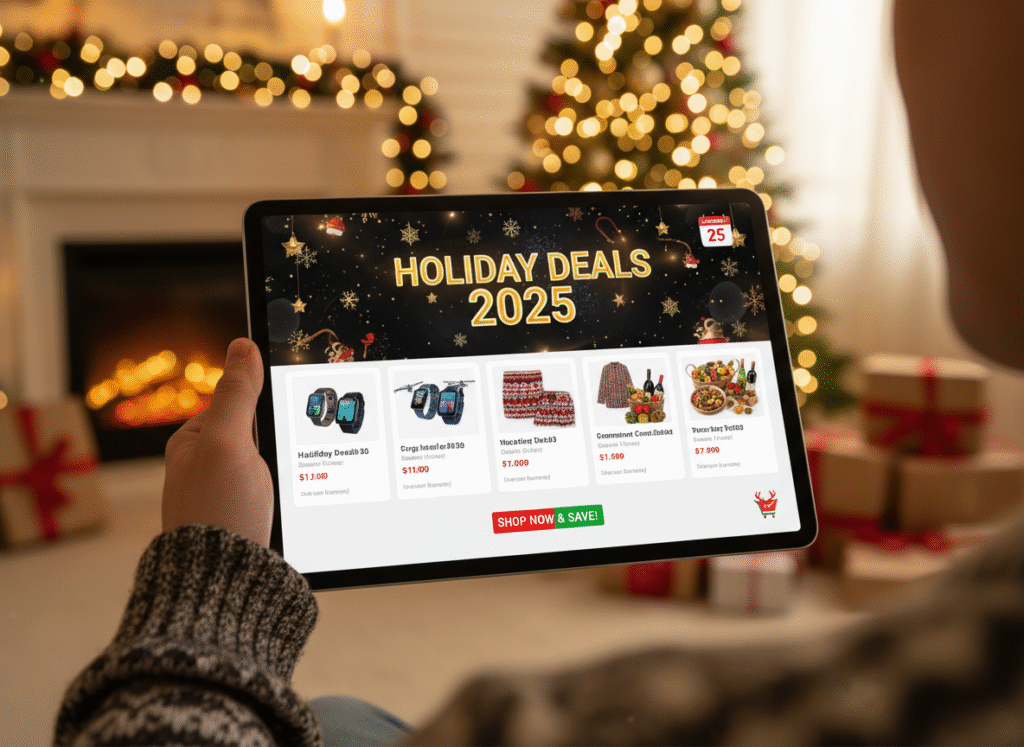
The holiday shopping season has evolved far beyond traditional retail windows, doorbusters, and “one-big weekend” deals. In 2025, the intersection of advanced e-commerce technology and what’s called connected commerce is redefining how consumers browse, buy and engage with brands during the most important sales period of the year.
For the audience of your blog (global, tech-savvy), this article will unpack how these technologies work, why they matter for holiday campaigns, and what brands (or blog readers interested in the space) should prepare for now.
What is Connected Commerce – and Why It Matters
Before diving into the holiday specifics, let’s define “connected commerce” and how it differs (and overlaps) with standard e-commerce.
Definition & context
“Connected commerce” — as described by Capgemini — is a strategic framework for consumer-facing brands to upgrade their go-to-market capabilities across channels and ecosystems. Capgemini
Another definition: “Connected commerce is the process of driving customer engagement … across both digital and physical channels.” SAP Emarsys+1
In plain terms: while e-commerce refers primarily to online sales and channels, connected commerce emphasises seamless integration of online, mobile, in-store, marketplaces, social platforms and data. The customer journey is no longer linear (web → checkout) but many-to-many across moments & devices.
Why it matters for the holidays
- Customers expect to browse online, buy via mobile, pick up in-store, or return online with no friction. The holidays magnify those expectations.
- Brands that still treat channels separately (web vs store vs mobile) will face customer frustration and cart abandonment.
- During high-volume seasons, efficiency, flexibility, and agility count: connected commerce enables unified inventory, omnichannel fulfilment and real-time data.
- For global audiences (which your blog targets), cross-border commerce, marketplace expansions and social commerce all tie into connected commerce.
So for your holiday season article: the interplay between e-commerce tech (AI, mobile, personalization) and connected commerce (omnichannel systems, in-store + online coordination) is crucial.
Holiday e-Commerce Landscape for 2025: Trends to Watch
Early & extended shopping window
The “big two” shopping days (Black Friday, Cyber Monday) still matter, but brands are shifting to longer, earlier campaigns. In 2025:
- Brands are launching promotions earlier, rather than concentrating all spend around one weekend. tcf.team+1
- The core holiday selling window is compressed in some regions but still being stretched via early drop-ins and multiple waves. kase.com
Mobile dominance & social commerce
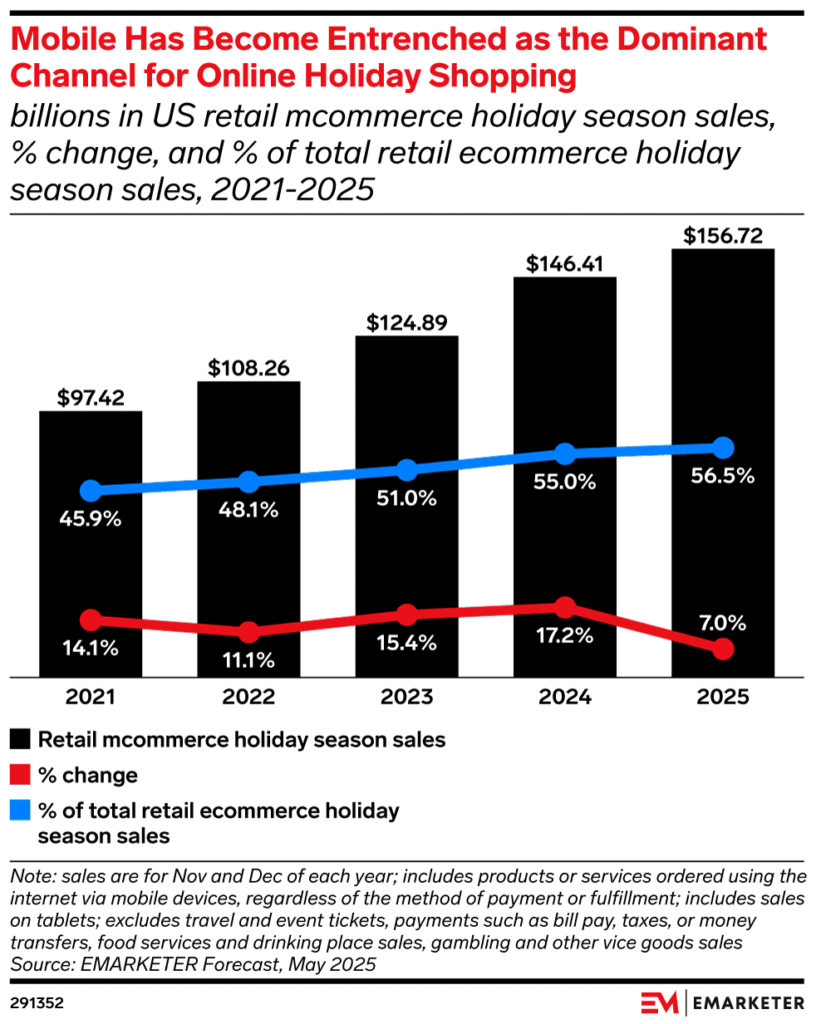
- Mobile is expected to drive ~56.5 % of all U.S. holiday e-commerce sales this year. BigCommerce
- Social commerce (buying via social platforms) is growing — younger consumers especially plan to purchase directly through social apps. BigCommerce
AI & Shopping Tech
- According to Adobe, AI-driven traffic to retail sites is forecast to rise ~515–520 % year-over-year for this holiday season. Adobe para Empresas+1
- Shoppers will increasingly use AI assistants, chatbots, recommendation engines and voice tools when researching or buying. Digital Commerce 360
Consumer expectations & behaviour
- Shoppers are more selective, budget-conscious, and expect seamless experience. Basis Technologies+1
- The hybrid journey (online-to-in-store, store-to-online) is more the norm than the exception. Salesforce
How Connected Commerce Technology Drives Holiday Success

Now let’s examine how connected commerce tech underpins these holiday trends and how brands can leverage them.
Unified customer data & personalization
Connected commerce requires breaking down silos: linking in-store, web, mobile and marketplace data so brands can recognise customers wherever they engage. SAP Emarsys+1
During the holidays, personalization matters more than ever: e.g., tailored gift guides, targeted offers based on past behaviour, predictive stocking for high-interest customers.
Omnichannel fulfilment & in-store digital integration
- Offering “buy online, pick up in-store (BOPIS)”, “reserve online, try in store”, “ship-from-store” are all part of connected commerce.
- The physical store becomes another touchpoint in the customer journey, not merely a showroom. Some brands embed digital screens, mobile apps, or interactive kiosks to enhance the experience. bdssolutions.com+1
For holiday logistics: inventory visibility across channels, reliable returns across channels, and flexible fulfilment options are differentiators.
Channel-agnostic purchase paths
In connected commerce, the path to purchase is not predetermined: web → mobile → in-store → pickup can happen in any order. Brands must support that flexibility. Raconteur+1
For example: A shopper might browse on social media, click to the brand’s store, buy via mobile, choose curbside pickup at the store—this all happens in one seamless journey.
Technology & ecosystem partners
Connected commerce often involves a broader ecosystem of partners: marketplaces, social platforms, payment providers, logistics & fulfillment services. According to Capgemini, brands need to set “where to play”, “how to win” and “how to scale” across category/channel strategy, data/technology and partner ecosystem. Capgemini
During the holiday season, where peak volumes and complex omnichannel operations come into play, having flexible tech platforms matters — decoupled front-ends (headless commerce), API integrations, real-time inventory, etc. Wikipedia+1
Holiday-Specific Technology Use-Cases & Strategies
Let’s break down actionable use-cases for connected commerce and e-commerce tech during the holiday season.
1. AI-powered shopping assistants & recommendations
- Chatbots and virtual assistants guide gift selection, recommend complementary items, and surface deals in real-time.
- AI can process large datasets (past purchases, browsing history, holiday trends) to personalise offers and reduce decision fatigue for the consumer.
As Adobe reports, AI traffic surges this season, so brands should ensure their AI-based pathways are optimized. Adobe para Empresas
Strategy tip: Integrate AI tools with your site/app so users get contextual recommendations (e.g., “Looking for a gift under $50? Here are top picks”) and seamlessly transition from discovery to checkout.
2. Mobile + Social Commerce Enablement
- Ensure that your mobile storefront is optimized (fast loading, intuitive UI) as over half of holiday e-commerce is expected via mobile. BigCommerce
- Leverage social commerce: enable in-app checkout or shoppable posts, especially for younger demographics.
Strategy tip: Map out your social-shop journey: content → social ad/post → mobile checkout → optional in-store pickup. Make sure the transition is frictionless.
3. Omnichannel fulfillment & flexible pickup/delivery
- Offer options like “Buy online, pick up in store (BOPIS)”, “Reserve online, try in store”, “Ship from store”, “Pick up curbside”.
- Real-time inventory visibility and centralized stock management enable smooth experiences.
Strategy tip: During the holiday surge, highlight delivery cut-off dates, ensure returns across channels are clearly communicated, and prepare store staff for pick-up and fulfilment roles.
4. Seamless in-store digital integration
- In-store kiosks, mobile-scan experiences, QR codes, augmented reality try-ons all strengthen the connected commerce loop.
- Use the physical store not just for purchase, but for digital engagement, social photo opportunities, click-and-collect zones.
Strategy tip: Create an in-store holiday experience tied to your online/promo campaigns — e.g., bring your online cart to store for faster pickup, or use a mobile app to unlock in-store exclusive offers.
5. Data-driven, agile campaigns
- Because the holiday window is compressed and competition is fierce, brands need to launch early, test offers, and iterate quickly. kase.com+1
- Use real-time data analytics to adjust messaging, inventory, fulfilment strategy.
Strategy tip: Sweep your analytics dashboards daily for product-level performance, channel conversion rates and fulfilment bottlenecks; be ready to pivot from one channel to another.
6. Secure, seamless payments & checkout experiences
- With frictionless payments (mobile wallets, one-click checkout) and secure transactions, you not only boost conversions but also build trust.
- Payment technology is a key part of connected commerce, especially when the customer journey spans multiple channels.
Strategy tip: Evaluate your checkout flow, reduce unnecessary steps, support mobile wallets/social checkout, clearly communicate shipping/return policies — especially critical during holiday time.
For Brands & Marketers: Roadmap for Holiday Preparation
Here is a suggested week-by-week plan (which can be adapted for your blog readers who are tech marketers or e-commerce business owners) to prepare for holiday season connected commerce success:
Weeks 1-2 (Now): Audit & strategy alignment
- Review customer journey across all channels (online, mobile, in-store) — are there silos?
- Ensure data infrastructure allows unified customer view and cross-channel tracking.
- Choose the tech stack or partnerships for omnichannel fulfilment and connected commerce (e.g., inventory sync, store pickup, mobile app integration).
- Establish holiday campaign calendar (early wave, mid-wave, last-minute).
- Define KPIs: conversion rate by channel, mobile traffic share, BOPIS fulfilment rate, average order value, returns rate.
Weeks 3-4: Build & integrate technology
- Optimize mobile storefront and site performance (critical for mobile-dominant shopping).
- Implement or refine AI-powered recommendation engines and chatbots for gift guidance.
- Enable social commerce pathways (shoppable posts, influencer tie-ins, live shopping events).
- Ensure in-store digital experiences are connected (mobile scanning, kiosk, pick-up signage, QR codes).
- Test checkout flows for speed, secure payments, cart abandonment.
Weeks 5-6: Campaign launch & early wave
- Launch early deals/promos (pre-Black Friday) to capture early-buyers and build momentum.
- Promote cross-channel fulfilment options and awareness of pickup and return flexibility.
- Monitor analytics strongly — track mobile vs desktop vs in-store behaviours.
- Adjust inventory strategy based on early uptake.
Weeks 7-8: Main holiday push
- Leverage personalized communications (email, mobile push, notifications) based on customer segments and behaviour.
- Ramp up social-live events, influencer tie-ins, interactive experiences (both online and in store).
- Ensure fulfilment operations are smooth: store staff prepped for pickups, returns, shipping surges.
- Monitor conversion drivers: which channels are outperforming? Where are the bottlenecks?
Week 9+: Last-minute & post-holiday strategy
- Highlight last-minute deals, expedited shipping cut-offs, gift-card promotions.
- Consider loyalty/retention strategies for holiday shoppers (post-season follow-up offers, returns ease, cross-sell).
- Analyse results: channel-specific performance, mobile share, BOPIS success, return rates, customer satisfaction.
- Prepare for post-holiday returns and the transition into off-season.
Challenges & Risks to Watch
While the opportunities are large, several risks specific to holiday and connected commerce must be addressed:
- Inventory & fulfilment strain: With multiple channels and pickups, stock visibility must be flawless.
- Returns & margins: The more flexible the fulfilment, the higher the complexity of returns — which can eat into margins.
- Technology failures / site performance: Mobile traffic surges, social traffic spikes, live-shopping events — outages or slow pages cost revenue.
- Data privacy & security: As data is shared across channels, maintaining trust and compliance is vital. Studies even show holiday periods see spikes in cyber-attacks on e-commerce platforms. arXiv
- Customer experience consistency: If the brand’s online experience, mobile app, store pickup, or social purchase journey aren’t seamless, customers will drop off.
- Budget constraints & economic uncertainty: Many consumers are cautious. Your technology should enable efficiency and personalization to stand out. Basis Technologies
Looking Ahead: Post-Holiday & Beyond
While this article focuses on the upcoming season, brands should view connected commerce as a long-term transformation, not a one-off holiday push.
- The data collected during the holiday window (customer behaviour, channel preferences, fulfilment patterns) is gold for 2026 planning.
- Technology investments (headless commerce, unified customer profiles, omnichannel fulfilment) built now will pay dividends in off-season and future peaks.
- The “connected commerce mindset” — treating every channel as part of a unified ecosystem — will become baseline rather than differentiation.
- For your blog readers: encouraging ongoing investment in flexible tech, data-driven personalization and seamless omnichannel journeys will keep them ahead.
Conclusion
The 2025 holiday season isn’t just about flashy deals or one-weekend sales anymore. It’s about how shoppers engage with brands across devices, platforms and physical locations. For e-commerce businesses, success will hinge not only on offering great products and discounts — but on building smooth, integrated, data-driven experiences.
Connected commerce is no longer a buzzword: it’s the operational backbone for holiday readiness. From AI-powered recommendations, mobile-first checkout, social commerce, to in-store pickup and unified inventory — the brands that nail these will be the ones that capture customer loyalty (and revenue) this season.
For your blog readers at bytenest.tech, this is the moment to think broadly: technology + customer journey + fulfilment = holiday success. By planning early, integrating smart tech, and measuring continuously, the holiday season becomes less about chaos and more about strategy.