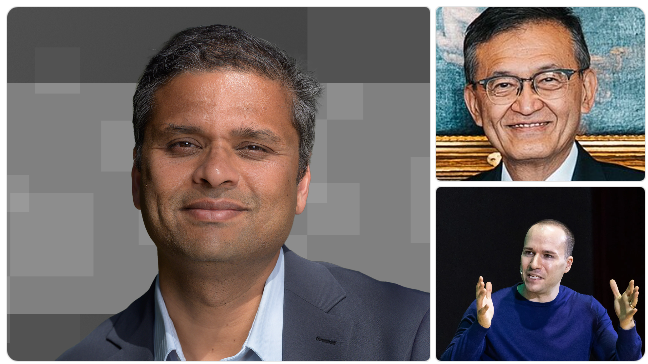
The rapidly evolving artificial intelligence (AI) landscape has entered a new chapter — one defined not just by models and algorithms but by the underlying compute infrastructure, the people who lead it, and the strategic decisions around hardware, software and organisational design. In a bold and telling move, Sachin Katti, formerly Chief Technology & AI Officer at Intel, has joined OpenAI to spearhead compute infrastructure for artificial general intelligence (AGI).
In this article, we’ll explore who Sachin Katti is, what his move means for both Intel and OpenAI, and why this signals a broader shift in how AI leadership and infrastructure are being structured for the next wave of innovation.
Who is Sachin Katti – and why his move matters
Early career and academic credentials
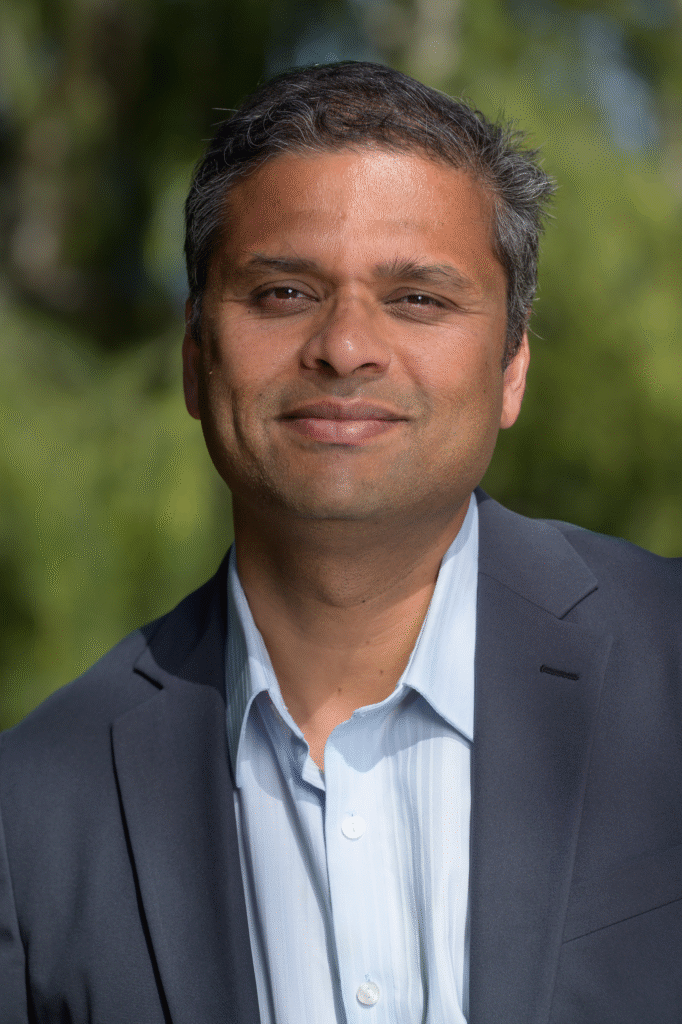
Sachin Katti emerges as a fascinating figure in the AI-hardware crossover domain. According to press coverage, Katti is an alumnus of IIT Bombay (India) and spent nearly fifteen years as a professor at Stanford University where his research focused on wireless communications, networking, edge computing and distributed systems. India Today+1
That blend of academic depth in networking and distributed computing, combined with exposure to emerging compute and AI workloads, positions him at a cross-roads of infrastructure and intelligence — the kind of profile that major labs are now seeking.
Role at Intel
Katti joined Intel around four years ago (circa late 2021) and initially led Intel’s Network and Edge group. Reuters+1 In April 2025, he was promoted to Chief Technology and AI Officer of Intel Corporation, with responsibilities covering AI strategy, product roadmap, Intel Labs, startup and developer ecosystem partnerships. crn.com+1
Importantly, his promotion was part of Intel CEO Lip‑Bu Tan’s leadership restructuring, reflecting the chipmaker’s recognition of the changing compute/AI landscape. businesschief.com+1
Move to OpenAI
On 10–11 November 2025, it was confirmed that Katti would depart Intel and join OpenAI, where he will focus on designing and building the compute infrastructure to power AGI research and scale applications. crn.com+2NDTV Profit+2
His own post on X (formerly Twitter) stated:
“Excited for the opportunity to work with @gdb, @sama and the @OpenAI team on building out the compute infrastructure for AGI! Very grateful for the tremendous opportunity and experience at Intel …” The Hans India
Why is this move more than just a “job change”? Because it reflects key inflection-points in the AI sector:
- Infrastructure-first thinking: At the frontier of AI today, models are only as good as the billions of dollars in compute, data centre scale, custom silicon, interconnect, and optimisation behind them. OpenAI’s hiring of a person whose background spans networking, edge, AI and chips signals they’re doubling down on compute leadership as a strategic axis.
- Hardware-software convergence: Historically AI labs and hardware makers operated in silos: labs consumed hardware, chip-vendors supplied it. The new paradigm sees cross-pollination: labs becoming hardware users and hardware specifiers, and hardware firms seeking AI-native leadership. Katti’s move will strengthen this convergence.
- Talent competition and signalling: The fact that Intel — a titan of semiconductors — is losing its top AI infrastructure exec to OpenAI underscores the competitive war for talent, especially at the intersection of AI + compute. It sends a message to the market that compute horsepower and its leadership matter as much as the algorithms.
- Strategic pivot moment for Intel: Intel’s loss of its AI chief is happening as CEO Lip-Bu Tan has had to take over AI and Advanced Technologies leadership directly — a sign that Intel realises the urgency of AI infrastructure but is also exposed in its talent and strategy. Reuters+1
In short: Katti’s move is a litmus test for how AI leadership and infrastructure are going to be re-architected over the next 3–5 years.
What’s at stake for Intel
The departure of such a senior AI-and-compute executive places Intel Corporation into a critical juncture. Here’s what’s happening and what to watch:
Leadership vacuum & strategic signal
Intel confirmed the move and stated that CEO Lip-Bu Tan will personally assume oversight of the AI & Advanced Technologies Groups. Reuters+1 While this might reassure stakeholders, it also highlights a challenge: losing a CSuite exec in such a fresh role (Katti had been in the CTAIO role only since April 2025) could be perceived as instability or lack of retention. Tom’s Hardware
Competitive pressure in AI hardware
Intel has been under pressure for several years to match rivals such as NVIDIA Corporation and Advanced Micro Devices, Inc. in server-scale AI accelerators and data-centre hardware. Reuters+1 Katti’s departure might be interpreted as a reflection of internal turbulence or of external attractiveness elsewhere (i.e., OpenAI).
Execution is now more vulnerable
With senior leadership transitions, the execution of Intel’s roadmap — covering AI chips, networking, edge, foundry services — must navigate a more complex environment. Intel emphasized that “AI remains one of Intel’s highest strategic priorities … focused on executing our technology and product roadmap across emerging AI workloads.” Financial Times+1
Opportunity to pivot faster
On the flip side, Intel’s re-structuring gives it a chance to pivot with urgency. The CEO personally taking charge may accelerate decisions, streamline layers, and commit to new hardware/AI partnerships. That means Intel could still re-emerge stronger, if it moves effectively.
In summary: Intel is at a turning point — the departure of Sachin Katti raises red flags, but it also signals a reset. How Intel executes from here could determine whether it remains a major player in AI infrastructure or falls further behind.
What it signals for OpenAI (and the broader AI ecosystem)
For OpenAI, the acquisition of a compute infrastructure expert like Sachin Katti is strategic on multiple levels.
Compute infrastructure as the “next frontier”
OpenAI President Greg Brockman’s comments make it clear: Katti will help design and build the compute infrastructure “which will power our AGI research and scale its applications to benefit everyone.” crn.com+1
OpenAI’s ambitions now go beyond deploying large language models — they include scaling custom hardware, data centres, interconnects, co-designing silicon plus systems. In that sense, Katti’s domain (networks, edge, distributed systems, AI) makes him a fit.
Hardware-software synergy and vertical integration
One of the biggest bottlenecks in frontier AI is not just algorithmic design but compute availability, energy efficiency, cooling, interconnect, chip design, data-centre architecture. By hiring someone who straddles academic research (Stanford) and hardware/network infrastructure (Intel), OpenAI is signalling it wants to integrate and optimise across the stack.
Talent signalling and competitive posture
In a media landscape rife with AI talent poaching, this move sends a message: OpenAI is serious about leadership in the hardware-AI intersection. It may trigger further competitive moves (by other labs, hardware vendors) in securing infrastructure talent.
Potential ripple-effects across the ecosystem
- Hardware vendors and foundry services may face intensified expectations from AI labs, forcing faster innovation cycles.
- Data centres and cloud vendors must ramp up customisation, as AI labs increasingly want end-to-end control rather than just “buy-GPUs.”
- Start-ups and academia might see increased focus (and funding) on compute-hardware-AI convergence rather than pure algorithmic research.
In essence: OpenAI is not just hiring a ‘CTO’; it is building the foundation for the next era of intelligence, and compute infrastructure is the analogue of “rails” or “tracks” for that train.
Implications & strategic take-aways for the tech/AI industry
Infrastructure matters more than ever
The importance of leadership in compute infrastructure cannot be overstated. As the stakes of AI scale (model size, dataset size, compute cost, energy footprint) grow, companies that can optimise across stack layers – hardware, networking, data centre architecture, algorithm-hardware co-design – will have advantages. Sachin Katti’s move emphasises this trend.
Leadership transitions can create windows of opportunity
For Intel, the departure might open a short-term vulnerability – but also a chance to rethink, restructure, and rebuild. For OpenAI, it provides a talent boost and signals a new infrastructure-centric strategy. Other firms (cloud providers, chipmakers, AI labs) should watch these transitions as both risk and opportunity: talent shifts can reshape competitive dynamics.
The hardware-software divide is shrinking
AI is no longer just about models and datasets; it’s a system problem — silicon, chips, cooling, interconnect, software stack, data pipeline, architecture. Leadership that understands all these layers will win. Katti’s background covers this breadth.
Strategic timing matters
The timing of Katti’s move is noteworthy: less than a year after his appointment as CTAIO at Intel (some reports say 6–7 months in) he moves to OpenAI. Tom’s Hardware+1 That suggests both the urgency of leadership in the compute-AI domain and the high level of competition in acquiring such talent.
Signals to investors and partners
Leadership changes at companies like Intel and OpenAI send signals to markets, ecosystem partners, investors. For Intel, this signals pressure and possibly increased risk; for OpenAI, it signals ambition and infrastructure build-out. Ecosystem players (software vendors, chip suppliers) may adjust strategies accordingly.
What to watch next – four key focal points
- OpenAI’s infrastructure roadmap – Will OpenAI publicise or hint at new compute facilities, partnerships, custom silicon, or data-centre build-outs? With Katti onboard, that roadmap may accelerate.
- Intel’s next moves – Who replaces Katti at Intel? How quickly can Intel fill the gap and continue its AI hardware product roadmap? Will they accelerate partnerships, restructure design pipelines?
- Compute-hardware partnerships – Expect a surge in collaborations: AI labs teaming with foundries/custom-silicon, edge/hybrid compute, networking firms aligning with AI labs.
- Talent flows and ecosystem shifts – The Katti move may prompt other senior executives to shift roles (hardware to AI labs, labs to infrastructure leads). Tracking senior hires may give clues to where the next compute-AI battleground lies.
Conclusion
The move of Sachin Katti from Intel to OpenAI is far more than a personnel change; it is emblematic of a strategic inflection point in the AI industry. As compute infrastructure becomes the fulcrum of next-generation AI — not just algorithms alone — leadership with a dual grasp of hardware and AI becomes a scarce and valuable asset.
For Intel, the departure presents both challenge and impetus: restructure rapidly, re-engage compute-AI strategy, and retain talent. For OpenAI, it signals a hardened focus on infrastructure as a competitive edge — an acknowledgement that building AGI at scale demands not just brilliant models but world-class hardware, networking, data-centre design and compute orchestration.
For the broader tech ecosystem — hardware vendors, cloud providers, AI start-ups, chip foundries — this moment serves as a wake-up call: compute leadership is now inseparable from AI innovation. The rails of AI’s future are being laid in silicon, networking, edge and large-scale infrastructure — and talent like Sachin Katti are the track-builders.
As the dust settles on this leadership shuffle, the ripples will become visible: new compute architectures, infrastructure investments, hardware-AI co-design, and a reshaped ecosystem where the boundaries between lab and factory, research and silicon, software and hardware blur.In a sense, we are entering a new era of AI leadership — one where the power behind models resides less in the code alone and more in the compute, systems and people orchestrating at scale. Sachin Katti’s move is a signal flare: prepare for an infrastructure-driven chapter in AI.