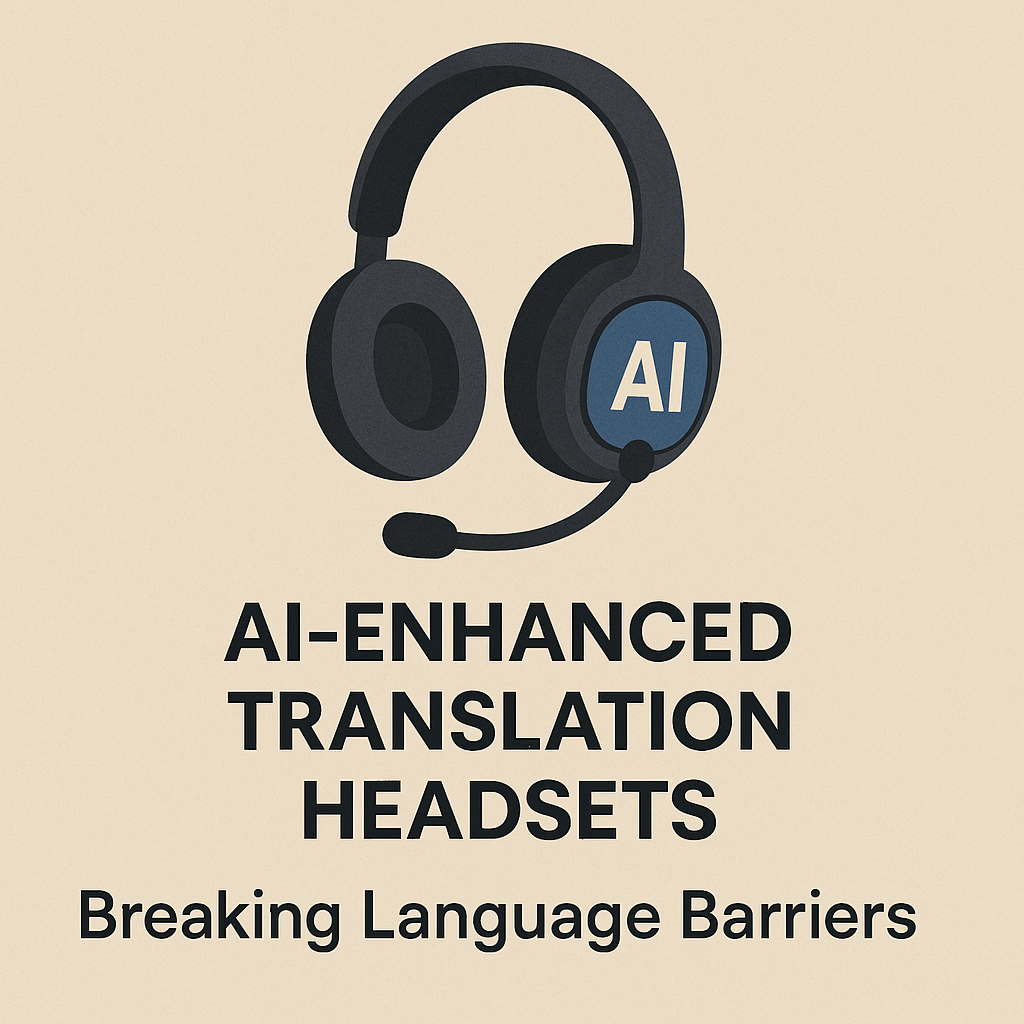
Language barriers have always been a major challenge in global communication. Whether in international business meetings, travel, education, or diplomacy, the inability to understand each other in real time has limited collaboration and efficiency. Now, AI-enhanced simultaneous translation headsets are changing the game. These cutting-edge devices combine artificial intelligence, speech recognition, and natural language processing to offer instant, highly accurate translation directly in the user’s ear—making multilingual interaction seamless.
In this article, we’ll explore how these devices work, their benefits, the latest innovations, challenges, and where this technology is headed in the near future.
How AI-Enhanced Translation Headsets Work
At the core of these devices is a combination of speech-to-text, machine translation, and text-to-speech technologies. Here’s a simplified breakdown of the process:
- Speech Recognition – The headset’s microphones capture spoken words in the source language.
- Natural Language Processing (NLP) – AI models process the speech, identifying grammar, context, idioms, and tone.
- Machine Translation – Advanced AI engines translate the content into the target language in milliseconds.
- Text-to-Speech Output – The translated content is spoken in the listener’s ear in a natural-sounding voice.
Modern AI headsets leverage neural machine translation (NMT), which learns from millions of multilingual datasets, constantly improving accuracy.
Key Features of Modern AI Translation Headsets
- Real-Time Translation – Responses are delivered within a fraction of a second, allowing smooth conversations.
- High Accuracy – Current models can achieve over 95% accuracy in common languages.
- Context Awareness – AI understands idioms, slang, and professional jargon, adapting to specific scenarios.
- Multi-Language Support – Some headsets support 40+ languages and hundreds of dialects.
- Noise Cancellation – Built-in technology ensures clear audio even in loud environments.
- Offline Mode – Some devices allow translation without internet, useful for travelers in remote areas.
Applications in Different Sectors
1. International Business
Companies can now hold meetings without hiring human interpreters, cutting costs and improving efficiency. Negotiations, conferences, and customer support become more inclusive and immediate.
2. Travel and Tourism
Travelers can communicate with locals without learning the language, improving cultural exchange and safety.
3. Education
Foreign students can follow lectures in their own language in real time, making education more accessible.
4. Healthcare
Doctors and patients speaking different languages can communicate instantly, improving diagnosis and treatment.
5. Diplomatic and Government Use
Diplomats can engage in complex negotiations without waiting for human interpretation delays.
Leading AI Translation Headset Brands in 2025
Several companies are pioneering this technology:
- Timekettle WT2 Edge – Offers bi-directional simultaneous translation in over 40 languages.
- Google Pixel Buds Pro (with AI upgrade) – Integrated with Google Translate for real-time in-ear interpretation.
- Vasco Translator M3 – Known for strong offline translation capabilities.
- Langogo Summit – Combines translation with AI-powered note-taking.
Benefits Over Traditional Translation Methods
- Speed – No lag between speech and translation.
- Privacy – Conversations stay between the people involved.
- Cost-Effective – Eliminates the need for professional interpreters in many situations.
- Portability – Wearable and lightweight, unlike large conference translation systems.
- Scalability – Can be deployed to entire teams or classrooms.
Challenges and Limitations
While the technology is impressive, it’s not flawless:
- Accent and Dialect Handling – Strong regional accents can reduce accuracy.
- Idiomatic Expressions – Some phrases lose meaning when directly translated.
- Dependence on Internet – Real-time accuracy often relies on high-speed connectivity.
- Data Privacy Concerns – Conversations may pass through cloud servers for processing.
The Future of AI Translation Headsets
In the next few years, we can expect:
- Full Contextual Understanding – AI will improve at interpreting sarcasm, humor, and cultural nuance.
- Augmented Reality Integration – Visual cues and translations displayed in AR glasses.
- Seamless Multilingual Group Conversations – AI managing real-time translations for multiple languages simultaneously.
- Voice Cloning for Personalized Output – The translated voice could match the speaker’s original tone and style.
With advancements in generative AI and edge computing, offline performance will become as strong as online, making these devices even more reliable in any setting.
Conclusion
AI-enhanced simultaneous translation headsets are more than just a gadget—they are a revolution in human communication. By combining advanced AI algorithms with wearable technology, they are removing one of humanity’s oldest obstacles: the language barrier. From business meetings to casual travel, the ability to understand and be understood in any language is quickly becoming a reality.