Imagine arriving at the airport, walking through check-in, security, immigration, and boarding without showing a physical passport or ID — just a face scan or a tap on your phone. That’s not science fiction anymore: digital identity and “smarter airports” are rapidly moving from concept to reality. For global travellers and the aviation industry alike, the shift promises faster, more seamless journeys and improved security.
In this deep-dive article we’ll explore what digital identity means in the airport context, how airports and regulators are implementing it, the benefits and risks, key players and standards, and what travellers should expect in the near future.
What is Digital Identity in the Airport Context?
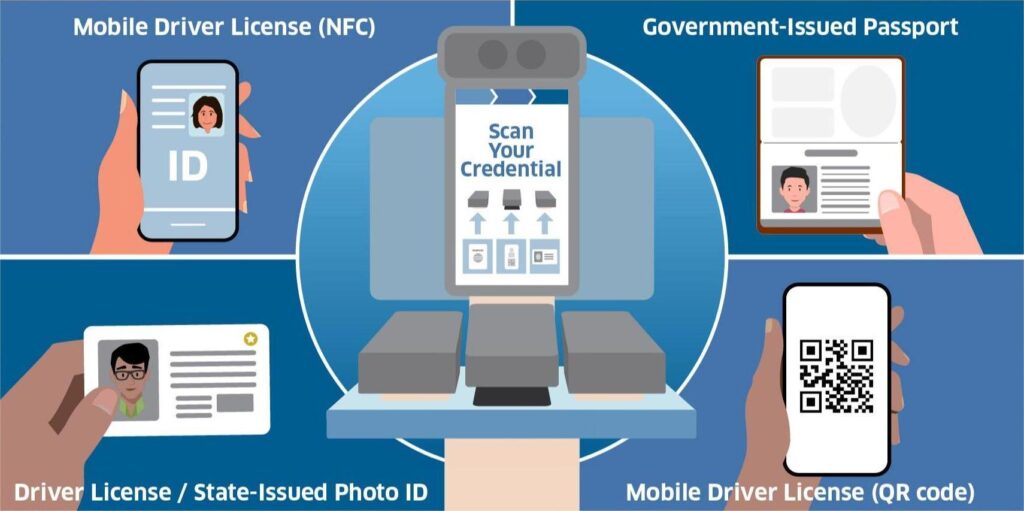
“Digital identity” broadly refers to the electronic representation of a person’s identity — credentials, biometric templates, authorisations — which can be verified digitally rather than relying solely on physical documents. In airports, this may include:
- Digital travel credentials (digital versions of passports or boarding passes)
- Biometric identifiers (face, fingerprint, iris) tied to identity or travel credentials
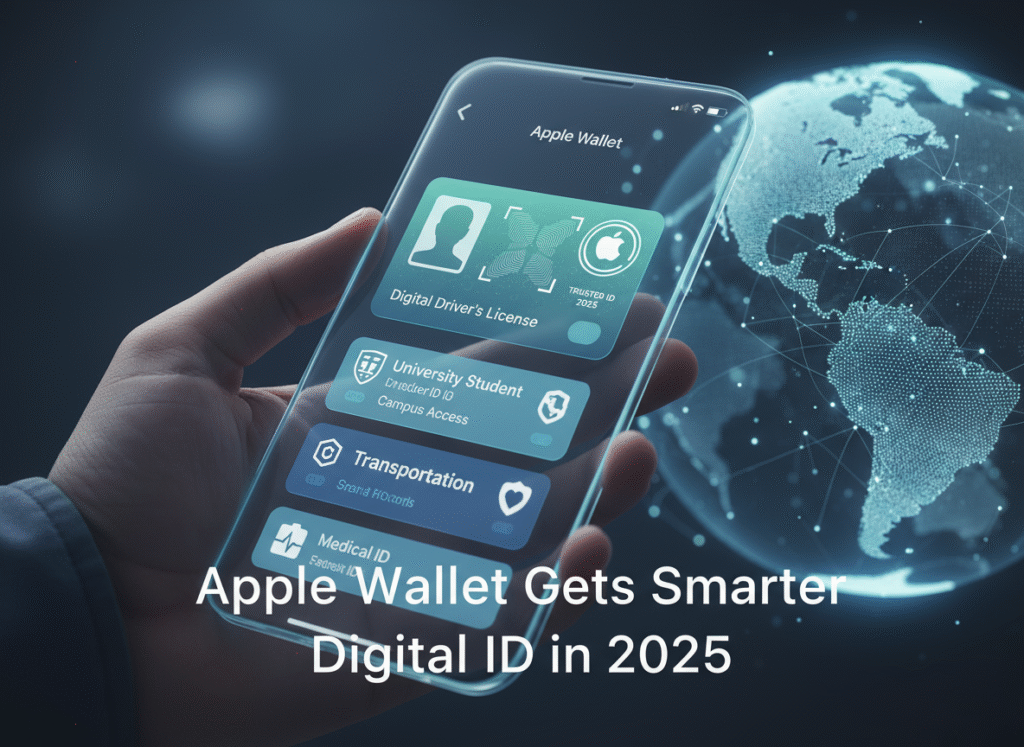
- Mobile wallet-based IDs (stored in apps like Apple Wallet / Google Wallet)
- Pre-verified admissibility and travel authorisations before arrival at the airport
For example, SITA’s Digital Travel ID platform allows verification of travellers before they travel and supports seamless identity exchange between traveller, airline, airport and government. sita.aero+1 Similarly, the International Air Transport Association (IATA) defines its “One ID” concept as digitising admissibility and enabling contactless travel at multiple touchpoints. IATA+1
In short: digital ID + biometrics + automation = smarter airport experience.
Why Airports Are Moving to Digital ID & Smart Systems
Several industry forces are driving this transformation:
1. Passenger Growth & Infrastructure Constraints
Passenger numbers are projected to double by 2041, and building new airports or massively expanding existing terminals is increasingly difficult (land, regulation, cost). IATA+1 Digital identity and automation help airports boost throughput using existing infrastructure.
2. Efficiency Gains & Cost Savings
Manual document checks, physical queues, staff-intensive processes are costly and slow. Smart systems (self-service kiosks, biometric gates) reduce labour, cut time, and free up space. For example, FastID touts that airports can “free up valuable staff and space” by eliminating queues. fastid.com+1
3. Passenger Experience & Competitive Advantage
Airports and airlines compete on travel experience. Reducing friction (checking bags, going through security) and offering premium service becomes a differentiator. According to “Tech Trends in Travel 2025”, digital identity solutions are becoming the norm for faster and smoother passenger journeys. Travel and Tour World
4. Security & Regulatory Drivers
National security, fraud prevention and data privacy are major concerns. Biometric verification tied to digital identity helps strengthen identity assurance. For example, TSA in the U.S. is expanding digital ID and facial-recognition systems at hundreds of airports. mobileidworld.com
How Digital ID & Smart Airports Work: Key Components
Here’s a breakdown of the major components and how they fit together in an airport environment.
Pre-Travel Credentialing
Before reaching the airport, a traveller may:
- Provide identity and travel documents digitally
- Have a digital wallet store a verifiable credential (e.g., ePassport copy, visa, company ID, boarding pass)
- Consent to their biometric image being captured and paired with credentials
In the IATA “fully digital travel experience” proof-of-concept, two travellers used digital wallets containing their ePassport, boarding pass, visa, and biometric image to complete all airport touchpoints. IATA
Biometric Checkpoints & Contactless Travel
At the airport, instead of presenting documents at each checkpoint:
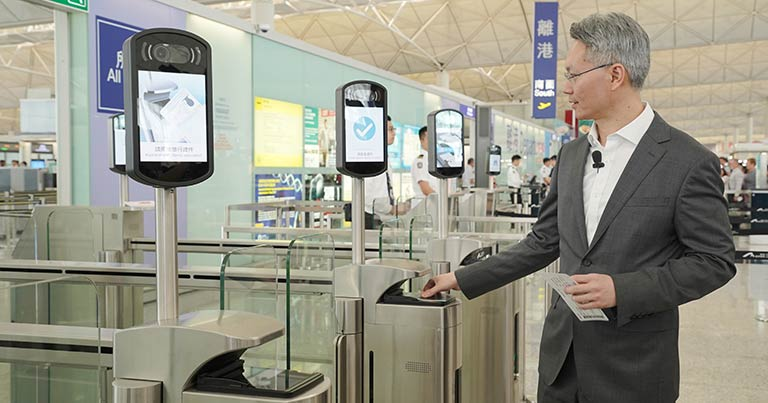
- Facial recognition or other biometric is used to match the traveller to their stored identity
- Self-service kiosks, e-gates, boarding gates operate without a physical ID or paper boarding pass
- The traveller simply walks through or taps the device
In Abu Dhabi, Abu Dhabi Airports and the Federal Authority for Identity, Citizenship, Customs & Port Security launched a biometric smart travel project where departing passengers are authenticated automatically — no physical documents required. identityweek.net
Mobile Wallets & On-Device Digital IDs
Mobile devices become the platform for storing digital identity credentials. For example, travellers might store their digital driver’s licence, passport credentials, or digital ID in Apple/Google Wallets, which interact with airport systems. The US Transportation Security Administration (TSA) has plans for digital ID acceptance across many airports. mobileidworld.com
Interoperability, Standards & Privacy
Because airports, airlines, governments, and identity providers all link together, interoperability and standards are crucial. IATA’s One ID and SITA’s Digital Travel Ecosystem emphasise: open, interoperable frameworks and privacy by design. IATA+1
Real-World Implementations & Examples
Here are some notable real-world examples of digital ID and smart airports in action:
● Digi Yatra (India)
Digi Yatra is an Indian initiative (by the Ministry of Civil Aviation) enabling facial-recognition-based verification at check-in, security, boarding in participating airports. Wikipedia
● Abu Dhabi Biometric Smart Travel Project
As mentioned above, Abu Dhabi Airports launched a project where no physical documents are needed: biometric authentication is used at multiple touchpoints. identityweek.net
● TSA Digital ID / Biometric Expansion (USA)
The TSA is expanding mobile ID and facial recognition systems across more than 250 U.S. airports, allowing mobile driver’s licences and state IDs in digital wallets, and deploying biometric face-scan systems at 430+ airports. mobileidworld.com
● Industry and Vendor Partnerships
- SITA’s Digital Travel ID is used by 100+ airports and border crossings, and trusted by governments in 70+ countries. sita.aero
- NEC’s Digital ID solution, deployed in India and in major international airports like Frankfurt and Narita, integrates biometric identity for airline/airport processing. NEC Global
- Thales Group’s biometric deployments with airports under the Adani Airport Holdings Limited in India illustrate expansion of digital ID and biometric tools. Biometric Update
Benefits of Digital ID & Smarter Airports
From the perspective of different stakeholders — passengers, airports, airlines, governments — the benefits are compelling.
For Passengers
- Faster, smoother journeys: fewer document hand-offs, less queue time, less stress.
- Personal control: in many models, travellers control what credentials they share and when. For example, IATA states that passengers “remain in control of their personal data and are provided with informed consent before sharing their credentials.” IATA
- Reduced physical baggage: fewer paperwork, fewer physical items to carry.
- Enhanced convenience: new services (mobile apps, lounge access, priority lanes) become easier when identity is verified seamlessly.
For Airports & Airlines
- Improved throughput: more passengers processed in the same footprint; better utilisation of infrastructure.
- Operational cost reduction: automation reduces staffing needs, manual checks, error rates.
- Flexibility & agility: Data-driven processes allow airports to respond to disruptions quicker (e.g., flight delays, gate changes).
- Additional revenue opportunities: premium services (fast lanes, lounges) enabled via digital identity authorship (e.g., loyalty plus biometric).
For Governments & Security Agencies
- Enhanced identity assurance: stronger verification of travellers, reducing fraud and security risks.
- Streamlined border processing: faster immigration and customs checks, particularly for trusted travellers.
- Better data for smart planning: digital systems generate analytics, enabling smarter resource deployment and incident management.
- Global interoperability: digital identities can enable harmonised systems across countries, simplifying travel.
Challenges, Risks & Considerations
As compelling as digital identity and smarter airports are, the implementation is non-trivial and carries risks. Key issues include:
Data Privacy & Trust
Passengers are rightly concerned about how their biometric data, travel history, and personal credentials are stored, shared and protected. Trust and transparency are essential.
Interoperability & Standards
Different airports, airlines, countries adopt different systems. Ensuring harmonised standards (for digital credentials, wallets, identity verification) is critical. The literature shows that adoption of Industry 4.0 technologies in airports varies widely and is still “slowly gaining traction.” arXiv+1
Cybersecurity & Resilience
With digital systems comes risk of hacking, data breaches, system failures. Airports must ensure robustness and backup paths (e.g., manual checks).
Inclusion & Accessibility
Not every traveller will (or can) use smartphones, wallets, biometrics; there must be fallback paths.
Legal & Regulatory Frameworks
Digital ID at airports crosses domains: aviation regulation, data protection law, identity law, border control. Countries must align legislation and governance.
Implementation Costs & Legacy Infrastructure
Upgrading airports to support biometric gates, digital wallets, interoperable systems is capital-intensive. Many airports operate legacy systems that are not built for digital identity.
Human Acceptance & Experience
Even with technology in place, acceptance by staff and travellers (including training, comfort) is important. Some user forums still report issues with digital ID machines in airports. Reddit+1
What Travellers Should Know & Expect
If you’re a traveller, here are practical take-aways about digital ID and smarter airports.
- Enable mobile/digital ID: Where available, consider storing an official ID or travel credential in your mobile wallet if supported by your jurisdiction and airline.
- Travelling early: Even though digital ID systems exist, always carry your physical passport/ID as backup — some checkpoints may not yet support the digital system fully.
- Biometric opt-in: Some programs require you to enrol ahead of time (e.g., upload photo, link biometrics, consent). Check your airline/airport.
- Check airport readiness: Not all airports are fully enabled yet. For example, while major hubs may support facial scanning, smaller airports may still rely on traditional processes.
- Privacy awareness: Read the consent/usage terms for digital ID programmes. Understand what data is collected and how it’s used/shared.
- Prepare for change: Smart airports may introduce different lanes (touchless, biometric pre-check). Use signage, app notifications, airport websites to identify the correct lane.
- Be flexible: Technology systems may jam or fall back to manual. Plan for some buffer time.
What’s Next: The Future of Digital Identity in Airports
The transformation is ongoing, and several trends are pointing the way:
1. End-to-End Digital Travel Journeys
The IATA PoC demonstrated a fully digital travel experience in October 2024: travellers completing booking, digital wallet storage, biometric check-in, boarding without physical documents. IATA We can expect more airports/airlines scaling similar models, moving toward “one identity → one token → journey”.
2. Wider Mobile-Wallet Integration & mDLs
Mobile driver’s licences (mDLs) and state-issued digital IDs are gaining traction. The TSA’s expansion plan in the U.S. aims for digital IDs to work at hundreds of airports. mobileidworld.com
3. Smarter Analytics, AI & Digital Twins in Airport Operations
Beyond identity, airports are deploying AI and real-time data management to optimise flows, anticipate disruptions, and personalise passenger experience. For example, Munich Airport’s AIRHART platform is consolidating real-time data for decision-making. Smarter Airports Moreover, academic research is exploring digital twin frameworks for pedestrian flows in airports. arXiv
4. Wider Global Adoption & Standards Harmonisation
As more countries adopt digital identity and biometric travel credentials, there is increasing push for interoperable standards (e.g., through ICAO, IATA, W3C for verifiable credentials). More cross-border recognition of digital travel credentials can simplify international travel.
5. Sustainability & Contactless Travel
The push for sustainability means reducing paper, less staffing, more efficient operations. Contactless and digital systems help airports cut carbon footprint per passenger processed. SITA’s “Launchpad” initiative links digital identity with sustainability. Biometric Update
Potential Roadblocks & What to Watch
While the future looks promising, there are a few key potential roadblocks:
- Data-sharing trust: Will travellers trust sharing diaries, biometrics, travel data across airlines, airports, governments?
- Privacy regulation mismatch: GDPR, local data-protection laws, and aviation regulations must align.
- Technology fragmentation: Different vendors, different standards can lead to siloed systems rather than unified travel identity.
- User adoption: If few travellers opt-in or still require manual backups, the gains may remain limited.
- Equity and access: Ensuring non-smart-phone users, older travellers, or those with disabilities are not left out.
- Security incidents or failures: A major breach could erode trust and slow adoption.
Conclusion
Digital identity and smarter airports are no longer the distant “future” — they are being rolled out globally, transforming how we travel. The combination of mobile wallets, biometrics, interoperable travel credentials, and data-driven airport operations promises to deliver faster, more secure, and more seamless journeys for passengers, while helping airports and airlines handle growth and improve efficiency.
However, to fully realise the potential, industry stakeholders must address interoperability, privacy, trust, accessibility, and regulatory alignment. For travellers, the era of reaching the gate with just your phone and a glance may soon become mainstream. As the technology matures and global roll-out gathers pace, airports will become not just transport hubs, but smart gateways — anchored in digital identity.Are you preparing for a trip soon? Consider checking if your departure or arrival airport supports digital ID or biometric lanes — and keep your physical documents handy just in case.