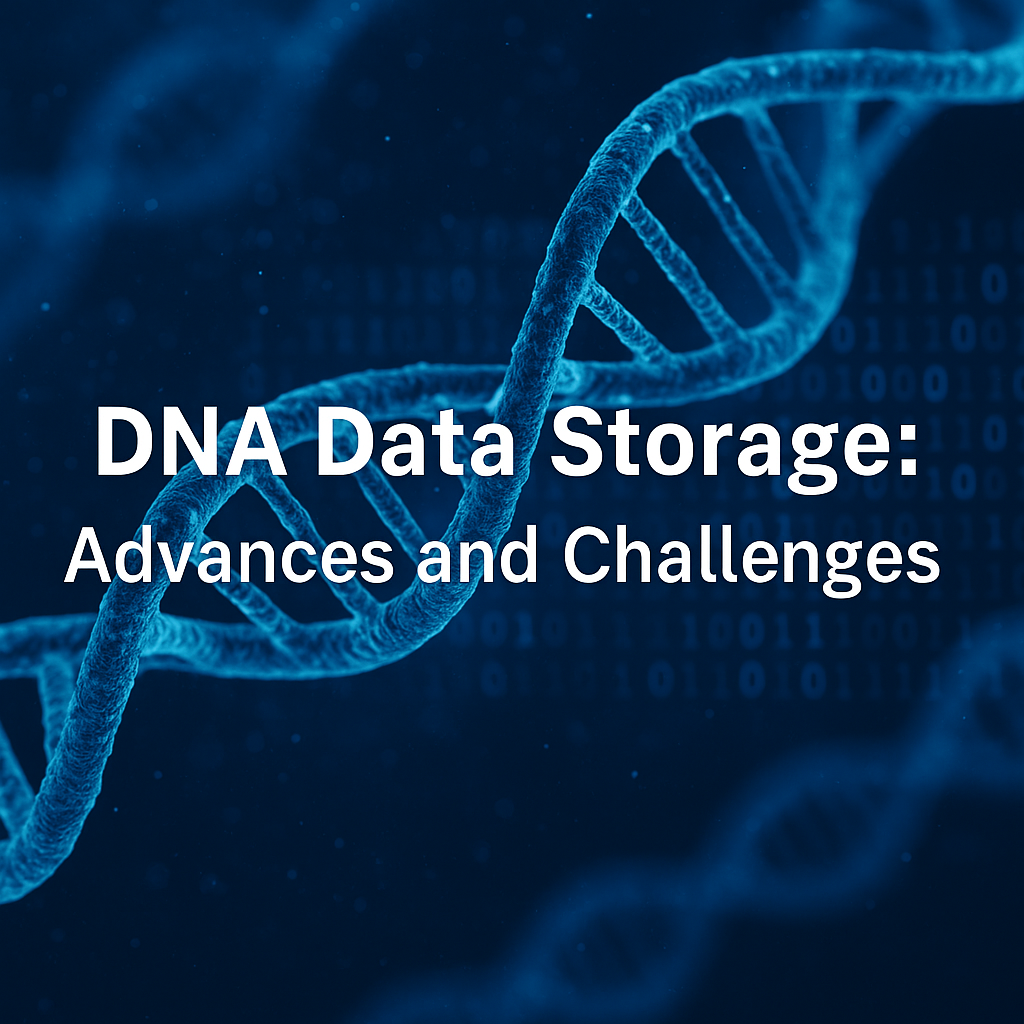
In an era where global data creation is skyrocketing—projected to surpass 180 zettabytes by 2025—our traditional data storage systems are straining under the weight. Hard drives degrade, servers consume massive energy, and even cutting-edge storage solutions like solid-state drives face limitations in lifespan and scalability. Enter DNA data storage—a revolutionary approach that leverages the molecule of life itself to store digital information.
DNA has been nature’s storage medium for billions of years, encoding the genetic instructions for all known living organisms. Now, scientists are learning to repurpose it as the ultimate data vault: incredibly dense, ultra-durable, and capable of lasting for centuries without degradation. But while the concept is groundbreaking, the road to widespread adoption is filled with both technical and economic challenges.
Why DNA for Data Storage?
DNA is an astonishingly efficient storage medium. Consider this: all of humanity’s data could, in theory, fit inside a shoebox of DNA. This efficiency comes from its incredible density—about 215 petabytes (215 million gigabytes) per gram of DNA.
Some key advantages include:
- Unmatched Storage Density
DNA can store vast amounts of data in an incredibly small volume, dwarfing the capacity of magnetic or optical storage media. - Longevity
Unlike hard drives (which last 5–10 years) or magnetic tapes (about 30 years), DNA—when stored in cold, dry, dark conditions—can last for thousands of years. - Minimal Energy Use for Storage
Once encoded and preserved, DNA doesn’t require continuous energy input for maintenance, unlike data centers that consume gigawatts. - Future-Proof Format
As long as there is life, we’ll have the technology to read DNA. Even if today’s file formats become obsolete, DNA sequencing will likely remain a foundational tool in biotechnology.
How DNA Data Storage Works
The process of storing data in DNA involves three main steps: encoding, synthesis, and sequencing.
- Encoding the Data
Digital data is composed of bits (0s and 1s). In DNA, information is stored using four nucleotide bases: adenine (A), cytosine (C), guanine (G), and thymine (T). Encoding algorithms map binary data into sequences of these bases. - Synthesizing the DNA
Once the digital-to-DNA code is ready, synthetic biology techniques are used to physically create strands of DNA with the desired sequences. This step currently represents one of the largest cost bottlenecks. - Reading the Data
To retrieve the stored information, scientists use DNA sequencing methods to determine the order of nucleotides. Decoding algorithms then translate these sequences back into binary data.
Recent Advances in DNA Data Storage
The past decade has seen remarkable progress, bringing DNA storage from a lab curiosity to a serious contender for future data centers.
1. Higher Encoding Efficiency
New algorithms now reduce redundancy while protecting against errors. Error-correcting codes, inspired by those in telecommunications, ensure data integrity even if some DNA strands degrade.
2. Automation and Miniaturization
Companies like Microsoft and the University of Washington have built automated DNA storage systems, integrating encoding, synthesis, and sequencing into a single, benchtop-sized device.
3. Faster Synthesis Techniques
Traditional DNA synthesis is slow and costly, but recent methods—such as enzymatic synthesis—are speeding up the process while reducing expenses.
4. Stable Encapsulation
Researchers have developed silica and polymer encapsulation methods to protect DNA from environmental damage, further enhancing its long-term stability.
Challenges Holding Back Adoption
Despite these leaps forward, several major hurdles stand between DNA storage and widespread commercialization.
1. High Costs
Today, synthesizing DNA at large scales is prohibitively expensive. Encoding a few megabytes of data can cost thousands of dollars.
2. Slow Read/Write Speeds
Unlike magnetic disks or SSDs, DNA writing and reading speeds are measured in hours or even days. While perfect for long-term archiving, it’s unsuitable for applications requiring instant access.
3. Error Rates
Although error-correcting codes help, synthesis and sequencing still introduce substitutions, insertions, and deletions that must be mitigated.
4. Lack of Standards
Currently, there is no universal standard for DNA data encoding, making cross-platform compatibility a future concern.
Potential Applications
Given its strengths and weaknesses, DNA storage is best suited for cold storage—archiving data that doesn’t need to be accessed frequently.
- National Archives: Safeguarding historical records for centuries.
- Scientific Data: Preserving raw experimental datasets in genomics, astronomy, or particle physics.
- Cultural Heritage: Storing digitized art, literature, and music for future generations.
- Disaster-Proof Backups: Resistant to electromagnetic pulses or natural disasters when stored securely.
The Road Ahead
To make DNA data storage commercially viable, researchers are focusing on:
- Reducing synthesis and sequencing costs through advanced chemistry and enzymatic approaches.
- Improving automation for hands-off operation.
- Creating standardized encoding formats for interoperability.
- Integrating with existing archival systems to act as a complement, not a replacement.
The DNA Data Storage Alliance, a consortium of tech and biotech companies, is already working toward these goals, predicting that viable market solutions could emerge within the next decade.
Ethical and Security Considerations
With great storage power comes new questions. For instance:
- Biosecurity Risks: Could malicious actors hide harmful genetic code within DNA data files?
- Privacy: If DNA storage becomes mainstream, secure encryption will be crucial to prevent data leaks.
- Environmental Impact: While DNA itself is eco-friendly, the chemicals used in synthesis must be managed responsibly.
Conclusion
DNA data storage isn’t just science fiction—it’s rapidly becoming a tangible part of our technological future. The ability to store massive amounts of information in a microscopic, durable, and eco-friendly medium could transform archival storage for centuries to come.However, costs, speed, and error rates remain the main roadblocks. As research advances and economies of scale take hold, we may soon see DNA storage moving from specialized labs into mainstream data centers. The next time you think of DNA, it might not just be about life—it might be about your digital life.