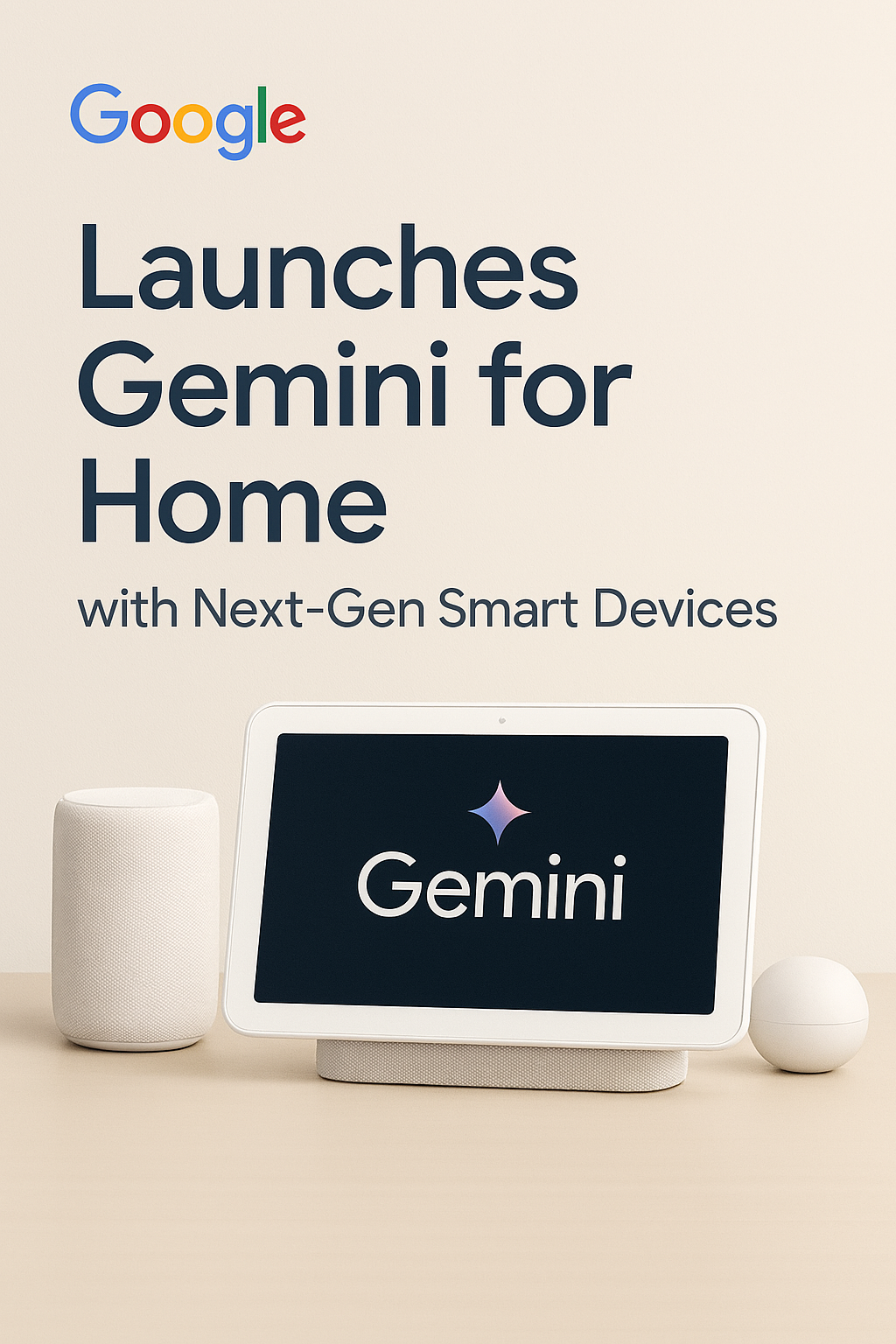
The future of the smart home just got a major upgrade. Google today announced Gemini for Home, a new AI-powered assistant designed specifically for the home, and released a fresh lineup of smart devices — including new smart cameras, doorbells, and a smart speaker built around Gemini. The launch marks a key shift from the venerable Google Assistant toward a more context-aware, conversational, capable home assistant experience.
In this article we’ll dive into what Gemini for Home is, how it changes the smart home landscape, what new hardware is arriving, how it works with your existing devices, and what this means for you and your connected home setup.
What is Gemini for Home?
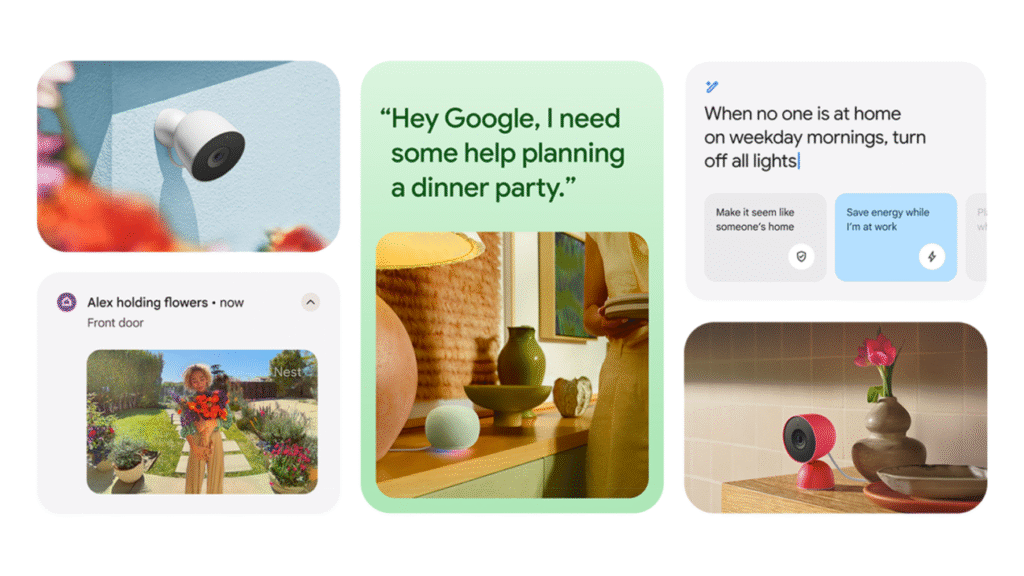
At its core, Gemini for Home is Google’s next-generation voice assistant for the home — powered by the same advanced models behind the broader Gemini brand — but adapted specifically for in-home, voice-and-device interactions.
Here are the key elements that distinguish it:
- Deeper reasoning, inference, and search capabilities: Google says Gemini for Home uses the “advanced reasoning, inference and search capabilities of our most capable models”, making it more powerful and easier to use than the current Google Assistant.
- More natural language and context-awareness: Instead of rigid, command-based interactions (“Turn lights off”), you can ask layered or nuanced requests — for example, “Dim the lights everywhere except my bedroom, and start playing the playlist we listened to last Friday.”
- “Gemini Live” conversational mode: A feature that allows follow-up interaction without re-issuing the wake word each time. For instance, after saying “Hey Google, let’s chat”, you can continue a conversation around cooking, troubleshooting appliances, or brainstorming ideas.
- Deep integration with smart home devices: Not just speaking to a speaker, but coordinating across lights, thermostats, speakers, cameras, and more with chained commands and device context.
- Phased rollout and tiers: Gemini for Home will begin arriving in early access in October 2025, and will eventually fully replace Google Assistant on compatible devices. Google has said there will be both free and paid tiers.
In short: if Google Assistant was the original voice helper, Gemini for Home is the smarter, more capable, home-centric successor.
Why it Matters — The Smart Home Gets Smarter
The smart home ecosystem has grown rapidly, but one of the key limits has been the assistant: rigid commands, limited contextual understanding, device silos, and frequent voice frustration. With Gemini for Home, Google is poised to shift that.
Smarter control
When your assistant can understand and execute complex requests (“Turn everything off except the living room; set the thermostat to 21 °C; pause the music and lock the doors”), your home genuinely becomes more intuitive.
The ability to issue multiple commands in one utterance and have context-carrying back-and-forth conversation is a big leap.
Better device intelligence
The launch isn’t just about voice — the hardware is upgraded too. For example: the new cameras can interpret video/image data, search through clips (“Did my kid leave the bike in the driveway?”) and surface what matters.
That richer data helps the assistant act more proactively and intelligently.
Ecosystem reinforcement
By tying advanced AI to hardware plus services, Google is positioning the home as a core platform for Gemini. It blurs the line between smartphone assistant, home assistant, and device intelligence. Google is making its Home APIs support Gemini features for developers.
Competitive implications
With this move, Google is clearly trying to keep up (or leap ahead) of rivals like Amazon (Alexa) and Apple (Siri/HomePod). The home assistant wars are heating up.
The Hardware: What’s New
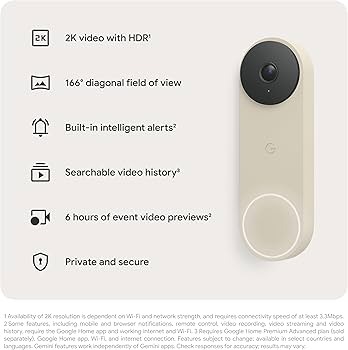
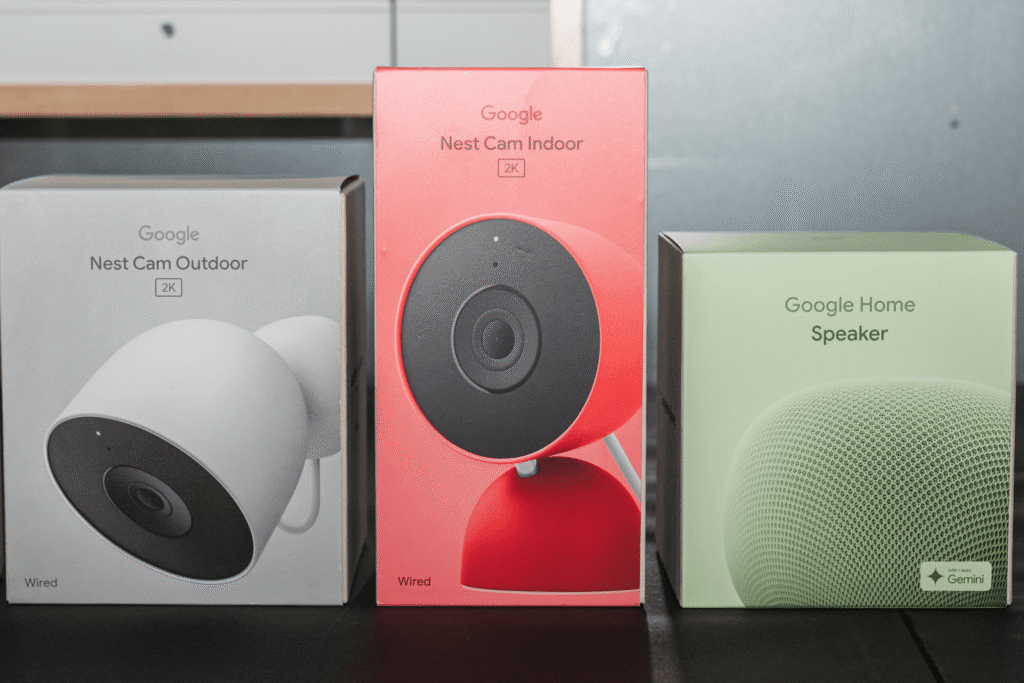
Google didn’t just announce an assistant — it announced devices built for it. Here’s a breakdown of the key new hardware revealed:
New Nest Cams & Doorbell
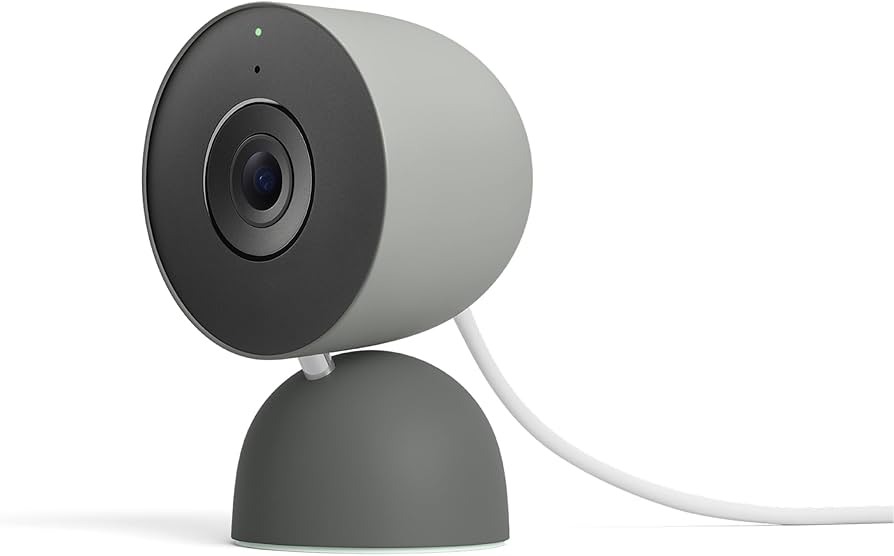
- The new Nest Cam Indoor (3rd gen) and Cam Outdoor (2nd gen) as well as Nest Doorbell (3rd gen) are built to deliver the rich visual data that Gemini’s multimodal models can use.
- Features include 2K HDR video, wider and taller fields of view (for example the doorbell offering 166° diagonal view) and improved low-light/outdoor durability (IP65 rating for outdoor models) to handle real home scenarios.
- These upgrades mean better image quality and better AI interpretation: detecting not just motion or person, but context (“Is someone leaving a package?” vs “just movement”).
New Smart Speaker
- Google teased a new Google Home Speaker “built for Gemini” — a round speaker with expressive base-ring lighting, 360° audio, and support for stereo/TV pairing.
- The speaker will come in multiple colors (Porcelain, Hazel, Berry, Jade) and is expected to launch in spring 2026.
- While the announcement may be teaser-ish, it signals Google is serious about making hardware that leverages Gemini’s capabilities rather than simply adapting old devices.
Compatibility & Ecosystem
- Many existing Nest and Google Home devices are slated to receive Gemini for Home via software updates — meaning you don’t necessarily need to replace everything.
- Google is also working with partners (for example affordable devices from Walmart’s Onn brand) so more entry-level hardware can join the Gemini ecosystem.
What You Can Do With It — Real-World Use Cases
Let’s move beyond specs and talk about what this actually means when you walk into your home or interact with your system.
A more natural conversation
Instead of:
“Hey Google, turn off lights in living room.”
“Hey Google, set timer for 15 minutes.”
You might say:
“Hey Google, dim the lights everywhere except the bedroom, set the thermostat to 22 °C, and start playing our weekend playlist.”
Then follow up:
“Also — how much time left on the timer?”
“Can you remind me to check the oven in 10 minutes?”
That kind of fluid, chained interaction is what Gemini for Home aims to deliver.
Smart device awareness & summarisation
Your camera can produce smarter notifications:
- “A person wearing a blue coat moved across the driveway.”
- “Three packages delivered between 2 pm and 4 pm.”
- At the end of the day: “Here’s what happened while you were out: kids left for school, solver robot vacuum ran, mail delivered.”
These kinds of summaries build more intelligence into the home, not just raw streams or alerts.
More intuitive routines & automations
You could request:
“Every night at 10 pm, lock doors, set alarm, dim lights to 25%, and play relaxing jazz.”
And Gemini will create the routine for you, perhaps even suggest improvements:
“Would you like me to pause your smart lights after the timer ends?”
The idea: automation without needing to dig into menus.
Troubleshooting & creative help
Because Gemini Live supports conversational back-and-forth, you might ask:
“I have spinach, eggs, cream cheese and smoked salmon — help me make a dinner idea.”
Or:
“The dishwasher error code E15 came up, what should I check?”
And it can walk you through step-by‐step.
Availability, Upgrades & What to Know
Here are key details for those considering how/when to adopt.
- Early Access Launch: Google says rollout begins October 2025 for early access to Gemini for Home on existing Home/Nest speakers and displays.
- Free & Paid Tiers: While some features will be free, advanced capabilities (e.g., richer AI, more detailed analytics/history) may require a paid subscription.
- Hardware Compatibility: Many existing devices will support Gemini for Home, but some advanced features may only work on newer hardware (especially Gemini Live requirements).
- Regional Limitations: Some users outside of major markets have raised concerns about full feature availability or subscription component justifications.
- Data & Privacy: As the assistant becomes more context-aware and proactive, users should pay attention to data sharing permissions, device updates, and how integrations are managed. While Google doesn’t ignore this, smarter assistants always come with increased responsibility.
What it Means for You — Should You Upgrade?
If you already have a smart home setup or are considering one, here’s how to think about Gemini for Home:
For early adopters & smart home enthusiasts
If you have multiple devices (cameras, smart lights, thermostats, doorbells) and want a more cohesive, intelligent experience, Gemini for Home is a very compelling step. The ability to “talk naturally” and to have a home assistant that understands context is no longer sci-fi—it’s arriving.
If you’re planning camera upgrades or speaker upgrades anyway, picking the new Nest Cams or the upcoming Google Home Speaker makes sense.
For casual users or who have minimal smart devices
If you only have one smart speaker or a few lights, you’ll still get benefit — but the biggest gains come when multiple devices are integrated and you want more advanced interactions. You may want to wait for rollout and subscription clarity.
For budget-conscious or device-averse users
Keep in mind there may be subscription fees for “premium” features. Also, some features will need newer devices to fully shine. If you’re fine with basic smart speaker or camera features, you might continue using your current gear and see how things evolve.
Potential Risks & What to Watch
- Subscription creep: As with many AI services, the advanced features may end up behind paywalls. Evaluate value versus monthly cost.
- Feature fragmentation: Older hardware may support Gemini for Home in a limited way; newer features may require upgraded devices.
- Privacy & security: With richer recognition, more ambient listening and visual interpretation, make sure you are comfortable with how data is handled.
- Regional rollout speed: Depending on where you are (for example, in Colombia), features may roll out later or have limited availability.
- Competitive ecosystems: If you’re invested in Amazon or Apple ecosystems, evaluate how switching (or hybridizing) may impact you.
Final Thoughts
With Gemini for Home, Google is not just upgrading an assistant — it’s redefining the smart home experience. By marrying advanced AI with purpose-built hardware and deeper ecosystem integration, Google is positioning the home as a central brain in your life, not just a bunch of connected devices.
If you’re ready for a smarter, more intuitive home where you can speak naturally, have follow-on conversations, control many things in one command, and have devices that “understand” more of what’s going on — Gemini for Home is a strong step forward.
But like all big transitions, there will be nuance: subscription tiers, compatibility trade-offs, rollout timing. The good news: if you’re already in the Google/Nest ecosystem, you’re likely well placed to benefit early. If you’re new or cross-platform, now is a good moment to plan how you want your smart home to function over the next 2-3 years.
In short: this is a big moment in the evolution of the smart home — one worth paying attention to.