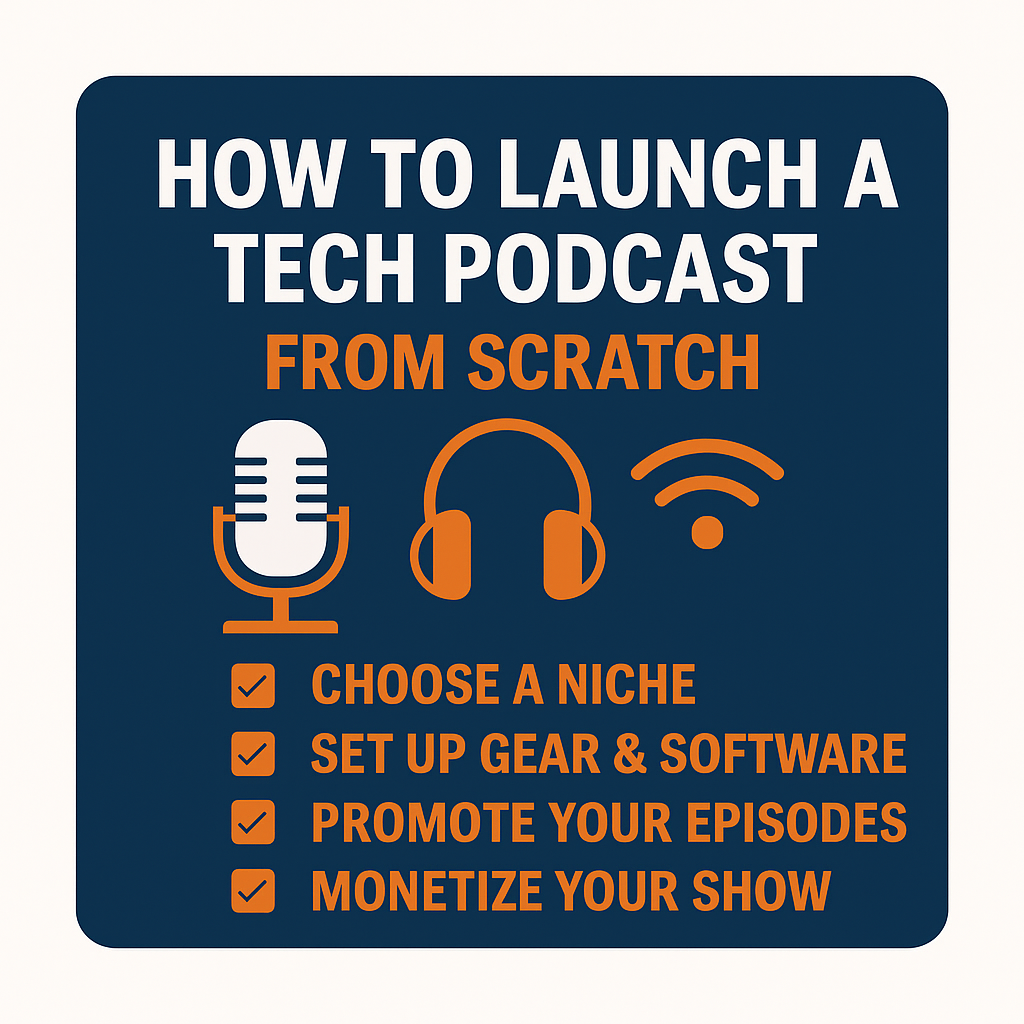
Podcasting has exploded in popularity, and the tech niche is one of the most promising areas to tap into. Whether you want to discuss the latest gadgets, software trends, coding tips, or tech industry news, launching your own tech podcast can help you build authority, connect with an audience, and even generate income.
In this guide, we’ll break down the steps to launch a tech podcast from scratch, even if you’ve never recorded audio before.
1. Understand Why You’re Starting a Tech Podcast
Before you jump into buying gear, define your “why.” A clear purpose will guide every decision you make.
Ask yourself:
- Do you want to build your personal brand as a tech expert?
- Are you trying to promote a business or product?
- Do you simply love discussing technology?
Your motivation will shape your content style, frequency, and promotion strategy.
Pro tip: If your goal is monetization, you’ll want to pick a sub-niche with a passionate and engaged audience—think AI, cybersecurity, blockchain, or software development.
2. Choose Your Niche and Target Audience
“Technology” is broad, so narrowing down your focus will make your show more appealing to a specific audience. Examples of focused niches include:
- AI & Machine Learning Insights
- Cybersecurity Tips for Businesses
- Web Development Trends
- Gadget Reviews and Comparisons
- Tech Career Advice for Developers
Identify your ideal listener:
- What are their biggest challenges?
- What topics do they search for online?
- Which other podcasts do they listen to?
This information will help you create relevant, high-value content.
3. Plan Your Podcast Format
There’s no one-size-fits-all format. Choose a style that fits your personality and audience preferences:
- Interview-based: Invite tech experts, developers, or entrepreneurs to share their insights.
- Solo commentary: You share news, tips, or opinions.
- Roundtable discussion: Multiple hosts discuss trending tech topics.
- Storytelling: Tell engaging stories about tech history, startups, or case studies.
Decide on episode length:
- Short-form (10–20 minutes) works well for quick tips.
- Long-form (40–60 minutes) allows deep dives and interviews.
Release frequency: Weekly is ideal for building an audience, but bi-weekly can also work if you focus on quality.
4. Get the Right Equipment
You don’t need a professional studio, but good audio quality is crucial. Listeners will forgive less-than-perfect content, but poor sound will make them tune out quickly.
Basic gear you’ll need:
- Microphone: USB mics like the Blue Yeti or XLR mics like the Audio-Technica ATR2100x.
- Headphones: Closed-back headphones to monitor audio without feedback.
- Pop filter: Reduces plosive sounds (“p” and “b” noises).
- Audio interface (if using XLR mics): Like Focusrite Scarlett 2i2.
Optional upgrades:
- Acoustic panels to reduce echo.
- A boom arm for mic positioning.
5. Select Your Recording & Editing Software
Some great free and paid options include:
- Audacity (Free – beginner-friendly)
- GarageBand (Free on Mac)
- Adobe Audition (Paid – professional-grade)
- Reaper (Paid – affordable and powerful)
If you plan on recording interviews remotely, tools like Riverside.fm, SquadCast, or Zencastr provide high-quality remote audio.
6. Create a Content Plan
A successful podcast requires consistent, valuable episodes. Build a 3-month content calendar before you launch.
Include:
- Episode titles & topics
- Potential guest names
- Research notes and key points
- Relevant calls-to-action (CTA) for each episode
Pro tip: Record at least 3–5 episodes before your launch date so new listeners have more content to binge.
7. Branding Your Podcast
Your branding makes you memorable and helps your show stand out among thousands of other podcasts.
Branding checklist:
- Podcast name: Short, catchy, and relevant (e.g., Tech Talk Weekly, CodeCast, The AI Insider).
- Cover art: 3000×3000 px, clear typography, and a tech-related design.
- Intro/Outro music: Use royalty-free music from sites like AudioJungle or Free Music Archive.
- Voice intro: A brief welcome and tagline.
8. Hosting and Distribution
You’ll need a podcast hosting service to store your episodes and distribute them to platforms like Spotify, Apple Podcasts, and Google Podcasts.
Popular hosts include:
- Buzzsprout (Beginner-friendly)
- Podbean
- Anchor by Spotify (Free)
- Transistor
Once you upload to your host, they’ll generate an RSS feed—submit it to all major directories so listeners can find you easily.
9. Promoting Your Podcast
Promotion is where most podcasters fail. Don’t rely on “build it and they will come.”
Effective promotion strategies:
- Share on social media with audiograms (short audio clips with visuals).
- Post related articles on your blog for SEO traffic.
- Join relevant online communities (Reddit, Discord, LinkedIn groups).
- Collaborate with other podcasters.
- Use email marketing to notify subscribers of new episodes.
SEO tip: Write detailed episode descriptions with relevant keywords so search engines can index your content.
10. Monetizing Your Tech Podcast
Once you’ve built a loyal audience, you can explore monetization:
- Sponsorships: Partner with tech brands.
- Affiliate marketing: Promote relevant tools and earn commissions.
- Paid subscriptions: Offer bonus content on platforms like Patreon.
- Merchandise: Sell branded gear.
- Courses & consulting: Use the podcast to promote your services.
11. Tracking Performance and Improving
Use analytics from your hosting platform to track:
- Downloads per episode
- Listener retention rates
- Geographic location of listeners
- Popular episodes and topics
Adjust your content strategy based on this data—double down on what works and drop what doesn’t.
Final Thoughts
Starting a tech podcast from scratch may feel overwhelming, but with the right planning, gear, and promotion, you can carve out a niche and grow a loyal audience. Remember: consistency and quality are the two most important factors.
Whether you aim to share your passion for gadgets, educate developers, or cover breaking tech news, podcasting can be both a creative outlet and a business opportunity. So grab your mic, plan your first episode, and start building your voice in the tech world.