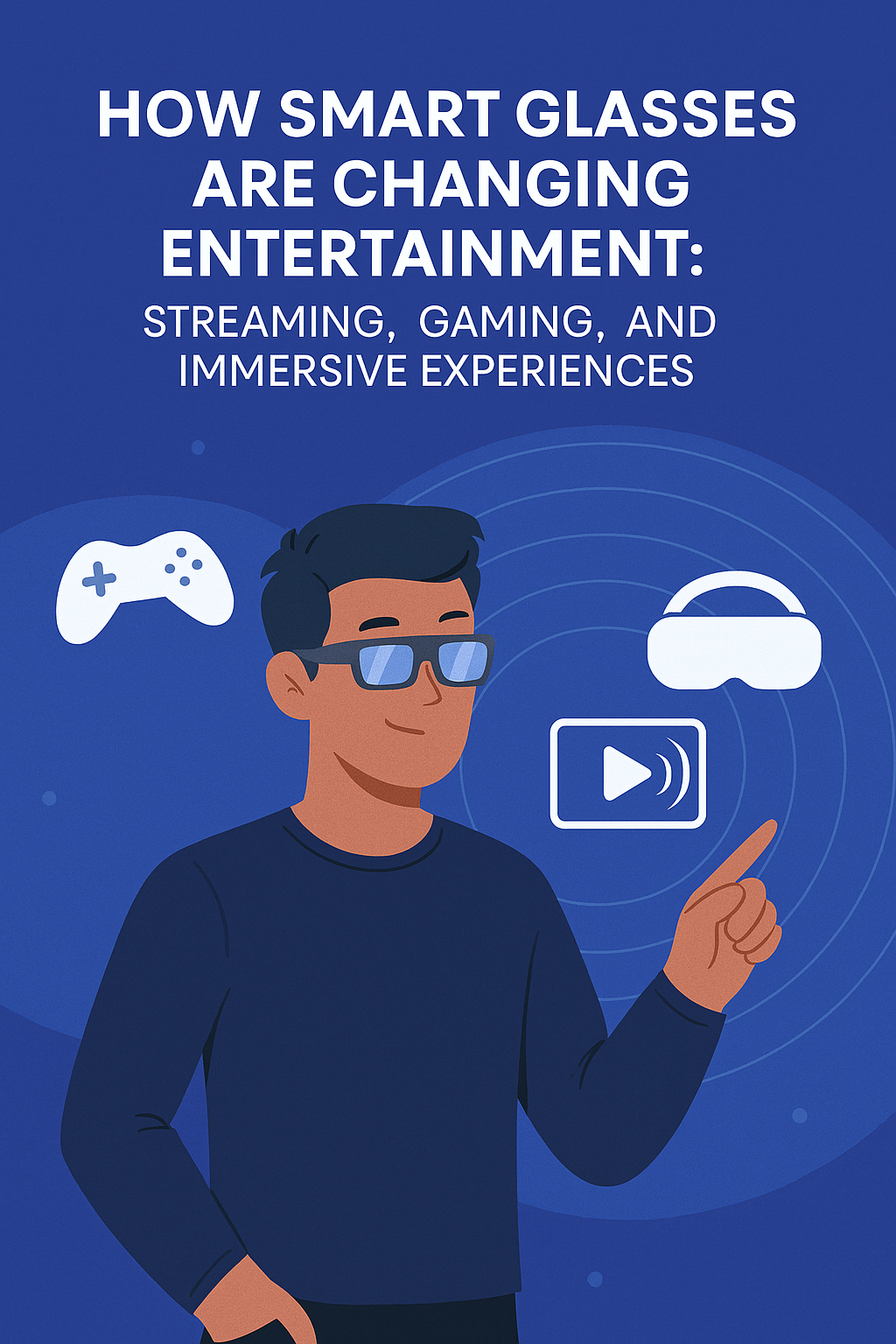
For decades, entertainment has evolved alongside technology. From the early days of black-and-white television to the rise of on-demand streaming services, every innovation has reshaped how we consume content. Today, we stand at the edge of another major shift: smart glasses. Equipped with augmented reality (AR) and virtual reality (VR) capabilities, smart glasses are more than just futuristic eyewear—they are becoming powerful tools that blur the line between physical and digital entertainment.
In this article, we’ll explore how smart glasses are changing the way we stream content, play games, and experience immersive entertainment, while also considering the challenges and opportunities this emerging market brings.
The Evolution of Smart Glasses
Smart glasses are not entirely new. Early prototypes like Google Glass generated buzz in the 2010s but failed to capture mainstream adoption due to limited functionality and privacy concerns. However, advancements in AR, VR, display technology, and lightweight designs have transformed them into highly capable devices.
Modern smart glasses combine:
- Augmented Reality (AR): Overlaying digital elements onto the real world.
- Virtual Reality (VR): Creating fully immersive digital environments.
- Mixed Reality (MR): Blending real-world surroundings with interactive 3D objects.
Companies like Meta, Apple, Microsoft, and Snap are competing to define the next era of wearable entertainment. With increasingly powerful processors and cloud connectivity, smart glasses are moving beyond novelty into practical everyday devices.
Streaming with Smart Glasses: A Personal Cinema
One of the most exciting applications of smart glasses in entertainment is media streaming. Instead of watching your favorite show on a TV or phone, smart glasses can project a virtual screen anywhere you are.
Benefits of Smart Glasses for Streaming:
- Portability: Users can carry a virtual cinema in their pocket.
- Privacy: Watching in public without others seeing your screen.
- Immersive Visuals: Large-scale virtual screens with crisp resolution.
- Hands-Free Control: Voice commands or gesture-based navigation.
Imagine boarding a long flight and turning your seat into a private movie theater. No need for bulky tablets or shared displays—the glasses project an immersive viewing experience tailored to you.
Companies like Xreal and Rokid are already offering smart glasses that connect to smartphones and streaming platforms. As 5G and cloud services improve, buffering-free high-definition streaming will make this use case even more compelling.
Gaming with Smart Glasses: A New Level of Immersion
Gaming has always been at the forefront of technological innovation. With AR and VR smart glasses, the gaming experience takes on an entirely new dimension.
How Smart Glasses Are Revolutionizing Gaming:
- AR Gaming: Games like Pokémon Go introduced the concept of augmented play, but smart glasses expand this by integrating interactive 3D characters into real-world settings.
- VR Gaming: Immersive environments allow players to step directly into their favorite worlds. Instead of just pressing buttons, they physically move, gesture, and interact.
- Multiplayer Experiences: Smart glasses connect players in shared augmented environments, creating collaborative and competitive experiences beyond traditional gaming.
For example, imagine battling holographic creatures in your living room or playing a VR racing game where the track expands across your backyard. Gaming is no longer confined to screens—it becomes part of your surroundings.
Tech giants like Meta (Quest platform) and Sony (PlayStation VR2) are integrating smart glasses into their ecosystems, while startups are experimenting with AR-based social games that blend digital and physical play.
Immersive Experiences Beyond Streaming and Gaming
While streaming and gaming are the most obvious applications, smart glasses unlock new entertainment formats:
1. Concerts and Live Events
AR glasses can place you virtually in the front row of a concert, even if you’re watching from home. VR setups go further, allowing fans to feel like they’re inside the venue, complete with 360-degree perspectives.
2. Sports Experiences
Fans can overlay live stats, replays, and commentary directly onto their field of view while watching games. This transforms passive viewing into an interactive and informed experience.
3. Interactive Storytelling
Filmmakers are exploring ways to create narratives where viewers make choices in real time, shaping the story’s outcome. Smart glasses can turn passive movie-watching into active participation.
4. Virtual Tourism and Museums
Want to visit the Louvre or explore ancient ruins? Smart glasses can simulate travel experiences, offering guided tours enriched with 3D overlays, historical context, and interactive learning.
Opportunities in Entertainment with Smart Glasses
The potential of smart glasses extends to reshaping the entire entertainment ecosystem:
- New Business Models: Subscription-based AR/VR streaming services could become as popular as Netflix and Disney+.
- Content Innovation: Filmmakers, game developers, and musicians can create unique formats optimized for immersive devices.
- Advertising and Marketing: Brands can experiment with interactive ads, product placements, and AR-enhanced experiences.
- Social Connectivity: Friends can “hang out” in virtual spaces, watch shows together, or play AR games collaboratively across distances.
Challenges and Limitations
While the possibilities are vast, challenges remain:
- Hardware Limitations: Battery life, weight, and comfort are ongoing concerns.
- Content Availability: The industry still lacks a critical mass of high-quality AR/VR content.
- Privacy and Security: Cameras and sensors raise concerns about surveillance and data misuse.
- Adoption Barriers: High costs and niche appeal slow mainstream adoption.
Tech companies must address these hurdles before smart glasses can become as ubiquitous as smartphones.
The Future of Smart Glasses in Entertainment
Looking ahead, smart glasses are likely to become lighter, more affordable, and seamlessly integrated into daily life. Artificial intelligence will enhance personalization, recommending shows, games, or interactive experiences based on user behavior.
We may soon reach a point where entertainment isn’t confined to screens but woven into our surroundings—where any wall can become a cinema, any park a gaming arena, and any living room a concert hall.
Smart glasses won’t just change entertainment—they will redefine how we interact with digital worlds and with each other.
Conclusion
Smart glasses are at the heart of a major technological shift in entertainment. From streaming private blockbusters on virtual cinema screens to battling enemies in augmented reality games, these devices expand what’s possible. While challenges like cost and content availability remain, the future looks promising.
As AR/VR technology matures, smart glasses will move from niche gadgets to everyday companions—shaping a new era where entertainment is not something we watch, but something we live.