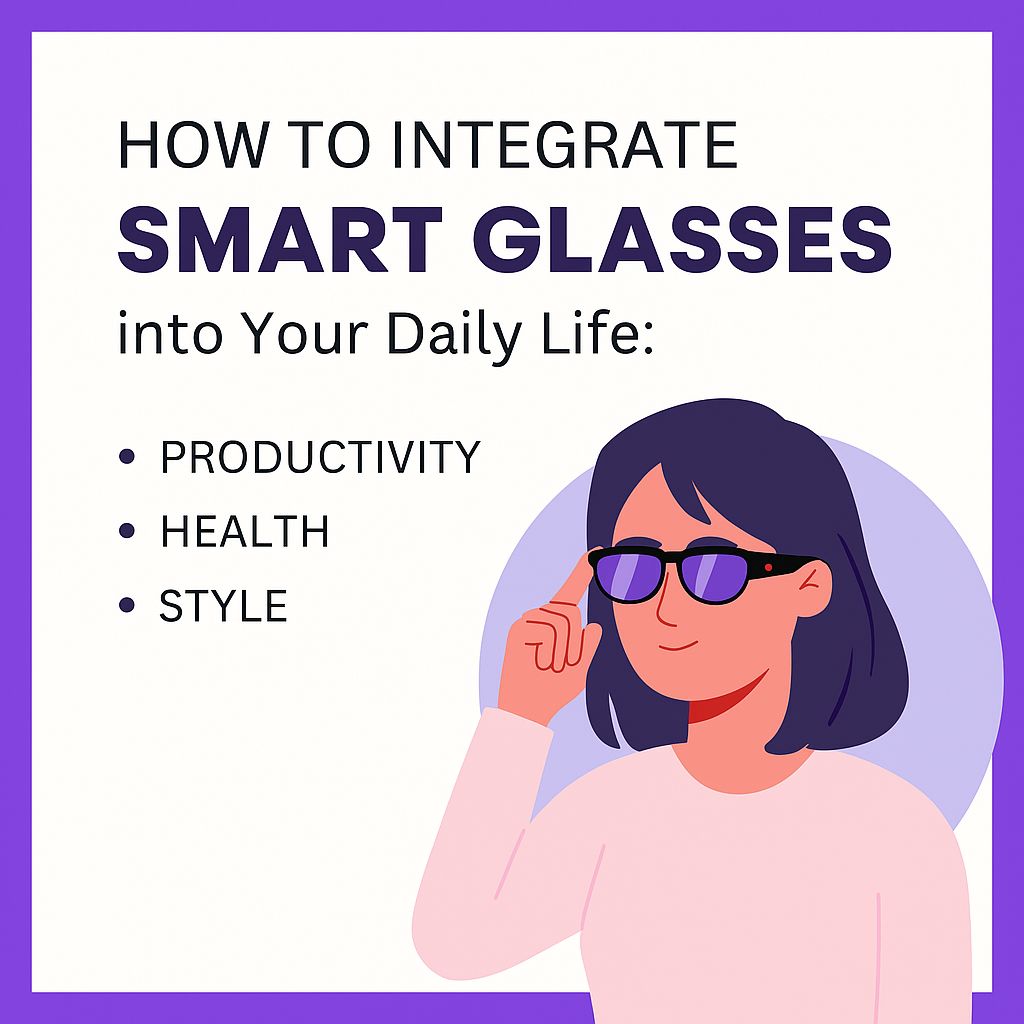
Smart glasses are no longer a futuristic concept reserved for science fiction or tech enthusiasts. Over the past few years, these wearables have evolved into practical tools that can seamlessly fit into everyday routines. Whether you’re looking to boost productivity, monitor your health, or add a stylish touch to your outfits, smart glasses offer a blend of function and fashion that makes them increasingly relevant in modern lifestyles.
In this article, we’ll explore how to make the most of smart glasses in three key areas—productivity, health, and style—so you can integrate them into your daily life effectively.
1. Productivity: Working Smarter with Smart Glasses
Smart glasses are redefining how people manage tasks and access information. By placing digital tools directly in your line of sight, they eliminate the need to constantly check a smartphone or computer.
a) Hands-Free Access to Information
One of the greatest advantages of smart glasses is the ability to access information without lifting a finger. Imagine walking into a meeting and instantly seeing your agenda, notes, or live translations projected in front of you. This hands-free functionality saves time and improves focus.
- Business applications: Sales professionals can pull up customer data on the spot, while field workers can access technical manuals without pausing their work.
- Everyday use: Instead of pulling out your phone for directions, your glasses can overlay arrows directly onto the real-world environment.
b) Productivity on the Go
For remote workers and busy professionals, smart glasses act as a personal assistant. Notifications, reminders, and even AI-powered task management can appear subtly in your peripheral vision, reducing distraction while keeping you on track.
For example:
- Writers and creatives can dictate notes while walking or commuting.
- Engineers and designers can visualize 3D models in real space, adjusting them in real-time.
- Students can benefit from on-screen highlights, definitions, or even real-time language translations during study sessions.
c) Collaboration and Remote Work
With video streaming capabilities, smart glasses allow users to share their perspective with others. This feature is particularly useful in industries like construction, healthcare, and education. Instead of explaining a problem, you can simply show what you see.
This live perspective sharing reduces misunderstandings and speeds up problem-solving—a major productivity win.
2. Health: A Wearable Wellness Partner
Beyond productivity, smart glasses are becoming powerful health companions. Unlike traditional wearables like smartwatches, they offer a unique way to track and promote well-being without requiring wrist space.
a) Eye Health Monitoring
Some smart glasses come with sensors that monitor eye movement, blinking patterns, and even screen exposure. With increasing concerns about digital eye strain, this feature is invaluable. Your glasses can remind you to blink more frequently, take breaks, or adjust lighting conditions.
b) Fitness Integration
Like fitness trackers, smart glasses can monitor physical activity. Built-in accelerometers and heart-rate sensors provide real-time stats during workouts. For example:
- While jogging, your glasses can display your pace, distance, and heart rate without you needing to check your wrist or phone.
- During cycling, navigation overlays can keep your eyes on the road while tracking progress.
c) Mental Health and Focus
Smart glasses can also contribute to mental well-being. With integrated apps, they can:
- Guide you through short breathing exercises during stressful moments.
- Use light and sound cues to promote mindfulness.
- Track patterns in your concentration and offer insights to improve focus.
d) Accessibility and Healthcare Support
For individuals with vision impairments, smart glasses can enhance independence. Features such as text-to-speech, object recognition, and navigation aids can transform daily experiences, making technology more inclusive.
Healthcare professionals are also exploring their use in patient monitoring, allowing doctors to receive real-time updates or even visualize scans while attending patients.
3. Style: From Geeky Gadget to Fashion Statement
In the early days of smart glasses, aesthetics were often sacrificed for functionality. Today, brands understand that if wearables are going to be part of daily life, they need to look good.
a) Sleek and Stylish Designs
Modern smart glasses resemble traditional eyewear, with slim frames and customizable lenses. They’re available in various styles—from professional to sporty—making them suitable for different settings.
Leading brands now collaborate with fashion designers to create glasses that look just as stylish as luxury frames, ensuring that you don’t have to choose between tech and fashion.
b) Personalized Customization
Customization options mean you can adapt your smart glasses to fit your lifestyle. Options include:
- Prescription lenses for those who already wear glasses.
- Photochromic lenses that adjust to light levels.
- Interchangeable frames to match different outfits or occasions.
c) Balancing Technology with Subtlety
A key trend in wearable technology is blending tech into everyday life without drawing unnecessary attention. Many new smart glasses hide their sensors and cameras discreetly, allowing you to enjoy advanced features without looking like you’re wearing futuristic headgear.
This subtlety helps break down barriers for widespread adoption, making them feel like a natural extension of personal style.
4. Tips for Integrating Smart Glasses Seamlessly
Adopting smart glasses into your daily routine requires a bit of strategy. Here are practical tips to make the transition smooth:
- Start small: Begin with one feature, like navigation or fitness tracking, and gradually explore more.
- Personalize settings: Customize notifications so you’re not overwhelmed with constant alerts.
- Combine with other wearables: If you already use a smartwatch or fitness tracker, integrate your glasses to complement those tools.
- Respect privacy: Since some models include cameras, be mindful in public spaces.
- Choose comfort first: Make sure your glasses are lightweight and suited to long hours of wear.
5. The Future of Smart Glasses in Daily Life
Smart glasses are still evolving, but the trajectory is clear: they are moving from niche gadgets to mainstream lifestyle tools. Future advancements could include:
- More immersive AR overlays for shopping, gaming, or education.
- Integration with AI assistants for real-time problem-solving.
- Advanced health tracking, including blood pressure or glucose monitoring.
- Lighter, longer-lasting batteries for all-day use.
As these innovations roll out, smart glasses will become as common as smartphones, serving as essential companions for productivity, wellness, and self-expression.
Conclusion
Integrating smart glasses into daily life doesn’t have to be complicated. By focusing on productivity, health, and style, you can make the most of their features while keeping them comfortable and fashionable.
They’re not just a tech accessory—they’re a lifestyle upgrade. From staying focused at work to monitoring your well-being and enhancing your personal style, smart glasses bring the digital world closer without overwhelming you.
As technology continues to advance, adopting smart glasses early allows you to stay ahead, embracing a future where technology feels natural, stylish, and truly personal.