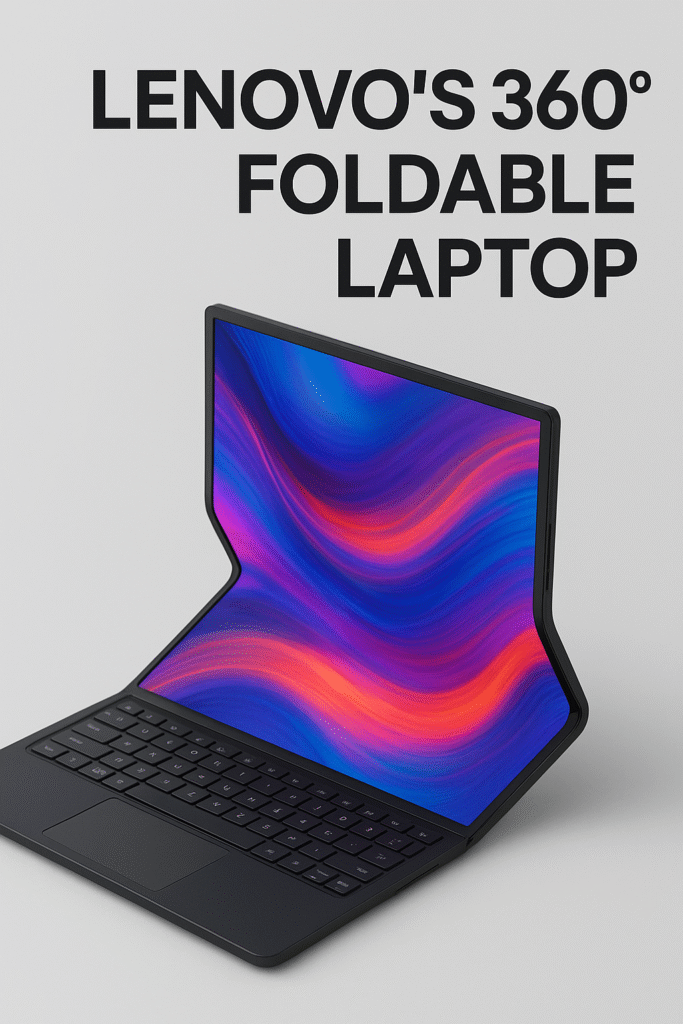
In the past decade, the laptop industry has seen incremental improvements—thinner bezels, lighter builds, and more powerful processors. Yet, a true leap in design has been rare. That changed when Lenovo unveiled its 360° foldable laptop prototype, an ambitious device that promises to reshape the way we think about portable computing.
With this unveiling, Lenovo positions itself at the forefront of laptop innovation, combining the flexibility of foldable displays with the practicality of a full-fledged PC. But what does this prototype mean for the industry, consumers, and the broader future of hybrid devices? Let’s dive into the details.
The Evolution of Foldable Technology
Foldable technology is not new. The smartphone sector pioneered it, with devices like Samsung’s Galaxy Z Fold and Huawei’s Mate X pushing boundaries of screen flexibility. However, adapting foldable displays into laptops is a more complex challenge due to larger screens, heat dissipation, durability, and usability considerations.
Lenovo has been experimenting with this idea for years, most notably with the ThinkPad X1 Fold, one of the first foldable PCs launched back in 2020. While that model was groundbreaking, it was also experimental—its smaller size and high price limited its mass appeal. The new 360° foldable prototype takes that concept further, aiming to merge tablet, laptop, and hybrid workstation into one seamless product.
Design and Build: A 360° Revolution
At first glance, Lenovo’s foldable laptop looks like a futuristic tablet. But the magic lies in its hinge mechanism, which allows the device to rotate a full 360 degrees, effectively transforming the screen into different modes:
- Laptop Mode – Half the display folds into a tactile or digital keyboard while the other half functions as a traditional display.
- Tablet Mode – When unfolded, the entire display acts as a large, uninterrupted tablet.
- Tent Mode – By bending the laptop slightly, users can stand it up for streaming, presentations, or collaborative work.
- Dual-Screen Mode – The display can be split into two sections, allowing multitasking like video conferencing on one half and note-taking on the other.
This versatility positions the foldable laptop as a multi-use productivity powerhouse, something no traditional clamshell laptop can fully replicate.
Display Technology: OLED at Its Finest
The centerpiece of Lenovo’s prototype is its OLED foldable display, likely ranging between 14 and 17 inches when fully unfolded. OLED offers vivid colors, deep blacks, and superior contrast—ideal for both creative professionals and media consumption.
More importantly, Lenovo’s engineers are working to address key issues that plagued earlier foldable screens, such as:
- Crease visibility – reducing the appearance of the hinge line when unfolded.
- Durability – ensuring the screen can withstand thousands of folds without compromising quality.
- Touch and pen input – supporting seamless stylus use for drawing, writing, and design tasks.
If Lenovo manages to perfect these areas, the foldable laptop could become a mainstream option, not just a novelty.
Performance Under the Hood
A futuristic design requires equally strong performance. While Lenovo has not confirmed all technical details, industry analysts expect the prototype to include:
- Latest Intel or AMD processors designed for hybrid devices.
- Generous RAM (16GB or more) for multitasking and professional workloads.
- Solid-state storage (SSD) to ensure fast boot and load times.
- Integrated 5G or Wi-Fi 7 support for next-gen connectivity.
- Advanced cooling solutions to manage heat in a foldable, compact form factor.
Given Lenovo’s track record with the ThinkPad and Yoga series, we can expect this device to balance performance, portability, and battery efficiency.
Who Is This For? Target Users
The 360° foldable laptop may not be for everyone at launch. Its early adopters are likely to be:
- Creative professionals – Designers, digital artists, and video editors who benefit from larger canvases and stylus input.
- Business travelers – Users seeking a lightweight, all-in-one device that can serve as both a laptop and a tablet.
- Tech enthusiasts – Early adopters eager to test groundbreaking innovations.
- Students – Particularly those in design or engineering fields, where multitasking and flexible setups enhance productivity.
Over time, as prices drop and the technology matures, foldable laptops could appeal to mainstream consumers looking for devices that blend work and entertainment.
The Challenges Ahead
While exciting, Lenovo’s 360° foldable laptop faces challenges before it can disrupt the market:
- Price Point – Foldable screens are expensive, and early models could retail well above $2,000.
- Durability Concerns – Consumers remain skeptical about long-term reliability of foldable displays.
- Software Optimization – Windows and other operating systems must adapt to flexible screen modes to provide a seamless user experience.
- Battery Life – Larger foldable displays often demand more power, so Lenovo must innovate in battery efficiency.
Without addressing these issues, the foldable laptop risks being seen as a luxury experiment rather than a practical everyday tool.
Market Implications: A New Category of Devices
Lenovo’s prototype could inspire other tech giants—like Dell, HP, or Apple—to invest in foldable laptop R&D. If this trend accelerates, we may see a new product category emerge: devices that are neither pure laptops nor pure tablets but hybrid computing ecosystems.
This could also affect industries like:
- Education – where foldables can replace laptops and tablets with a single, versatile device.
- Enterprise – allowing executives and teams to use adaptable setups for meetings, presentations, and remote work.
- Entertainment – transforming how people stream, game, or create media on larger, portable screens.
Just as the iPad created the tablet market, Lenovo’s foldable could mark the beginning of the hybrid foldable era.
Lenovo’s Vision: Innovation Meets Practicality
Lenovo has consistently positioned itself as an innovator in the laptop space. The Yoga series redefined 2-in-1 laptops, while the ThinkPad X1 Fold introduced foldables to the PC market. The new 360° prototype is not just about novelty—it’s about pushing the boundary of how people interact with technology.
If successful, Lenovo could cement its status as a leader in next-gen computing, proving that foldables are not gimmicks but genuine productivity enhancers.
Looking Ahead: When Will It Launch?
While Lenovo has showcased the prototype, mass production timelines remain unclear. Industry insiders suggest we could see a commercial model within the next 12 to 24 months, possibly announced at global tech expos like CES or IFA.
Pricing, availability, and final specifications will determine whether Lenovo’s 360° foldable laptop becomes a game-changer or a niche product.
Conclusion
Lenovo’s 360° foldable laptop prototype is more than just a cool gadget—it represents a paradigm shift in portable computing. By combining laptop functionality, tablet flexibility, and next-gen display technology, Lenovo offers a glimpse into a future where devices adapt to users, not the other way around.
Though challenges remain, the potential is enormous. Just as smartphones evolved from experimental touchscreens into everyday essentials, foldable laptops could follow a similar trajectory. Lenovo’s bold move signals that the future of laptops is flexible, adaptable, and foldable.