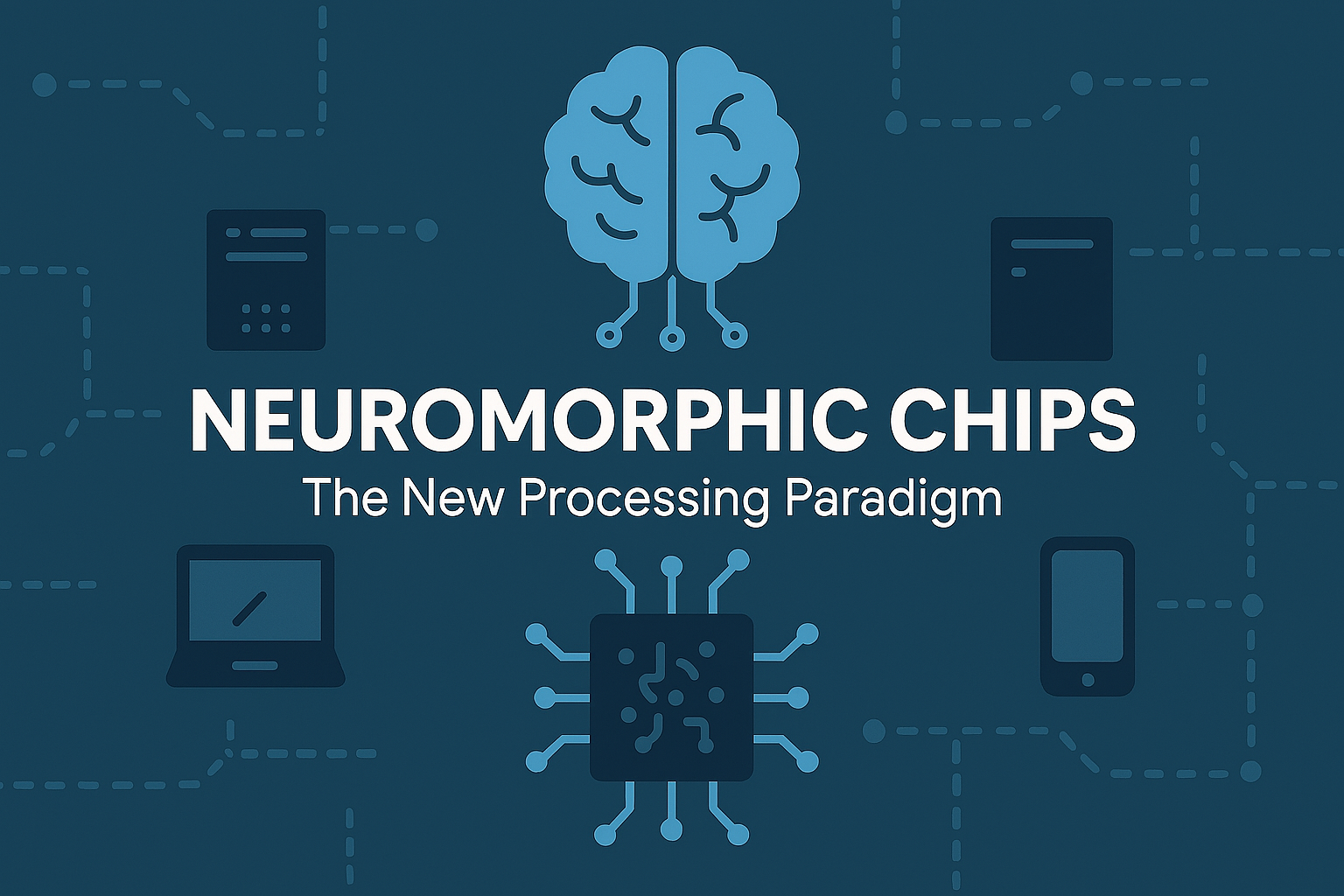
As artificial intelligence continues to evolve at an astonishing pace, so does the demand for smarter, faster, and more energy-efficient computing systems. Traditional CPUs and even advanced GPUs, while incredibly powerful, are hitting performance and power walls when it comes to real-time, intelligent decision-making tasks. That’s where neuromorphic chips come into play—ushering in a revolutionary shift in how machines process information.
This article explores how neuromorphic computing is reshaping the future of processors, mimicking the human brain’s architecture to deliver unprecedented advantages in speed, power efficiency, and adaptability.
What Are Neuromorphic Chips?
Neuromorphic chips are specialized processors designed to emulate the way biological brains process information. Unlike conventional architectures that follow sequential instructions, neuromorphic systems work through asynchronous and parallel processing, similar to how neurons and synapses operate in a brain.
The term “neuromorphic” was coined by Carver Mead in the 1980s, and while the concept has existed for decades, recent advancements in AI, IoT, and edge computing have pushed these chips into the spotlight.
How Do Neuromorphic Chips Work?
At the heart of neuromorphic computing lies the spiking neural network (SNN), a system of artificial neurons that communicate via electrical pulses or “spikes.” These chips use hardware elements called neurons and synapses, often built with memristors or other analog circuits, to mimic the low-power and highly efficient communication seen in biological brains.
Instead of processing data in large blocks, neuromorphic chips operate in an event-driven manner. A signal is transmitted only when something important happens, leading to lower energy consumption and real-time responsiveness.
Key Advantages Over Traditional Chips
Neuromorphic chips offer several distinct advantages compared to CPUs, GPUs, or TPUs:
1. Extreme Energy Efficiency
By emulating the brain’s sparse activity and minimizing redundant calculations, these chips consume orders of magnitude less power. Some neuromorphic systems can run on milliwatts, ideal for battery-powered or embedded devices.
2. Real-Time Processing
Neuromorphic hardware excels in tasks requiring immediate response, such as autonomous vehicles, robotics, and smart sensors. The spike-based architecture ensures rapid data interpretation without needing cloud-based computation.
3. Brain-Like Learning
Many neuromorphic platforms support on-chip learning, allowing devices to adapt and evolve in response to new data—similar to how human brains learn from experience.
4. Edge AI Optimization
These chips are a game-changer for edge AI, enabling devices like drones, wearables, and cameras to process complex data locally without needing internet connectivity or heavy cloud reliance.
Leading Neuromorphic Hardware Platforms
Several tech giants and startups are actively developing neuromorphic chips:
1. Intel Loihi
Intel’s Loihi chip uses a custom-built silicon architecture to simulate 130,000 neurons and 130 million synapses. It supports real-time learning and has been tested in applications ranging from olfactory recognition to adaptive robotics.
2. IBM TrueNorth
IBM’s TrueNorth features 1 million neurons and 256 million synapses while consuming just 70 milliwatts. Its architecture is ideal for sensory perception and pattern recognition tasks.
3. BrainChip Akida
BrainChip’s Akida neuromorphic system-on-chip (SoC) is optimized for ultra-low-power AI at the edge. It supports on-chip learning and inference with minimal latency.
Real-World Applications of Neuromorphic Computing
Neuromorphic chips are more than just a research novelty—they are already powering practical applications across industries:
- Autonomous Drones & Vehicles: Instantaneous object recognition and decision-making in dynamic environments.
- Healthcare Devices: Real-time diagnostics and patient monitoring with minimal energy use.
- Smart Surveillance: Low-power, always-on cameras that detect unusual activity with contextual awareness.
- Wearables: Fitness trackers and AR glasses that adapt to user behavior without draining the battery.
- Industrial IoT: Predictive maintenance and environmental sensing in remote or power-constrained areas.
The Future of Neuromorphic Computing
Despite the promising benefits, neuromorphic chips are still in their early stages. Challenges such as software development tools, scalability, and standardization need to be addressed before widespread adoption can occur. However, as AI models become more complex and power-hungry, traditional architectures are reaching their limits.
Neuromorphic computing may hold the key to achieving artificial general intelligence (AGI), enabling machines that can truly understand, adapt, and respond like humans.
With increased investment from tech leaders and breakthroughs in materials science and AI algorithms, neuromorphic chips are poised to become a cornerstone of next-generation computing.
Final Thoughts
The shift from traditional computing to neuromorphic architectures represents a fundamental change in how we think about processors and intelligent systems. By mimicking the power and efficiency of the human brain, these chips are enabling smarter, faster, and greener technologies for everything from smartphones to satellites.As innovation accelerates and demand for edge intelligence grows, neuromorphic chips are no longer just a futuristic concept—they’re the next processing paradigm reshaping our digital world.