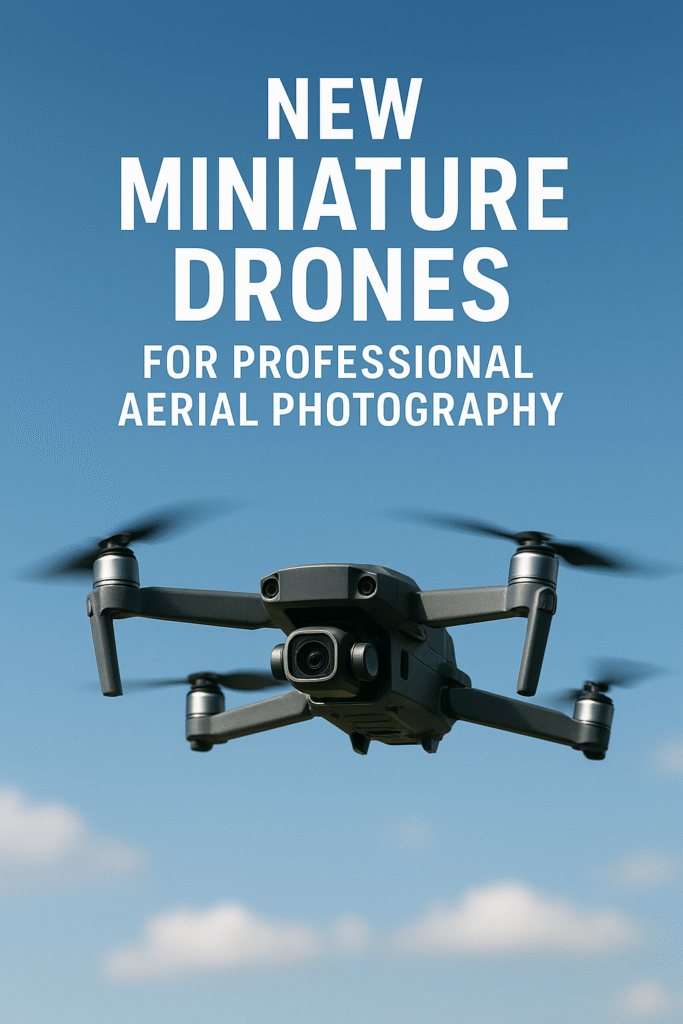
The world of aerial photography has evolved rapidly over the past decade, with drones becoming essential tools for filmmakers, photographers, and creative professionals. Once seen as toys or experimental gadgets, drones today represent a sophisticated blend of optics, flight control, and AI-powered technology. Among the most exciting innovations in this space are miniature drones—small but powerful devices that deliver professional-grade results without the bulk of traditional aerial equipment.
In this article, we’ll explore the rise of miniature drones, the technology that makes them powerful, and how they’re transforming industries ranging from real estate to filmmaking.
The Rise of Miniature Drones
The early generation of drones for aerial photography, such as the DJI Phantom series, were relatively large and required dedicated carrying cases. While they delivered impressive image quality, portability was always a challenge. For professionals traveling between shoots or working in dynamic environments, the need for lightweight, compact drones became clear.
Enter miniature drones. Brands like DJI, Autel, and Skydio have released portable drones that fit into a small backpack or even a jacket pocket, yet feature 4K and even 8K cameras, obstacle avoidance, and advanced stabilization. These drones prove that size doesn’t dictate quality—what matters is the integration of smart technologies.
Key Features of Miniature Professional Drones
Professional aerial photography demands more than just good cameras. Miniature drones have become viable for professionals because of advancements in multiple areas:
1. High-Resolution Cameras in Compact Frames
Today’s miniature drones often come equipped with 1-inch CMOS sensors, wide dynamic range, and adjustable apertures. Some models even rival DSLR image quality, offering RAW photo capture and HDR video capabilities.
2. Portability Without Compromise
Drones like the DJI Mini 4 Pro weigh under 250 grams but include intelligent flight modes, three-axis gimbals, and cinematic shooting presets. Their light weight also means they are often exempt from stricter aviation regulations in many countries, making them easier to operate legally.
3. Obstacle Avoidance and AI Assistance
Miniature drones now include 360-degree obstacle detection, autonomous flight modes, and AI-driven subject tracking. This means smoother footage, safer operation in tight environments, and less risk of accidents.
4. Extended Flight Times
Despite their small batteries, many new miniature drones achieve 30 to 45 minutes of flight time, thanks to efficient motors and lightweight construction.
5. Connectivity and Live Streaming
Professional photographers and content creators can stream or transfer footage directly to their devices in real time. This allows instant editing, client previews, and live broadcasts during events.
Why Professionals Are Turning to Miniature Drones
It’s not just hobbyists embracing these pocket-sized flying cameras. Professionals across industries are realizing that miniature drones provide a balance of quality, flexibility, and cost-effectiveness.
Real Estate Marketing
High-quality aerial shots once required renting helicopters or using bulky drones. Miniature drones now give real estate agents the ability to capture sweeping property views, cinematic home tours, and dynamic neighborhood perspectives—all with minimal setup.
Filmmaking and Content Creation
Independent filmmakers, vloggers, and even Hollywood studios use compact drones to capture shots that previously required heavy rigs. Their small size allows them to fly indoors, through narrow spaces, and close to actors without causing safety concerns.
Travel and Adventure Photography
Photographers and influencers value lightweight drones for their portability during hikes, road trips, and international travel. With many models slipping into a jacket pocket, travelers can capture cinematic shots without carrying bulky gear.
Events and Weddings
Wedding videographers now use miniature drones to capture stunning outdoor ceremonies, sweeping venue views, and creative indoor shots that complement traditional cameras.
Inspections and Surveys
In industries such as construction, agriculture, and energy, compact drones provide professionals with safe, efficient ways to inspect roofs, solar panels, bridges, and crop fields—even in hard-to-reach areas.
Popular Miniature Drones for Professional Photography
Here are some of the most notable models leading the miniature drone revolution:
- DJI Mini 4 Pro
- Weight: 249g
- Camera: 1/1.3-inch CMOS sensor, 4K HDR video
- Features: Omnidirectional obstacle sensing, ActiveTrack, extended flight time.
- Ideal For: Travel photographers, real estate agents, content creators.
- Weight: 249g
- Autel EVO Nano+
- Weight: 249g
- Camera: 50MP RYYB sensor, 4K HDR video
- Features: PDAF + CDAF autofocus, 3-way obstacle avoidance, compact design.
- Ideal For: Professionals wanting vibrant, detail-rich photography.
- Weight: 249g
- Skydio 2+
- Weight: 800g (slightly larger but still compact)
- Camera: 4K60 HDR, advanced stabilization
- Features: Industry-leading AI obstacle avoidance, autonomous tracking.
- Ideal For: Action sports, filmmaking in dynamic environments.
- Weight: 800g (slightly larger but still compact)
- Parrot Anafi
- Weight: 320g
- Camera: 4K HDR with 180° tilt gimbal
- Features: Lightweight, long zoom lens, portable design.
- Ideal For: Surveying, unique angled shots, creative projects.
- Weight: 320g
Advantages of Miniature Drones Over Larger Models
While larger drones still have their place in professional cinematography and industrial applications, miniature drones offer unique benefits:
- Discreet Operation – Smaller drones make less noise and attract less attention, which is crucial for weddings, events, and travel.
- Lower Cost – Miniature drones often cost significantly less than larger professional rigs, making them accessible to freelancers and small businesses.
- Legal Flexibility – Many countries have lighter regulations for drones under 250g, removing barriers to entry for commercial pilots.
- Ease of Learning – With user-friendly apps, automatic stabilization, and AI assistance, even beginners can achieve professional-level shots.
Challenges and Limitations
Of course, miniature drones aren’t perfect. Professionals should be aware of some limitations:
- Wind Resistance – Small drones can be less stable in strong winds compared to heavier models.
- Sensor Size Limits – While image quality is excellent, low-light performance still lags behind larger drones with bigger sensors.
- Battery Life – Despite improvements, flight times remain shorter than those of larger, high-capacity drones.
- Payload Limitations – Miniature drones cannot carry heavy accessories, external cameras, or advanced sensors used in specialized industries.
The Future of Miniature Professional Drones
The demand for smaller, smarter, and more powerful drones is only growing. As AI, battery efficiency, and imaging technology continue to evolve, the next generation of miniature drones may include features like:
- 8K video in pocket-sized frames
- Advanced AI subject tracking for live productions
- Improved low-light performance with larger sensors
- Extended 1-hour flight times with better batteries
- Integration with VR/AR tools for immersive filmmaking
It’s clear that miniature drones are no longer niche products—they’re becoming essential creative tools for professionals across industries.
Final Thoughts
Miniature drones are revolutionizing professional aerial photography by combining portability, affordability, and advanced technology. Whether you’re a filmmaker looking for cinematic shots, a real estate agent showcasing properties, or a content creator capturing your next travel adventure, these small but powerful machines offer incredible possibilities.
As technology advances, the line between “miniature” and “professional” continues to blur. For many professionals, miniature drones are no longer backup tools—they’re becoming the first choice for aerial creativity.