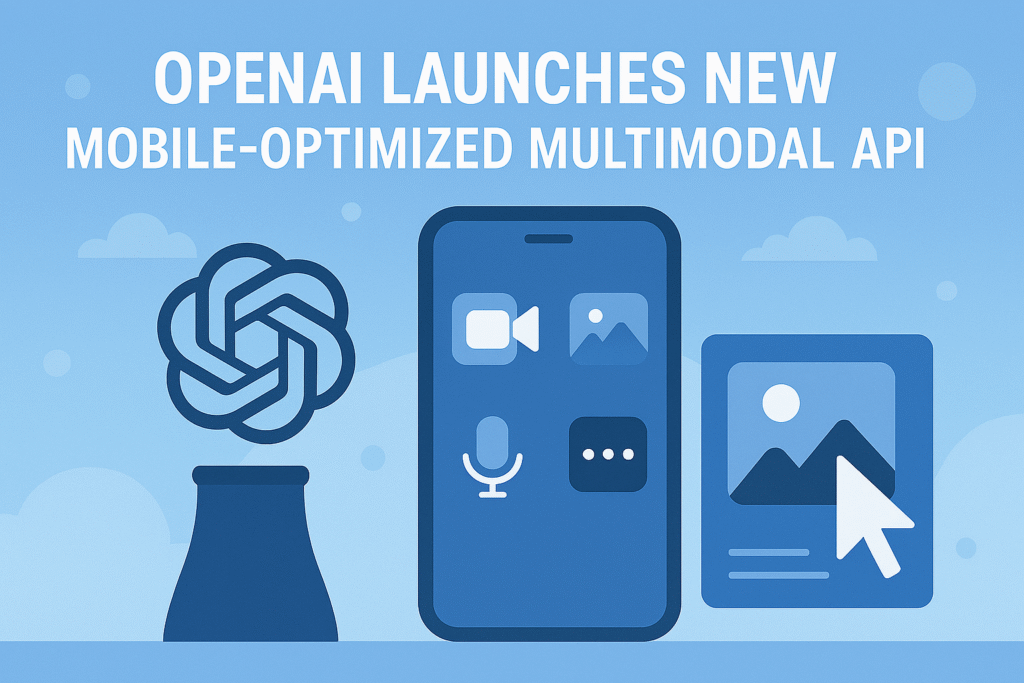
OpenAI continues to reshape the artificial intelligence landscape with the launch of its new mobile-optimized multimodal API, a major step forward in the seamless integration of advanced AI into mobile applications. This latest release is part of OpenAI’s ongoing mission to make cutting-edge AI more accessible, responsive, and versatile across platforms.
What Is the Multimodal API?
The multimodal API combines multiple types of input and output—specifically text, images, and audio—into a single, cohesive interface. This allows developers to build applications that understand and respond to user input in a more natural, human-like way. Unlike previous models which required separate endpoints or models for different modalities, OpenAI’s new API unifies them under one platform.
Optimized for Mobile Devices
A key differentiator of this release is mobile optimization. OpenAI has specifically designed this API to work efficiently on smartphones and tablets, ensuring:
- Low latency for real-time interaction
- Battery efficiency on iOS and Android
- Streamlined SDKs for faster development
- Offline fallback options using local models (select features)
This makes it ideal for developers building mobile-first applications in areas such as virtual assistants, productivity tools, education, healthtech, retail, and entertainment.
Key Features
1. Unified Input: Text, Image, and Voice
Developers can feed text, images (from the camera or gallery), and voice input into a single interface, enabling more interactive and personalized experiences.
Example: A user could snap a picture of a product, ask a question aloud, and get a spoken response—within one seamless flow.
2. Speech-to-Text and Text-to-Speech
The API supports high-accuracy speech-to-text transcription and natural-sounding TTS, making it perfect for virtual assistants, language learning apps, and accessibility-focused services.
3. Image Understanding with GPT-Vision
By integrating GPT-4’s vision capabilities, the API can analyze and interpret images, offering descriptive captions, answering visual questions, or detecting objects in real time.
4. Multilingual Support
It includes robust multilingual capabilities, allowing input and output in over 30 languages—critical for global apps and services.
5. Streaming and Real-Time Feedback
Responses can be streamed token-by-token for faster feedback loops, ideal for chat apps or AI copilots on mobile devices.
Use Cases and Industry Applications
Healthcare Apps
Doctors could use mobile devices to snap images of charts or wounds, input notes via speech, and receive AI-assisted insights instantly.
Education and E-learning
Language learning apps can now combine spoken conversation, image-based quizzes, and text prompts, creating richer learning environments.
Retail and E-Commerce
Customers can upload photos of products, ask questions via voice, and get real-time information, prices, or similar product suggestions.
Field Services
Technicians in construction or maintenance can photograph machinery, describe the issue aloud, and get AI-driven diagnostics or manuals—hands-free.
Social Media and Content Creation
Apps can use this multimodal approach to generate captions, transcribe interviews, or analyze images—all from a mobile UI.
Developer Tools and SDKs
To make adoption easy, OpenAI is providing:
- iOS and Android SDKs
- REST API documentation with code examples
- Cross-platform compatibility for React Native and Flutter
- Prebuilt UI components for speech, image, and text input/output
There’s also extensive support for authentication, user session management, and usage monitoring, helping developers integrate safely and at scale.
Privacy and Ethical Considerations
OpenAI emphasizes data privacy in this release. The mobile-optimized API supports:
- End-to-end encryption of media files
- Configurable data retention policies
- On-device processing for some functionalities in future releases
- User consent prompts for image or voice input
These features align with global data privacy regulations, including GDPR and CCPA, making it easier for developers to stay compliant.
Pricing and Availability
OpenAI offers a pay-as-you-go pricing model with generous free tier access for testing. Subscription tiers scale based on usage and modality (e.g., image or audio processing incurs higher costs than text-only requests). Early access is available for selected developers via the OpenAI platform.
Competitive Landscape
This move positions OpenAI ahead of rivals like Google’s Gemini, Anthropic’s Claude, and Meta’s LLaMA by offering a more complete and mobile-optimized suite of AI capabilities. While others offer some form of multimodal interaction, OpenAI is one of the first to optimize its APIs specifically for mobile UX and developer workflows.
Future Roadmap
OpenAI has announced plans to roll out:
- On-device multimodal processing using optimized models
- Real-time translation and dubbing
- Augmented reality (AR) integrations
- Contextual memory for apps, allowing personalization over time
These additions will likely solidify OpenAI’s API as the go-to toolkit for developers building the next generation of intelligent mobile applications.
Conclusion
With its new mobile-optimized multimodal API, OpenAI is redefining what’s possible in mobile AI development. The ability to interact using text, images, and voice through a unified interface opens up exciting opportunities for more natural, intuitive, and human-like digital experiences.For developers, this API not only shortens the development cycle but also enables powerful, real-time features that were previously limited to larger desktop platforms or separate toolkits. OpenAI’s latest release makes the power of GPT-4, Whisper, and DALL·E truly mobile—and truly accessible.