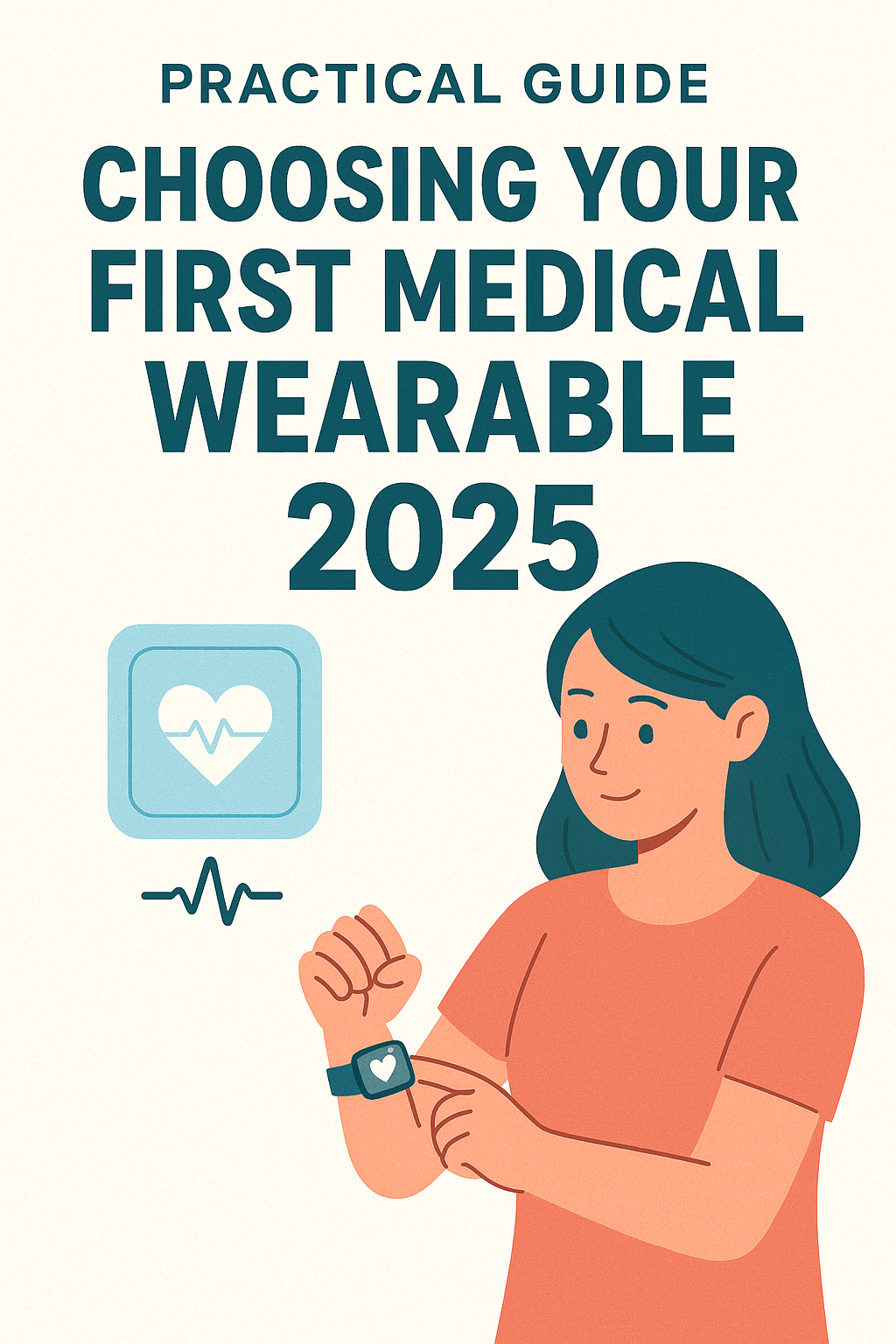
In 2025, wearable technology has evolved far beyond fitness tracking. We’ve entered the era of medical wearables—devices that don’t just count your steps, but monitor your vital signs, detect early signs of disease, and even connect directly to healthcare providers.
If you’ve been considering buying your first medical wearable, the number of options can feel overwhelming. From smart rings that track blood oxygen and sleep apnea to AI-powered patches that monitor heart rhythms in real time, the health tech market is richer than ever.
This practical guide will walk you through everything you need to know before purchasing your first medical wearable: what features matter, what brands lead the field, and how to balance accuracy, privacy, and cost.
1. What Is a Medical Wearable?
A medical wearable is any electronic device designed to collect health-related data continuously or periodically. Unlike fitness wearables that focus on activity and exercise, medical wearables are created with clinical accuracy and diagnostic value in mind.
These devices often measure:
- Heart rate and heart rate variability (HRV)
- Blood oxygen levels (SpO₂)
- Blood glucose (non-invasive or continuous monitoring)
- Blood pressure
- Respiratory rate
- Sleep stages and quality
- Temperature fluctuations
- Stress and hydration indicators
Many are approved or cleared by regulatory bodies like the FDA or European CE, which sets them apart from standard fitness trackers.
2. Why 2025 Is a Key Year for Medical Wearables
The wearable health market has matured rapidly thanks to advancements in sensor miniaturization, AI-driven analytics, and integration with telemedicine platforms. In 2025, consumers are seeing the benefits of five major trends:
- Continuous Health Monitoring:
Devices now offer 24/7 insights, automatically syncing with medical dashboards accessible to doctors. - AI and Predictive Health:
Algorithms can predict potential heart or respiratory problems before symptoms appear. - Non-Invasive Glucose Monitoring:
This year marks the first wave of consumer-grade wearables capable of tracking blood glucose without needles. - Regulatory Validation:
More devices are now medically certified, ensuring greater trust and accuracy in collected data. - Design Evolution:
The latest wearables combine clinical precision with aesthetics—making them look and feel like lifestyle accessories rather than hospital tools.
In short, 2025 is the year medical wearables went mainstream.
3. The Main Types of Medical Wearables
When choosing your first medical wearable, it helps to understand the categories available and what they’re best suited for.
a. Smartwatches with Medical Features
Examples: Apple Watch Series 10, Samsung Galaxy Watch 7, Fitbit Sense 3
Smartwatches have evolved into full-fledged medical tools, featuring ECG sensors, SpO₂ tracking, and even fall detection. Some models can generate medically validated reports you can share with your doctor.
Pros: All-in-one device, seamless app integration, stylish design.
Cons: Limited battery life, may lack clinical-grade precision.
b. Smart Rings
Examples: Oura Ring Gen 4, Ultrahuman Ring Air, Movano Evie Ring (for women)
Compact and discreet, smart rings excel at sleep and recovery tracking. In 2025, new models include sensors for temperature cycles, blood oxygen, and even blood glucose estimation.
Pros: Lightweight, excellent for long-term wear, accurate sleep and recovery data.
Cons: Limited display options, smaller sensor surface.
c. Patches and Biosensors
Examples: Abbott Lingo, Dexcom G7, BioSticker by BioIntelliSense
These adhesive devices stick to your skin to continuously track metrics like glucose, hydration, or cardiac activity. Data is transmitted wirelessly to an app or cloud platform.
Pros: High medical accuracy, continuous monitoring, great for chronic conditions.
Cons: Requires replacement after 7–14 days, higher cost, less discrete.
d. Smart Clothing
Examples: Hexoskin Smart Shirt, NURVV Run Insoles, OMsignal Sportswear
Wearable textiles integrate ECG and respiratory sensors directly into fabric, perfect for athletes or patients under cardiac supervision.
Pros: Comfortable, ideal for movement tracking, early-stage medical use.
Cons: Still expensive and niche; washing durability issues.
4. Key Features to Look for in 2025
When buying your first medical wearable, it’s easy to get distracted by flashy marketing or unnecessary features. Focus on the following essential attributes:
a. Accuracy and Validation
Check whether the wearable has medical-grade certification (FDA, CE, or ISO). Fitness-grade wearables can be useful for general insights, but medical-grade ones ensure reliable readings.
b. Sensor Variety
A good device combines multiple biosensors—for example, heart rate, SpO₂, temperature, and ECG—to provide a holistic view of your health.
c. Battery Life
Look for at least 3–5 days of continuous use, especially if you travel or dislike charging frequently. Smart rings and patches often outperform smartwatches here.
d. App Ecosystem
The companion app should offer clear visualizations, trend analysis, and easy data sharing with your healthcare provider. AI summaries are a bonus.
e. Data Privacy
Health data is highly sensitive. Choose a brand with strong end-to-end encryption and transparent data policies. Avoid devices that sell anonymized data to third parties.
f. Comfort and Design
Since you’ll likely wear it 24/7, comfort is crucial. Lighter materials like titanium, ceramic, and soft silicone reduce irritation and enhance usability.
5. Privacy and Security: The Hidden Priority
In 2025, data privacy is no longer a secondary concern—it’s a core factor. Medical wearables process continuous biometric data, which can include heart rhythms, glucose levels, and sleep cycles.
Before buying, check the manufacturer’s:
- Data ownership policy: You should retain full control of your information.
- Cloud storage location: Prefer companies storing data in regions with strong privacy laws (like the EU or US).
- Data sharing permissions: Opt for devices that allow you to toggle or disable data sharing with third parties.
Brands like Withings, Oura, and Garmin stand out for their user-first data practices, while others (especially budget brands) have been criticized for vague policies.
6. Price vs. Value: How Much Should You Spend?
Medical wearables vary greatly in price—from $100 basic trackers to $1,000+ advanced biosensor patches.
Here’s a general breakdown:
| Type | Entry-level | Mid-range | Premium |
| Smartwatch | $250–$400 | $400–$600 | $700+ |
| Smart Ring | $200–$300 | $300–$450 | $500+ |
| Patch/Biosensor | $150–$300 | $300–$500 | $600+ |
| Smart Clothing | $400–$700 | $700–$1,000 | $1,200+ |
Tip: For first-time buyers, a mid-range smartwatch or smart ring offers the best balance between accuracy, comfort, and affordability.
7. Top Recommended Devices in 2025
Here are some standout medical wearables of 2025 worth considering:
Apple Watch Series 10
- FDA-cleared ECG and SpO₂ sensors
- Blood pressure and stress monitoring
- Seamless integration with Apple Health
- Price: around $799
Oura Ring Gen 4
- Best for sleep and recovery analysis
- Temperature and blood oxygen sensors
- Stylish titanium build
- Price: around $399
Withings ScanWatch Nova
- Classic analog design with medical-grade ECG
- Long battery life (30 days)
- Approved in multiple regions
- Price: around $599
Abbott Lingo
- Continuous glucose and hydration monitoring
- Real-time app feedback
- Subscription-based model
- Price: $299 + $50/month
8. How to Choose Based on Your Goals
Here’s how to align your choice with your health priorities:
| Goal | Best Device Type | Recommended Brands |
| General health tracking | Smartwatch | Apple, Samsung, Fitbit |
| Sleep optimization | Smart ring | Oura, Ultrahuman |
| Chronic condition management | Biosensor patch | Dexcom, Abbott |
| Sports performance | Smart clothing | Hexoskin, NURVV |
| Women’s health | Smart ring | Movano Evie Ring |
Think about what insights matter most to you. If you simply want to track sleep and recovery, a ring might be ideal. If you need a device your doctor can use for analysis, go for a medical-grade smartwatch or biosensor.
9. Integration with Healthcare Systems
Another factor gaining traction in 2025 is telehealth integration. Many devices can now sync directly with:
- Electronic Health Records (EHRs)
- Doctor dashboards
- Virtual consultation platforms
This enables real-time monitoring of patients with conditions like hypertension, diabetes, or arrhythmia—empowering early interventions.
If your doctor’s clinic or insurance provider supports certain brands, that’s a strong reason to pick those models.
10. Final Tips Before You Buy
- Research user reviews, especially those discussing accuracy and comfort.
- Check compatibility with your smartphone ecosystem (iOS, Android).
- Avoid very cheap devices—they often lack sensor precision or data security.
- Set realistic expectations: A wearable is a health assistant, not a replacement for professional diagnosis.
- Plan for longevity: Choose brands that offer firmware updates and long-term app support.
Conclusion: Your Health, Your Data, Your Choice
Choosing your first medical wearable in 2025 is both exciting and empowering. These devices represent a shift from passive health tracking to proactive health management—giving you real-time feedback and control over your wellbeing.
Whether you go for a smartwatch, ring, or biosensor, the key is to balance accuracy, comfort, privacy, and purpose. Start with what truly matters to your lifestyle, and upgrade as your health goals evolve.
In the age of connected healthcare, your first medical wearable isn’t just a gadget—it’s a gateway to a smarter, healthier future.