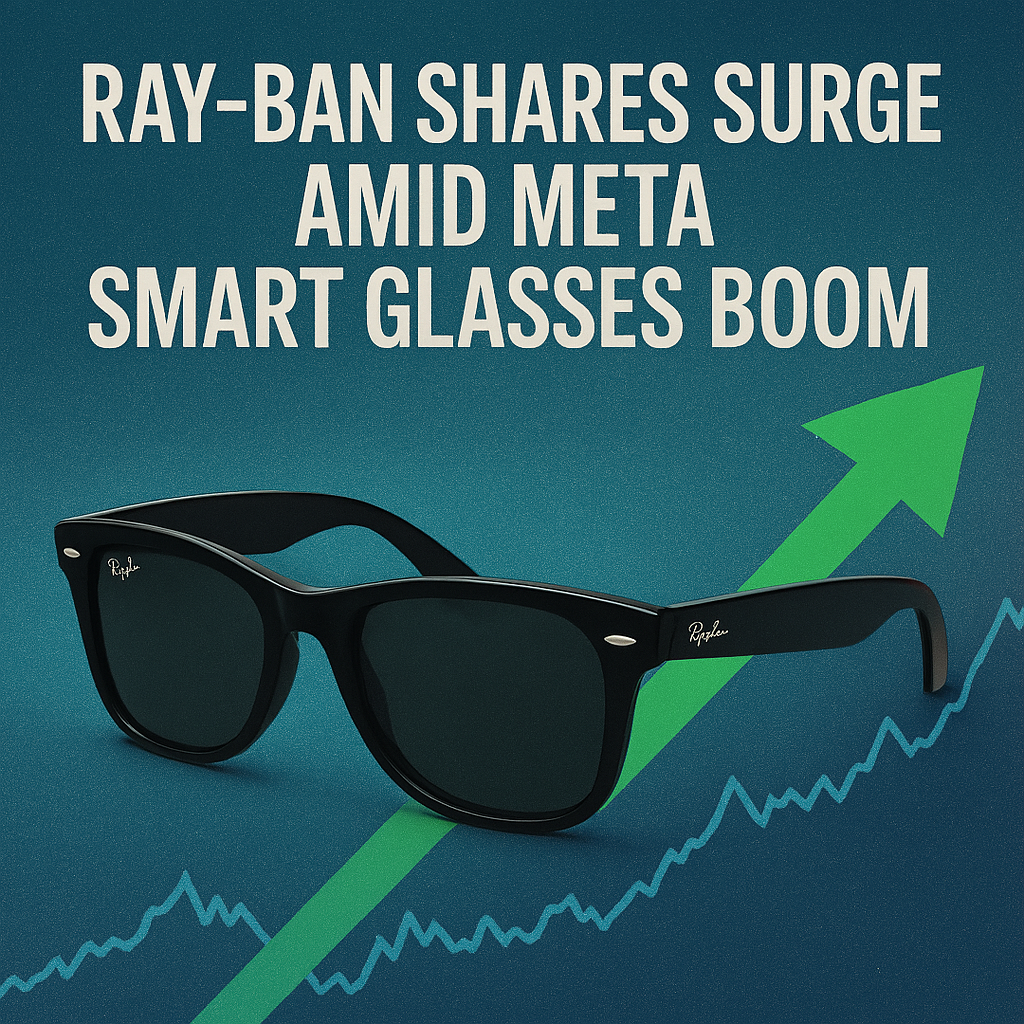
When Meta first partnered with Ray-Ban to create smart glasses, many saw it as another experimental step in Mark Zuckerberg’s vision for the metaverse. But today, that vision is becoming a tangible success. The latest generation of Ray-Ban Meta smart glasses is not only gaining traction among tech enthusiasts but also boosting the financial performance of EssilorLuxottica, the company behind Ray-Ban’s iconic eyewear.
The growing excitement around these AI-powered glasses has sent EssilorLuxottica’s shares climbing, signaling that smart eyewear may finally be ready for mainstream adoption. Beyond the hype, the partnership reflects a strategic turning point in how technology and fashion converge to shape the future of personal computing.
A Partnership Forged in Innovation
The collaboration between Meta and Ray-Ban began in 2021 with the launch of Ray-Ban Stories, the first generation of connected eyewear. The concept was simple but ambitious — glasses that could capture photos, record videos, and let users interact hands-free through voice commands.
However, the true leap forward came with the second generation released in late 2023. These glasses integrated Meta AI, improved camera and audio systems, and live streaming capabilities, turning them from a niche gadget into a functional, stylish piece of wearable technology.
What makes this collaboration so effective is the balance between Ray-Ban’s timeless design and Meta’s AI ecosystem. While Meta provides the intelligence — voice assistants, live translation, contextual information — Ray-Ban ensures that users actually want to wear the product.
That delicate balance is driving adoption. And now, it’s driving profit.
The Financial Boost: Ray-Ban’s Parent Company Benefits
As news spread about the surge in demand for Meta smart glasses, EssilorLuxottica’s stock began to rise steadily. Investors are seeing this as more than a passing trend — it’s a sign that the eyewear giant is successfully positioning itself at the intersection of fashion and next-generation technology.
EssilorLuxottica, which owns brands like Ray-Ban, Oakley, and Persol, is no stranger to innovation. But the collaboration with Meta has given it a new dimension — one that appeals to both tech consumers and investors alike.
According to financial analysts, the rise in shares is not just speculative. It’s driven by tangible sales performance and growing interest from global markets, especially in North America and Europe. The strong pre-orders and positive reviews for Meta’s latest smart glasses have added credibility to a product category that was once considered risky.
This trend echoes how Apple’s wearables line — including AirPods and the Apple Watch — evolved from skepticism to dominance. Ray-Ban and Meta are now poised to replicate that trajectory in the eyewear segment.
Why Meta’s Smart Glasses Are Winning Over Consumers
The reason behind this market enthusiasm is not purely financial — it’s technological. The new Ray-Ban Meta Smart Glasses have successfully bridged the gap between functionality and fashion.
Here’s why consumers are responding positively:
- Integrated Meta AI:
The glasses come with Meta’s voice assistant that allows users to ask questions, get real-time translations, and even identify landmarks or objects they’re looking at — all through natural voice interaction. - Improved Camera and Audio:
The second-generation model includes an ultra-wide 12MP camera capable of capturing high-quality photos and 1080p video. The upgraded microphones deliver clearer audio for calls and recordings, even in noisy environments. - Seamless Live Streaming:
Content creators and influencers are embracing the glasses for their ability to stream directly to Instagram and Facebook Live, offering an authentic first-person perspective. - Comfort and Design:
Unlike bulky AR headsets, Ray-Ban’s classic frame design makes these glasses look and feel natural. They come in several styles and lens types, maintaining the brand’s fashion appeal. - Battery and Connectivity Improvements:
Longer battery life and enhanced Bluetooth connectivity have resolved many of the early complaints from the first generation, making them more reliable for daily use.
These upgrades demonstrate how Meta is strategically using AI to enhance real-world experiences rather than confining it to screens. The glasses are no longer just tech accessories — they’re an entry point to the evolving world of ambient computing.
The Broader Vision: Meta’s Push Into Wearable AI
Meta’s long-term ambition goes beyond smart glasses. The company envisions a future where AI becomes seamlessly integrated into everyday life through wearable and spatial computing devices.
Mark Zuckerberg has repeatedly emphasized that the next computing platform won’t be confined to smartphones or desktops. Instead, it will revolve around devices that feel natural — like glasses — that help users interact with the digital world without constant screen time.
In this sense, the Ray-Ban partnership is Meta’s most successful hardware venture to date. While products like the Meta Quest headset cater to a more niche market, the smart glasses appeal to a far wider audience.
They represent a bridge between current consumer habits and Meta’s future metaverse vision. Each interaction, photo, and command used through these glasses strengthens Meta’s AI ecosystem — providing data and feedback that improve the underlying software.
Analysts See Long-Term Growth Potential
Market analysts are increasingly optimistic about EssilorLuxottica’s tech-driven growth strategy. The company’s early success with Meta’s glasses could set the stage for broader adoption across its other brands.
Some forecasts even suggest that the smart eyewear market could exceed $20 billion by 2030, driven by advances in miniaturized hardware, better battery efficiency, and AI integration.
If Meta continues to iterate on its AI models and hardware, and Ray-Ban maintains its fashion leadership, the collaboration could become the Apple Watch equivalent for eyewear — a stylish yet functional device category that defines a new consumer standard.
Financial institutions are also noting how this trend positions EssilorLuxottica as a technology-enabler in addition to being a fashion company. By diversifying its portfolio with smart products, the brand is future-proofing itself against market saturation in traditional eyewear.
The Competitive Landscape: Apple and Others Eye the Market
While Ray-Ban and Meta are enjoying their moment, competition is quietly heating up. Apple, Samsung, and Google are all developing their own forms of augmented reality (AR) eyewear.
However, none have managed to combine style, affordability, and usability as effectively as Ray-Ban Meta glasses. Apple’s rumored AR glasses remain in development, while Google’s past attempt (Google Glass) failed due to design and privacy concerns.
This gives the Meta-Ray-Ban alliance a significant first-mover advantage, allowing them to define user expectations and standards for smart eyewear.
Moreover, Meta’s early integration of AI capabilities gives it a technological head start. By embedding real-time translation, visual recognition, and conversational AI, the glasses go beyond simple recording devices — they become context-aware companions.
Challenges Ahead
Despite the optimism, challenges remain. Privacy concerns are resurfacing as users wear cameras in public spaces. Meta has implemented visible recording indicators and built-in privacy features, but skepticism persists.
Battery life and production costs are also ongoing hurdles. Miniaturizing hardware without compromising comfort continues to be a delicate balance.
Finally, the product’s reliance on Meta’s ecosystem might deter users who prefer platform neutrality or who have concerns about data collection.
Nevertheless, these issues are not unique to Meta. Every company entering the wearable AI space will have to address similar challenges, and the lessons learned from Ray-Ban’s approach could help set industry standards.
The Cultural Shift: From Gadgets to Lifestyle
Beyond numbers and specs, the real significance of the Meta-Ray-Ban collaboration lies in its cultural impact. Smart glasses have often been viewed as futuristic or even intrusive, but Ray-Ban’s design heritage normalizes them as everyday accessories.
By blending technology with fashion, they’re making the idea of wearable intelligence accessible and socially acceptable. This shift could be as transformative as the transition from feature phones to smartphones a decade ago.
If current trends continue, we may soon see smart glasses replacing earbuds as the preferred wearable for AI interaction — a future where you don’t just carry your assistant, you wear it.
Conclusion: The Future Looks Bright for Ray-Ban and Meta
The rise in EssilorLuxottica’s shares marks more than just investor optimism — it’s a reflection of changing consumer behavior and the growing acceptance of AI in daily life.
Meta’s smart glasses are still in their early stages, but they’re paving the way for an ecosystem where technology blends seamlessly with fashion and function. For Ray-Ban, this partnership could redefine its legacy — not just as a symbol of style, but as a pioneer in the future of wearable computing.
As smart glasses become more capable and socially integrated, it’s becoming clear: the next big screen isn’t in your pocket — it’s on your face.