
The technology industry is at a turning point. For decades it has operated under a linear “take-make-dispose” model: raw materials go into manufacturing, devices are sold, used—and then often discarded. But mounting environmental pressures and resource constraints have prompted a shift toward a circular economy model—especially in electronics. In this paradigm, products are designed for repair, reuse, modular upgrades and eventual recycling, so that materials stay in-use instead of ending up as waste.
In this article we’ll explore what a circular economy means in tech, why it matters, and how leading brands are stepping up—focusing especially on recyclable gadgets and smart replacement parts that enable the device lifecycle to extend and loop back. We’ll cover three standout case studies, lessons for consumers, and what the future may hold.
What is the Circular Economy in Technology?
At its core, the circular economy (CE) flips the linear production-consumption model. Instead of “take resources → make product → use → discard,” the CE emphasises: design out waste and pollution, keep products and materials in use, and regenerate natural systems. stuff.tv+1
In the electronics context this means:
- Design for longevity and repairability: Gadgets built to last, with parts easily replaceable, so the device doesn’t become obsolete prematurely.
- Modularity and upgrades: Rather than replacing the entire device when one component fails or becomes outdated, you swap that part.
- Use of recycled and recyclable materials: Minimizing virgin resource extraction by recovering materials from end-of-life devices and integrating them into new products. computerworld.com+1
- Take-back, refurbishment and recycling systems: Ensuring devices at end-of-life don’t just go to landfill, but are collected, refurbished, harvested for parts or recycled back into raw materials. Fairphone+1
In short: move from “make, use, throw” to “make, use, reuse/refurbish, recycle → new”. The benefit is clear: fewer resources consumed, less e-waste, less environmental impact.
Why This Matters Now
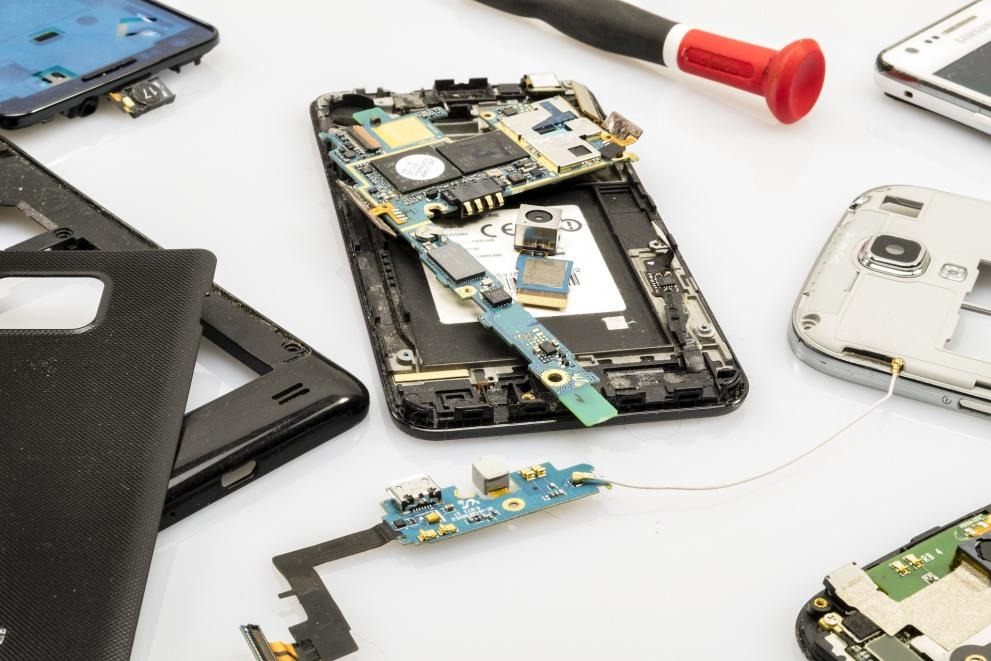
The growing e-waste mountain
Electronic waste is among the fastest-growing waste streams globally. According to recent analysis, the materials in electronics (plastics, metals, rare earths) are often not recovered efficiently, meaning resource-use and environmental burdens continue to increase. Sustainability Directory
Resource scarcity and supply-chain risk
Many devices rely on rare metals (e.g., cobalt, tin, tungsten, rare earths) whose mining is ecologically damaging and geopolitically sensitive. Recycling and reusing these materials helps reduce risks and environmental cost. For example, Apple reports that by 2022 about 20% of all materials shipped in its products came from recycled or renewable sources, with targets for 100% recycled for certain metals by 2025. computerworld.com
Consumer and regulatory pressure
Consumers are increasingly environmentally conscious; regulators (especially in the EU) are pushing for extended producer responsibility (EPR), right-to-repair laws and stricter e-waste rules. Brands that don’t adapt may face reputational, legal and financial risks.
Business opportunity
Circulating materials and extending device lifespans also make economic sense. Fewer raw-material costs, potential new services (repair, refurbishment, leasing) and differentiation in a crowded market.
Brands Leading the Shift: Recyclable Gadgets & Smart Parts
1. Fairphone: Modular repairable smartphones built for circularity
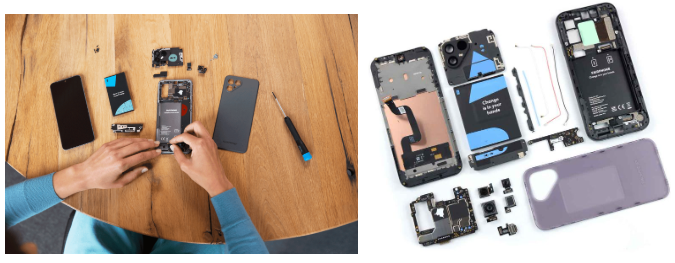
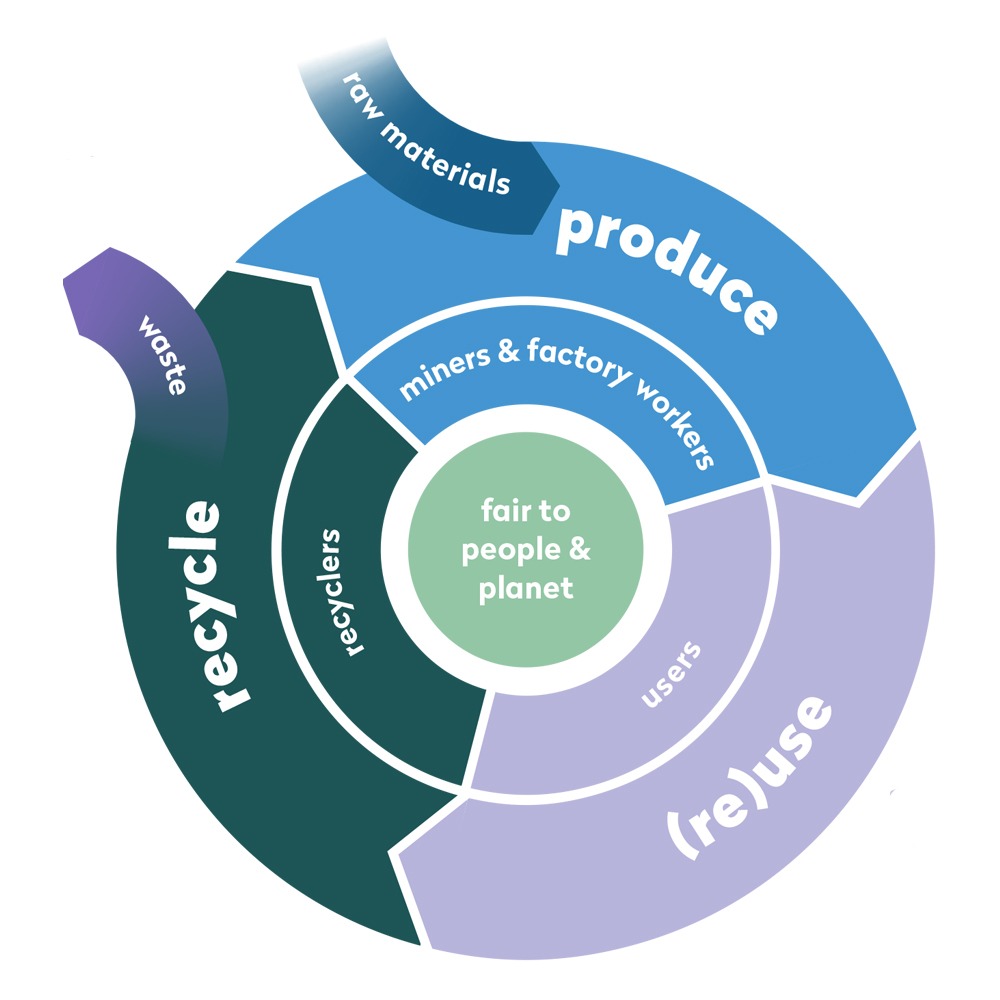
Fairphone is a Dutch company that has made circular economy principles central to its smartphone business. Key highlights:
- The devices are modular, meaning users can open the phone and replace key parts (battery, screen, camera, etc.) themselves, prolonging the device’s life instead of replacing the whole unit. Fairphone+1
- They have an “e-waste neutral” claim: for every product sold, an equivalent weight of e-waste is collected and recycled. Fairphone
- Their modularity and repairability have been praised: e.g., the Fairphone 2 scored a perfect 10/10 in replaceability in one review. Circulary
- They focus on fair-sourcing of materials, longevity of software support (many years of OS/security updates), and encouraging reuse and recycling of parts. Fairphone
Why this is important:
By making a phone that can be repaired, upgraded and brilliantly reused, Fairphone demonstrates that electronics can be designed for circularity rather than disposal. For tech blog readers, this is powerful: it shows how design plus business model can align with sustainability.
2. Apple: Scaling recycling and material recovery
While not purely “circular gadget” in the modular sense, Apple is a major global electronics brand whose scale gives its sustainability initiatives significant weight.
- Apple has committed to using 100% recycled rare earth magnets in its devices by 2025 and has already made strides: by 2022, over 20% of materials in Apple products came from recycled or renewable sources. computerworld.com+1
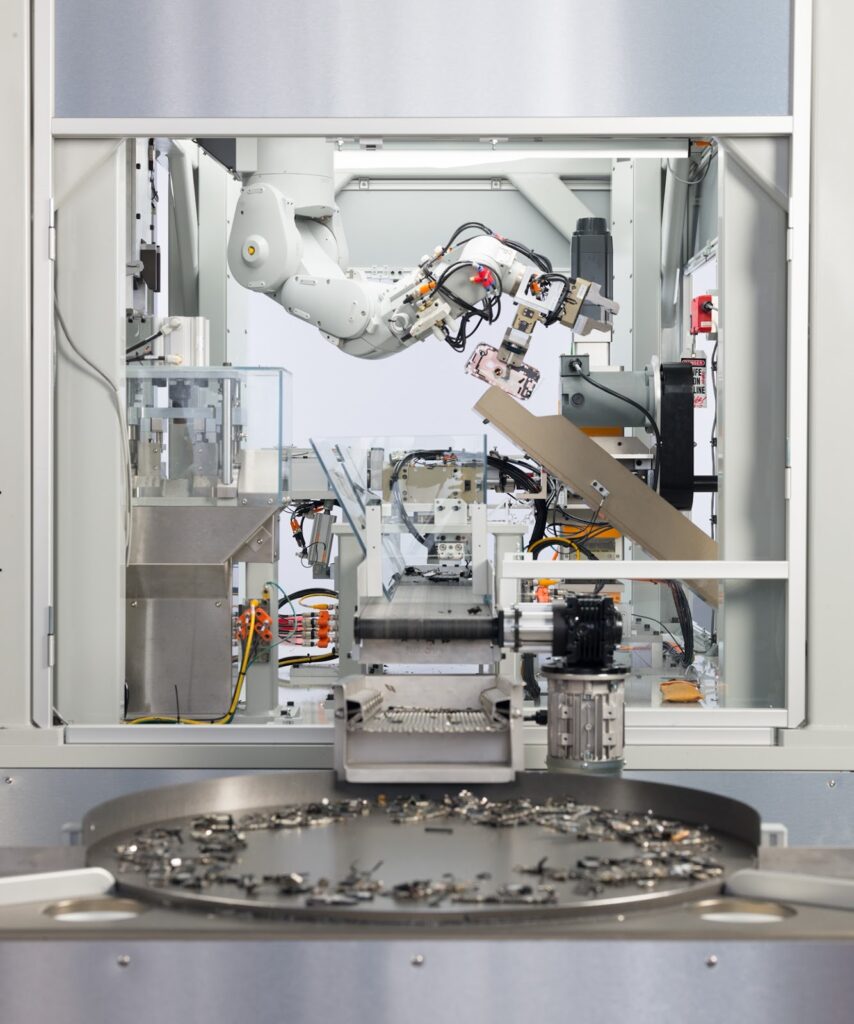
- Apple developed a robotic disassembly system called Daisy, capable of dismantling iPhones at scale to recover valuable materials like cobalt, aluminum, gold, tungsten and rare earths. epsc.ca
- Their overall circularity strategy includes “design for reuse or recycling”, materials recovery, and reducing virgin-resource demand. institute.smartprosperity.ca
Why worth noting:
Apple shows that even at massive scale you can embed circular-economy practices: reclaimed materials, device take-back programs, automated recovery. For a tech blog audience, this illustrates how mainstream tech can evolve, not just niche brands.
3. Dell: Designing for repair and material reuse
Dell has publicly committed to circular economy design principles:
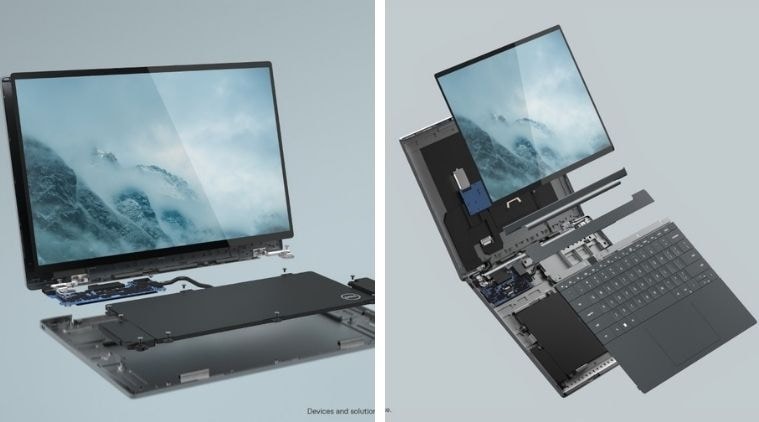
- Dell’s “Accelerating the Circular Economy” initiative emphasises durability, repair & refurbishment, material reuse and design for disassembly. Dell
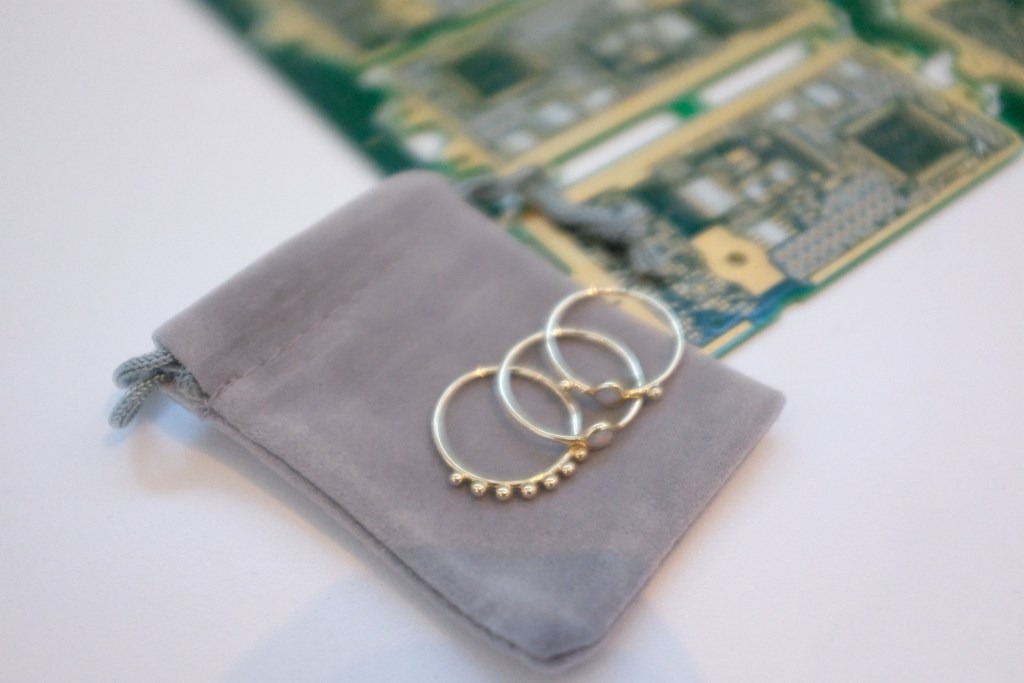
- It has developed processes that recover gold and other valuable metals from old motherboards and reuse them in new devices—“closed-loop” materials streams. institute.smartprosperity.ca+1
- They also highlight packaging made from ocean-plastics or recycled materials and less waste in manufacturing. Sustainable Brands
Why this matters:
Dell’s approach shows that circularity can apply across device categories (not just phones): laptops, desktops, server equipment. It emphasises that repair and material recovery are key levers for sustainable tech.
Key Strategies & Best Practices for Circular Tech
From these examples and broader industry research, several actionable strategies emerge:
- Design for repair and modularity: Make components replaceable, provide spare parts, ensure easy disassembly.
- Use recycled or responsibly-sourced materials: As Apple and others show, incorporating recycled metals/plastics reduces virgin resource demand.
- Implement take-back/refurbish programs: A device’s end-of-life should feed into reuse, refurbishment or material recovery streams, not landfill.
- Extend software/firmware support: Device lifespans are often limited by software updates. Extending support improves longevity and slows replacement cycles.
- Encourage upgrade rather than replace: If one component (camera, battery) fails, swap it instead of replacing the whole gadget.
- Quantify and communicate circular metrics: Brands that publish data (e.g., percentage recycled materials, take-back volumes) build trust and differentiate.
- Educate consumers & repair networks: Consumer behavior (keeping devices longer, repairing instead of discarding) is critical.
- Business model innovation: Consider leasing, repair-services, device-as-a-service models where circularity is built-in.
What This Means for Consumers & Tech Bloggers
As a tech blog owner (like you at bytenest.tech), these trends provide rich content and guidance for your audience:
- Content opportunities: Write deep-dives on modular smartphones (Fairphone), explain how big-brands are doing recycled materials (Apple, Dell), review repairable gadgets, compare linear vs circular tech models.
- Consumer advice: Encourage readers to choose devices with modular parts, take-back options, long software support. Teach how to keep gadgets for longer, opt for repair rather than replace.
- SEO advantage: Use keywords like “circular economy electronics”, “repairable gadget modular phone”, “recycled materials smartphone industry” to capture rising interest.
- Affiliate/partnership angles: Tech accessories that support repair (replacement batteries, parts), certified refurbished devices, gadget trade-in programs—all tie into circular economy.
- Data-driven insight: Use industry statistics and brand reports (e.g., percentage recycled materials) to strengthen credibility.
Challenges & Considerations
While the circular tech movement is promising, it isn’t without hurdles:
- Scale and economics: For many companies, integrating recycled materials or modular designs adds cost or complexity. Big-brand scale helps offset this, smaller players may struggle.
- Consumer behavior: People still tend to upgrade frequently; convincing them to keep devices longer or pay for repair is difficult.
- Greenwashing risk: Some brands may market “eco” credentials without fully delivering circular practices. Judgment and transparency matter.
- Recycling infrastructure: Collecting old devices, transporting, disassembling, recovering materials — all require robust systems. Many regions don’t yet have this. esmartrecycling.com
- Technology cycles: Rapid advances in tech may drive replacement before full lifecycle; circular models must adapt to upgrades and change.
- Material complexity: Modern electronics often use mixed materials, making disassembly and recycling harder. New research (e.g., recyclable PCBs) is promising but early. arXiv
The Road Ahead: Trends to Watch
- Device-as-a-service / leasing models: Rather than selling products, brands lease them and recover devices at end-term for refurbishment or reuse.
- Modular standards & repair ecosystems: As consumers demand it and regulation tightens, more devices may adopt modular architectures and standardized replacement parts.
- Advanced recycling technologies: Robotics, AI-based sorting, new materials that simplify recycling (e.g., dissolvable circuits) — research is underway. arXiv
- Material innovation: More use of bio-based materials, recycled plastics/metals, “design for disassembly” materials.
- Policy and regulation: Laws enforcing right to repair, take-back mandates, recycled content thresholds will push industry faster.
- Greater transparency and circular metrics: Brands will publish more circular-economy KPIs (percent recycled content, take-back volume, device-lifespan data).
Conclusion
The circular economy is no longer a niche sustainability concept—it’s quickly becoming vital to the future of tech. For gadget makers, integrating recyclable materials, modular repairable parts, and take-back systems is not only responsible but increasingly competitive. For your readers at bytenest.tech, it means there’s a rich story to tell: how technology can evolve from disposability to durability, from waste to resource, from replacement to upgrade.
By shining a spotlight on brands like Fairphone, Apple and Dell—and breaking down what they’re doing and why—you give your audience insight into the systems behind their devices, how they can make smarter choices, and how the tech industry is transforming. Crafting detailed articles about modular phones, recycled-material laptops, repair-friendly accessories and the business models that enable circularity will help your blog stand out in the SEO ecosystem and align with growing consumer interest in sustainable tech.
Embrace the “circular” wave in tech. It’s not just about greener gadgets—it’s about smarter design, smarter consumption, and a smarter future.