
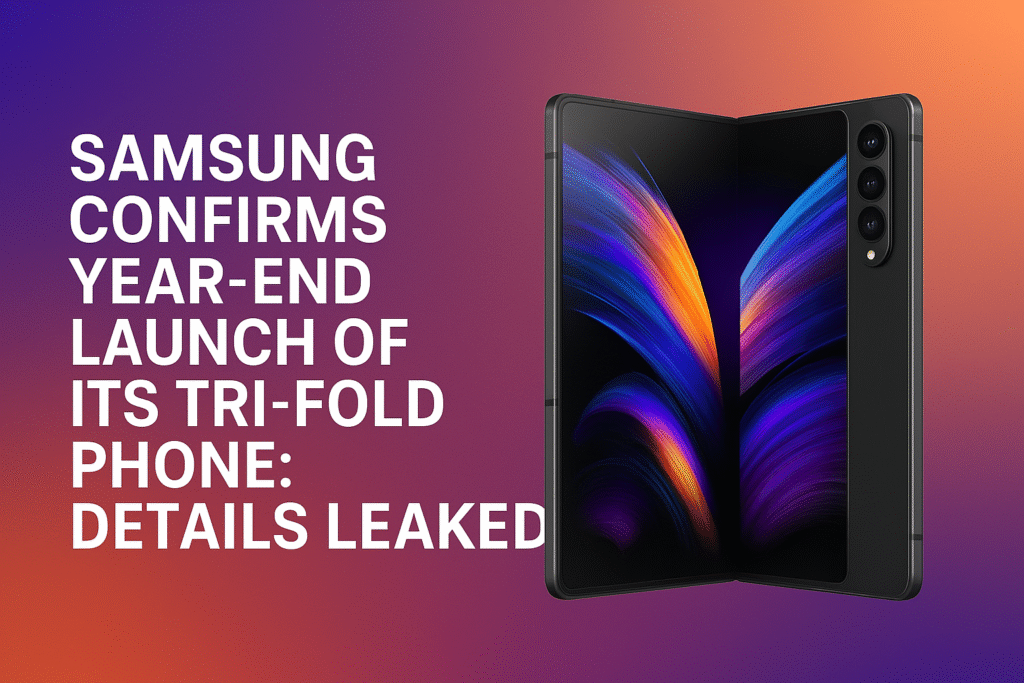
For years, foldable smartphones have been a bold experiment in the mobile industry. While Samsung pioneered the Galaxy Z Fold and Galaxy Z Flip series, users and analysts alike have been wondering what comes next. Now, it’s official: Samsung has confirmed that its long-rumored tri-fold phone will launch by the end of this year, marking a new chapter in smartphone design.
Adding fuel to the excitement, recent leaks have unveiled intriguing details about the device’s design, specifications, and potential positioning in Samsung’s premium lineup. Here’s everything you need to know.
The Next Step After Foldables
Samsung has long dominated the foldable segment, with its Galaxy Z Fold and Flip devices capturing the attention of both early adopters and mainstream consumers. However, innovation in foldables has been gradual—thinner frames, improved hinges, and stronger displays.
The upcoming tri-fold phone promises a more radical leap. Instead of folding once, the display will fold twice, expanding the usability and redefining what a smartphone can be. The concept was first teased at CES and MWC in past years, but Samsung had not confirmed a commercial release—until now.
By the end of 2025, we may see the world’s first widely available tri-fold phone, solidifying Samsung’s lead in the foldable market.
What We Know From the Leaks
Several reliable industry insiders and leaked renders have given us a glimpse into the tri-fold design:
1. Three-Panel Foldable Display
Unlike the Galaxy Z Fold, which opens like a book, the tri-fold phone reportedly features three separate panels connected by two hinges. When unfolded, users will have a tablet-sized display—estimated to be around 10 inches diagonally.
This makes it not just a phone, but a pocket-sized tablet replacement. Imagine browsing, multitasking, or even running desktop-like experiences on a device that folds neatly into your pocket.
2. New Flexible OLED Technology
Samsung Display, the division behind these innovations, has been perfecting Flex In & Out OLED panels. These are designed to bend multiple times without visible creasing, an issue that still plagues existing foldables.
The tri-fold device is rumored to use this technology, ensuring a smooth, crease-minimized experience even after thousands of folds.
3. S Pen Integration
One of the most exciting rumors is S Pen compatibility. With a larger unfolded screen, the tri-fold phone could act as a productivity powerhouse—perfect for creatives, students, and professionals. If true, this positions the device closer to Samsung’s Galaxy Tab lineup while keeping it portable.
4. Improved Battery Design
Foldable phones have always struggled with battery capacity due to design constraints. However, leaked details suggest Samsung has engineered a segmented battery system, distributed across the panels to maintain slimness while delivering long-lasting performance.
5. Pricing Speculation
If you’re wondering about the cost, prepare for a premium price tag. Early industry whispers suggest that the tri-fold phone could start at $2,000–$2,200, making it even more expensive than the Z Fold series. However, early adopters are likely willing to pay for the innovation.
Why a Tri-Fold Phone Matters
At first glance, the idea of a tri-fold phone might seem like a niche experiment, but it actually reflects a broader shift in consumer tech.
- Work and Play on One Device: With the rise of remote work and mobile productivity, users want bigger screens without sacrificing portability.
- Entertainment Everywhere: Imagine unfolding a 10-inch display on the go for movies, games, or even VR/AR applications.
- Future-Proofing the Ecosystem: A tri-fold device fits into Samsung’s broader Galaxy ecosystem, syncing with Galaxy Watches, Buds, Tabs, and even Galaxy AI services.
This launch could also spark competition from rivals like Huawei, Xiaomi, and Honor, who have already showcased foldable prototypes but lag behind in mass production.
Challenges Samsung Must Overcome
Of course, building a tri-fold smartphone isn’t without risks.
- Durability – Two hinges mean more potential points of failure. Samsung needs to prove this phone can survive daily use.
- Software Optimization – Android has adapted well to foldables, but tri-fold devices will demand new multitasking interfaces and app compatibility.
- Weight and Thickness – Adding a third panel could make the device bulky. Samsung will have to engineer a balance between durability and portability.
- Price Barrier – At over $2,000, the phone might be too expensive for the mainstream market, at least in the first generation.
Still, if anyone can push the foldable form factor further, it’s Samsung.
What This Means for the Smartphone Market
Samsung’s confirmation comes at a crucial time. Global smartphone sales have been slowing, with consumers holding onto devices longer. Foldables have been one of the few growth areas, especially in Asia and Europe.
By introducing a tri-fold phone, Samsung not only extends its lead in foldables but also sets a new benchmark for innovation. This could pressure Apple and Google to experiment with larger, more flexible form factors in the future.
Should You Wait for the Tri-Fold?
If you’ve been eyeing a Galaxy Z Fold or Flip, you might wonder whether to hold out for the tri-fold. Here are some points to consider:
- Early Adopter Tax: The first generation will be the most expensive and potentially less refined.
- Innovation Factor: If you want the latest cutting-edge tech, the tri-fold will be unmatched.
- Productivity Boost: For professionals and creators, the tri-fold could replace both your phone and tablet.
For the average user, Samsung’s current foldables may still provide the best balance of features and price. But for tech enthusiasts, the tri-fold phone will be hard to resist.
Final Thoughts
The confirmation of Samsung’s tri-fold phone is more than just another product launch—it represents a new phase in mobile innovation. With leaked details pointing to a massive screen, advanced OLED technology, and possible S Pen integration, this device could redefine the way we think about smartphones.
Challenges remain—durability, pricing, and software optimization—but Samsung has proven time and again that it can overcome these barriers. As we approach the year-end launch, excitement is only building.
One thing is certain: the Samsung tri-fold phone won’t just fold—it will unfold the future of mobile devices.