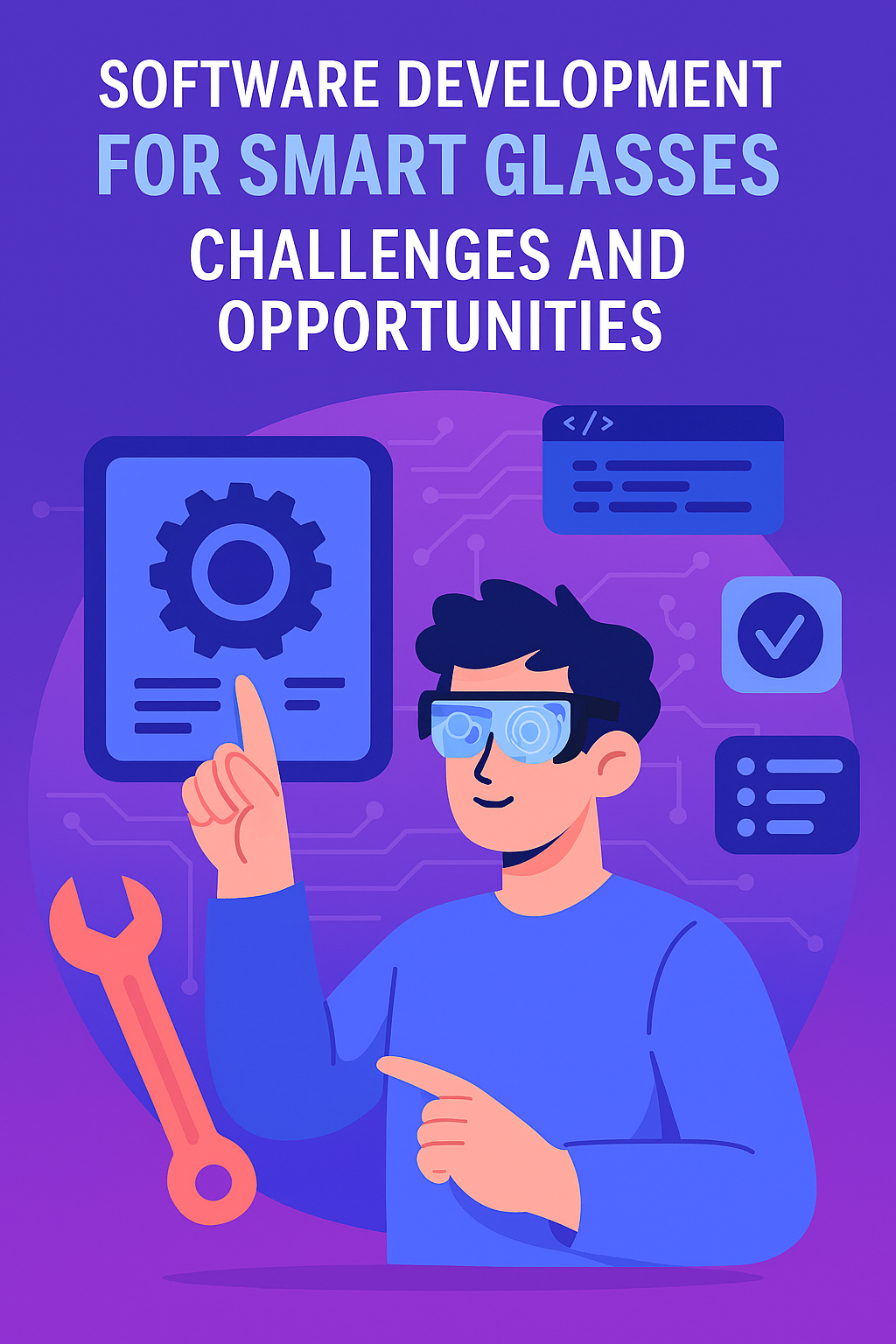
Smart glasses are quickly moving from futuristic gadgets seen in sci-fi films to real-world tools with growing adoption in healthcare, manufacturing, retail, gaming, and personal use. Unlike traditional wearables such as smartwatches or fitness trackers, smart glasses combine advanced sensors, augmented reality (AR), and artificial intelligence (AI) into a device worn directly on the face.
As this technology matures, software development emerges as the critical factor determining whether smart glasses become widely adopted or remain niche devices. While hardware lays the foundation, it is the software ecosystem—applications, user interfaces, connectivity protocols, and security layers—that enables true functionality.
In this article, we’ll explore the challenges and opportunities in software development for smart glasses, examining what developers must overcome and where innovation can thrive.
Why Smart Glasses Matter in Today’s Tech Landscape
Before diving into the software side, it’s important to understand why smart glasses are significant:
- Hands-free computing: Users can interact with digital content without needing a smartphone or PC.
- Immersive AR/VR experiences: Real-time overlays of information enhance everything from gaming to fieldwork.
- Cross-industry applications: From surgeons receiving visual guidance to factory workers accessing schematics, smart glasses open up powerful use cases.
- Integration with AI: Voice commands, object recognition, and contextual awareness are key enablers powered by software.
Given this context, software development becomes not just a technical requirement, but a strategic driver of adoption and innovation.
Challenges in Software Development for Smart Glasses
Despite their promise, smart glasses face multiple barriers that make software development uniquely complex.
1. Limited Processing Power and Battery Life
Smart glasses must remain lightweight and comfortable, meaning they cannot house large batteries or powerful processors like smartphones. Developers must optimize software for efficiency:
- Lightweight applications that minimize CPU/GPU usage.
- Battery-conscious designs that avoid draining power with heavy graphics.
- Use of cloud processing and edge computing to offload workloads.
The challenge lies in delivering rich AR/VR experiences while staying within strict hardware limitations.
2. User Experience and Interface Design
Designing software for smart glasses is radically different from smartphones or PCs. Developers must rethink:
- Gestures, voice, and gaze tracking as primary input methods.
- Minimalist AR overlays that provide useful information without obstructing vision.
- Accessibility for users with different vision capabilities.
Poor UX can lead to motion sickness, eye strain, or simply low adoption rates. Creating intuitive interfaces is a major development challenge.
3. Privacy and Security Concerns
Smart glasses often feature cameras, microphones, and sensors that capture sensitive data in real time. Developers must ensure:
- Strong data encryption for user privacy.
- On-device AI processing to limit cloud exposure.
- Clear consent mechanisms when recording or sharing information.
Without robust privacy safeguards, public trust in smart glasses could falter.
4. Platform Fragmentation
The smart glasses market is still fragmented, with platforms from Meta, Apple, Microsoft, Google, and smaller players. This creates challenges:
- No universal operating system or app store.
- Inconsistent APIs and SDKs across platforms.
- Difficulty for developers to build cross-platform applications.
Until standards mature, developers must decide whether to build for one ecosystem or adopt cross-development strategies.
5. Connectivity and Real-Time Processing
Smart glasses often require real-time data streaming for AR overlays, navigation, or collaboration. Developers must handle:
- Low-latency connections via 5G or Wi-Fi 6.
- Seamless synchronization with smartphones and cloud services.
- Offline functionality for environments without connectivity.
Balancing real-time performance with hardware constraints remains a complex challenge.
Opportunities in Software Development for Smart Glasses
While the challenges are significant, the opportunities are equally promising. Developers who address these pain points can position themselves at the forefront of a fast-growing industry.
1. Augmented Reality Applications
AR is the most compelling feature of smart glasses. Developers can build apps that:
- Assist surgeons with real-time imaging and patient data.
- Provide technicians with step-by-step repair instructions.
- Enhance education with interactive learning environments.
- Support gaming and entertainment through immersive overlays.
AR-driven applications represent the most direct path to mainstream adoption.
2. AI-Powered Assistants
With natural language processing (NLP), computer vision, and contextual AI, smart glasses can become powerful personal assistants. Developers can leverage AI for:
- Object recognition: Identifying products, landmarks, or tools.
- Contextual guidance: Offering real-time information based on the user’s environment.
- Productivity: Managing schedules, transcribing conversations, or translating languages.
AI integration opens the door to apps that feel truly futuristic.
3. Enterprise and Industrial Use Cases
Enterprises are early adopters of smart glasses due to productivity and safety benefits. Opportunities include:
- Remote collaboration: Engineers and field workers share live video with supervisors.
- Inventory management: Hands-free scanning and tracking in warehouses.
- Healthcare: Surgeons stream procedures for training or receive real-time alerts.
Developers who create specialized enterprise applications can tap into high-value markets.
4. Cross-Platform Development Tools
The lack of standardization presents an opportunity for tool developers. Companies can create:
- Frameworks and SDKs that simplify building for multiple platforms.
- Middleware solutions that bridge fragmented ecosystems.
- Cloud-based platforms for distributing smart glasses apps.
These tools can become essential infrastructure for the smart glasses software industry.
5. Consumer Lifestyle Applications
Beyond enterprise and AR-heavy apps, there’s space for everyday lifestyle software:
- Fitness and wellness tracking integrated with visual cues.
- Navigation apps with real-world overlays for pedestrians or cyclists.
- Social media integration that enables instant capture and sharing.
As consumer demand grows, developers can create apps that blend seamlessly into daily routines.
Best Practices for Developers Entering the Smart Glasses Market
For those looking to develop software for smart glasses, several best practices can guide success:
- Design for simplicity: Minimalist interfaces and efficient workflows matter most.
- Leverage cloud and edge computing: Offload heavy processing to external servers.
- Focus on battery optimization: Test software under real-world usage to minimize drain.
- Prioritize privacy: Transparent policies and secure coding practices are essential.
- Iterate with user feedback: Continuous testing helps avoid UX pitfalls like motion sickness.
- Stay platform-agnostic when possible: Adopt frameworks that ease cross-platform deployment.
The Future of Smart Glasses Software
Looking ahead, smart glasses software development will evolve in several key directions:
- Integration with IoT: Glasses acting as control hubs for smart homes and workplaces.
- Mixed reality convergence: Blending AR and VR into seamless experiences.
- Advances in natural input: Eye tracking, brain-computer interfaces, and more natural gestures.
- Expansion of developer ecosystems: Dedicated app stores and SDKs will lower barriers.
- Mainstream consumer adoption: As costs decrease and killer apps emerge, smart glasses could follow the trajectory of smartphones.
Conclusion
Smart glasses represent a bold step toward a future of hands-free, immersive, and AI-powered computing. While software development for these devices presents challenges such as hardware limitations, privacy concerns, and platform fragmentation, it also unlocks immense opportunities in AR applications, AI-driven assistants, enterprise solutions, and consumer lifestyle apps.
For developers, the key lies in embracing efficiency, prioritizing user experience, and innovating with an eye toward the future. Those who invest in this emerging field now will shape how billions of people interact with digital content in the coming decades.