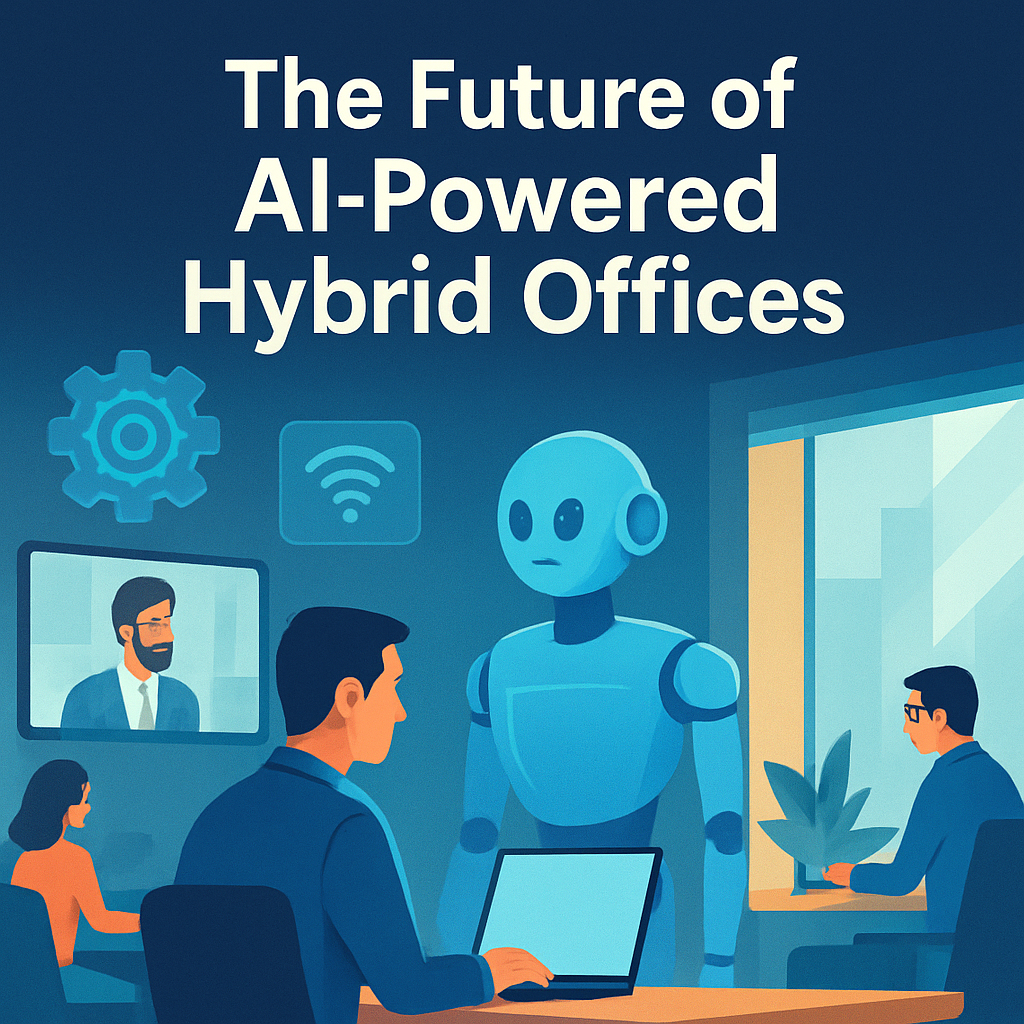
Hybrid work has moved from being a pandemic-era necessity to a long-term reality. As companies redefine their operations, artificial intelligence (AI) is becoming a key driver of this transformation. The hybrid office of the future won’t just be a mix of in-office and remote work—it will be a dynamic, AI-powered ecosystem that enhances productivity, strengthens collaboration, and optimizes both employee and business outcomes.
In this article, we’ll explore how AI is shaping hybrid work environments, the benefits and challenges, and what the next decade could look like for businesses that embrace this technological evolution.
1. The Rise of Hybrid Work
Before diving into AI, it’s important to understand why hybrid work has taken hold. According to recent workplace studies, over 60% of employees now prefer a mix of remote and on-site work. Businesses benefit too: reduced office costs, wider talent pools, and increased employee satisfaction.
However, hybrid work also introduces challenges:
- Communication barriers between remote and on-site teams
- Difficulty maintaining company culture
- Tracking productivity without micromanagement
- Ensuring security across distributed networks
This is where AI comes in—not as a replacement for human effort, but as an intelligent assistant that bridges the gap between physical and virtual workspaces.
2. How AI is Transforming Hybrid Offices
AI technologies are being integrated into every aspect of workplace management. Here’s how they are revolutionizing the hybrid office model:
a. Smart Scheduling and Resource Allocation
AI-driven scheduling tools can automatically arrange meetings, taking into account time zones, employee availability, and even preferred work hours. Some systems use predictive algorithms to recommend meeting formats—whether in-person, virtual, or hybrid—based on project needs.
Example: Platforms like Microsoft Viva and Google Workspace AI analyze work patterns to reduce unnecessary meetings and free up focus time.
b. AI-Powered Collaboration Tools
Virtual meeting fatigue is a real issue. AI is improving tools like Zoom, Microsoft Teams, and Slack with real-time transcription, language translation, and noise cancellation. Advanced AI assistants can summarize long conversations, highlight action items, and automatically update project management tools.
In the future, expect AI avatars to represent remote workers in AR or VR meetings, making interactions feel more natural and inclusive.
c. Intelligent Workspace Management
For the physical office, AI can track room usage, lighting, and temperature to ensure comfort and energy efficiency. Smart sensors can reserve desks, detect occupancy, and adjust environmental settings automatically.
In hybrid settings, these systems can prioritize spaces for team collaboration days, ensuring the office is used efficiently.
d. Performance Tracking Without Micromanagement
Rather than invasive monitoring, AI can analyze work patterns, project progress, and employee engagement through anonymized data. This helps managers identify burnout risks and skill gaps while respecting privacy.
Example: AI dashboards can suggest training modules or recommend workload adjustments to maintain balance.
e. Enhanced Cybersecurity
With employees working from multiple locations, AI-powered cybersecurity systems can detect unusual network activity, flag phishing attempts, and respond to threats in real time. AI can also manage secure identity verification for remote logins, reducing the risk of data breaches.
3. Benefits of AI in Hybrid Offices
The integration of AI into hybrid work offers multiple advantages:
- Increased Productivity – AI reduces repetitive tasks like scheduling and data entry, freeing employees to focus on high-value work.
- Improved Collaboration – Real-time translation and transcription break language barriers in global teams.
- Better Decision-Making – AI analytics offer insights into workflow efficiency, employee engagement, and resource allocation.
- Cost Savings – Optimized office space usage and reduced travel lead to lower operational expenses.
- Enhanced Employee Well-being – AI can monitor workload patterns and recommend breaks, helping prevent burnout.
4. Challenges and Risks
Despite the benefits, AI-powered hybrid offices come with challenges:
- Privacy Concerns – Over-monitoring can lead to employee distrust. Companies must ensure transparency and ethical AI usage.
- Bias in AI Algorithms – Poorly trained AI models can reinforce biases in hiring, promotion, and workload distribution.
- High Implementation Costs – Small businesses may struggle with the upfront investment in AI tools and infrastructure.
- Security Risks – AI systems can also be targeted by hackers, requiring strong protection measures.
To overcome these challenges, organizations must adopt clear AI governance policies, invest in employee training, and choose solutions with proven ethical frameworks.
5. The Future Outlook: 2025 and Beyond
Looking ahead, AI-powered hybrid offices will evolve beyond today’s capabilities. Here are key predictions:
- Virtual-First Collaboration – Augmented and virtual reality workspaces will merge physical and remote environments seamlessly.
- Personalized Work Experiences – AI will tailor workflows, schedules, and tools to individual preferences and productivity rhythms.
- Predictive Workforce Planning – AI will anticipate staffing needs, skill shortages, and project bottlenecks before they occur.
- Voice-First Workflows – Voice AI assistants will manage emails, create documents, and schedule meetings hands-free.
- Emotion-Aware Systems – AI could detect stress or frustration through voice tone or facial cues (with consent), prompting wellness support.
6. Final Thoughts
The future of work is not about replacing humans with machines—it’s about leveraging AI to make work more human. By automating routine tasks, enabling seamless collaboration, and offering actionable insights, AI has the potential to make hybrid offices more efficient, inclusive, and adaptable.
Businesses that embrace AI now will be better equipped to attract top talent, respond to market changes, and thrive in a competitive, digital-first economy.
The AI-powered hybrid office isn’t just a concept—it’s becoming a necessity. The sooner organizations adapt, the sooner they can unlock the full potential of this new era of work.