Welcome to another roundup of the most compelling tech stories of the week — perfect for readers of **ByteNest **and those who like to keep a finger on the pulse of the industry. Below you’ll find the major announcements and trends across infrastructure, device ecosystems, artificial intelligence and immersive experiences.
1. Infrastructure Leap: ESUN (Ethernet for Scale-Up Networking)
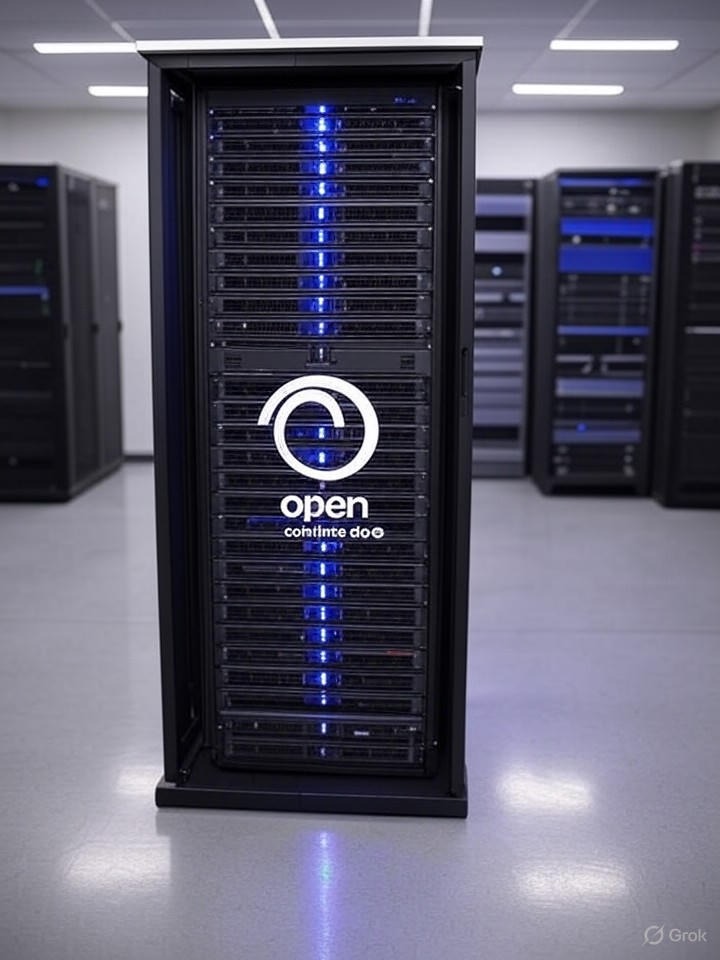
One of the most under-the-radar but potentially far-reaching developments this week is the launch of ESUN — the Open Compute Project’s new workstream focusing on Ethernet for scale-up networking in AI data centres. Open Compute Project+2WebProNews+2
What’s happening:
- ESUN brings together major players (including Meta Platforms, NVIDIA, AMD, Cisco Systems and many others) to standardise Ethernet networking within large-scale AI clusters. WebProNews+1
- Historically, among high-performance computing and AI clusters, proprietary interconnects like InfiniBand dominated due to extremely low latency requirements. ESUN posits that Ethernet — widely used elsewhere — can be adapted for the “scale-up” domain where many accelerators (GPUs, XPUs) must talk to each other in a rack or series of racks. blogs.arista.com+1
- The emphasis is on open standards, switching, lossless single-hop and multi-hop topologies and interoperability of accelerators + Ethernet switch ASICs. Open Compute Project
Why it matters:
- If successful, ESUN could lower the cost and complexity of building large-AI systems by enabling more standardised hardware and open ecosystems rather than vendor-locked proprietary interconnects.
- For tech blog readers and industry watchers, this marks a transition point: as AI workloads scale even further, infrastructure bottlenecks (especially networking) become more visible — and solving them is key for future performance leaps.
- For enterprises in regions like Latin America (including Colombia), this signals a moment when building local-scale AI clusters may become somewhat more feasible as costs and complexities drop.
What to watch:
- Which data-center operators adopt ESUN.
- Whether supercomputer / large-AI cluster benchmarks begin citing “Ethernet scale-up” rather than “InfiniBand”.
- What hardware vendors (NICs, switch ASICs) release ESUN-compatible gear and how adoption plays out globally.
2. Supercomputing & AI Clusters: The Engine Behind the Scenes
While ESUN addresses the networking layer, the broader supercomputing landscape continues to evolve. AI model complexity, data volumes and real-time training/inference demand ever more powerful compute infrastructures.
Key trends this week:
- Large supercomputer initiatives are increasingly framed not as “scientific compute only” but as AI research & enterprise compute platforms.
- Networking, storage, cooling and data-centre architecture are as important as raw GPU/TPU counts — hence initiatives like ESUN matter.
- Business blog readers: this is an indicator that the “AI backend” is moving from hyperscale only to more distributed, modular clusters, possibly opening new markets for service providers, edge data-centres, regional AI-hubs.
Implication for your blog & audience:
- You can highlight how the supercomputing world isn’t just about petaflops, but “system-flops” — interconnects, software, racks, ecosystem.
- For Colombian / regional readers: The story of infrastructure investment is relevant — local data-centres, connectivity, power/cooling all come into play.
- For SEO, words like “AI cluster networking”, “scale-up compute infrastructure”, “Ethernet vs InfiniBand AI data-centre” are good long-tail opportunities.
3. Smart Home & AI Assistant Upgrade: Gemini for Home

We also saw a big push into the smart-home layer of the AI stack: Google LLC introduced “Gemini for Home” — the next-gen assistant built on their advanced AI models, aiming to replace the older Google Assistant across home devices. blog.google+1
Highlights:
- Gemini for Home is designed for more natural conversations, improved context understanding, and complex household-tasks: multi-device control, troubleshooting, extended voice interaction. blog.google+1
- The rollout starts early October (1st Oct) for many devices. Cinco Días
- Google is also introducing new hardware (eg. a Google Home speaker explicitly built for Gemini) and new services (Google Home Premium subscription) tied to the launch. Android Faithful+1
Why this matters:
- Smart home is maturing from “voice to do simple commands” into “intelligent companion” mode — a trend your blog can analyse from a software/UX angle.
- The interplay with hardware + subscription suggests monetisation strategies for Google and others (Amazon, Apple) are accelerating — relevant to tech-business readers.
- For SEO, target phrases like “Gemini for Home launch”, “smart home AI assistants 2025”, “Google Home Premium subscription” could gain traction.
What to highlight for your readers:
- For everyday users: How will this change their smart home experience? What devices they might need, what the subscription means.
- For developers / enthusiasts: What opportunities this brings (eg. new skills, integrations, voice-app ecosystem).
- For regional readers: When might these features reach Latin America/Colombia? What compatibility issues might exist?
4. Immersive Tech: XR Headset & the Next Computing Interface

In the immersive computing space, a standout story is the launch of the Galaxy XR headset by Samsung Electronics (in partnership with Google & Qualcomm) — the first device to run the new Android XR platform and integrate Gemini AI. Android Developers Blog+1
Key details:
- The headset (code-name Project Moohan) is priced at around US$1,799, positioning it as a competitor to the Apple Vision Pro.
- Android XR is described as a new platform built for AI-native, immersive experiences and multimodal interactions. Wikipedia
- The hardware supports multimodal input (voice, gesture, eye-tracking) and blends digital content with the physical world in new ways. Android Developers Blog
Why this is relevant:
- It signals a shift: XR / mixed reality is no longer niche dev-gadget but moving toward mainstream consumer hardware with strong AI tie-ins.
- For the blog audience: There’s a story here about “computing beyond the screen” — how developers and businesses need to prepare for new interaction paradigms.
- For SEO: Good topics include “Galaxy XR review”, “Android XR device launch 2025”, “XR headset AI integration Gemini”.
Questions worth exploring:
- How will software ecosystems (apps) adapt to XR?
- What use cases (enterprise, education, home entertainment) will drive adoption?
- What are the regional implications (pricing, availability in Colombia/Latin America)?
5. Event Focus: GITEX GLOBAL 2025 — AI in the Spotlight
One major tech event this week that deserves attention is GITEX GLOBAL, held in Dubai and shaping into a key global gathering for AI, startups and deep-tech. tradearabia.com+1
Highlights:
- The event is expected to showcase powerful AI use-cases across sectors (healthcare, fintech, mobility, quantum). wam.ae
- It’s also an ecosystem hub: startups, investors, governments, hardware & software players all under one roof. PR Newswire
Implications:
- For your blog: good opportunity to spotlight regional (Middle East) tech strategies, startup growth, and how global trends influence Latin America.
- For SEO: potential topics like “GITEX GLOBAL 2025 highlights”, “AI applications showcased at GITEX”, “middle east AI investment 2025”.
Suggested angles:
- Which AI innovations from GITEX will trickle down globally?
- How Latin-American companies or developers might connect or benefit.
- How the event reinforces the message that AI-software, infrastructure and ecosystems are all converging.
6. AI Software & Platforms: The Hidden Layer Driving Everything
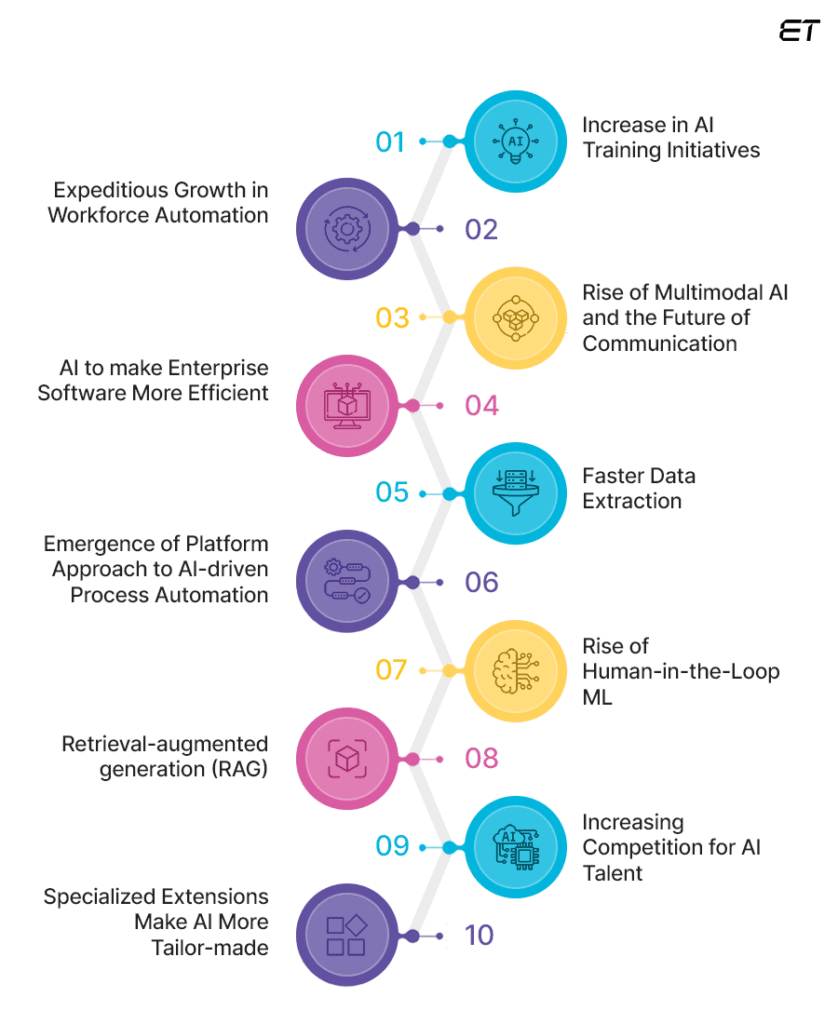
Underpinning all of the above (infrastructure, home assistants, XR, events) is the relentless growth of AI software — from foundations and models to platforms, tools and applications.
Key focal points this week:
- Infrastructure initiatives like ESUN show that the hardware/software stack for AI is becoming more standardised — meaning software development (models, frameworks) becomes more portable and accessible.
- Smart-home AI (Gemini for Home) and XR devices demonstrate how software – voice assistants, multimodal models, user-experience frameworks — are becoming central.
- Events like GITEX emphasise the cross-industry uptake of AI software: not just a tech-company thing but finance, energy, retail, etc.
What to emphasise for your blog:
- The shift from “AI as research project” to “AI as platform” — enterprises adopting software stacks, build-you-own models, etc.
- Regionally: How companies in Latin America / Colombia can leverage global AI platforms (cloud-based) without needing massive hardware build-outs locally.
- For readers: Practical advice — what skills, tools, and software stacks to watch (e.g., LLMs, multimodal APIs, edge AI).
SEO ideas:
- “enterprise AI software stack 2025”
- “generative AI tools for developers Latin America”
- “AI model deployment infrastructure trends 2025”
Conclusion & What to Watch Next Week
As we wrap up, a few closing thoughts:
- We’re witnessing a convergence of infrastructure + hardware + software + experience. It’s no longer just about sexy devices or flashy models — the plumbing (networks, interconnects), the ecosystems (platforms, standards) and the experience layers (home, VR/XR) all matter.
- For your blog (ByteNest.tech), this week offers rich content: you can craft deep-dive pieces on each of these 6 topics (with local/regional angle for Columbia/LATAM).
- Next week I’ll keep an eye on:
- Early adoption or pilot news from ESUN-compatible deployments.
- Availability-dates/pricing of Gemini for Home in Latin America.
- App-ecosystem announcements for Galaxy XR or Android XR.
- Keynotes or announcements from GITEX that tie into Latin-American markets.
- New enterprise AI software releases or partnerships (cloud-AI, AI-ops, etc).
- Early adoption or pilot news from ESUN-compatible deployments.